South Korea
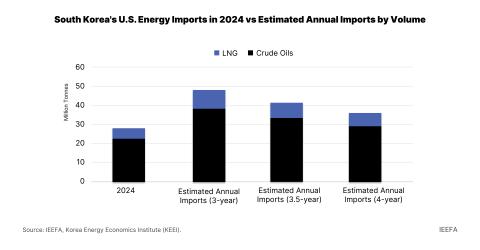
South Korea’s heavy reliance on imported fossil fuels continues to expose the country to global energy price volatility and supply disruptions. At the same time, growing electricity demand from energy-intensive industries, including semiconductors and Artificial Intelligence (AI) infrastructure, is increasing the need for reliable, affordable, and low-carbon power. However, renewable energy deployment continues to face policy, market, and regulatory barriers.
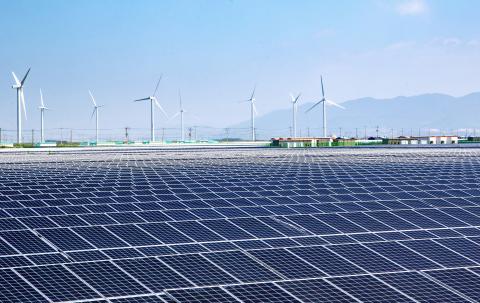
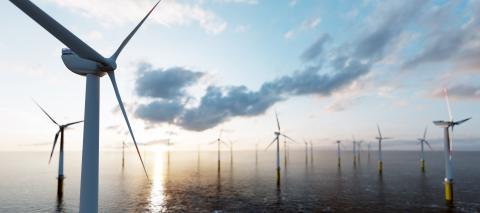
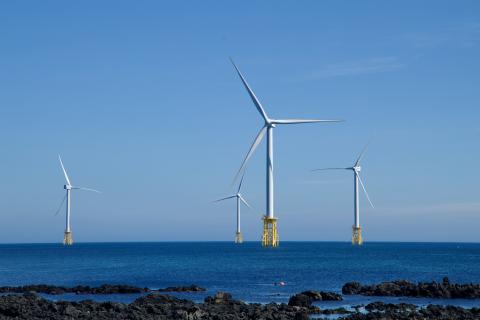
South Korea has pledged to phase out coal-fired power plants (CFPPs) by 2040 and, in April 2026, announced an accelerated roadmap to deploy 100 gigawatts (GW) of renewable energy by 2030. Achieving these targets will require continued investment in renewable energy, electricity networks, battery energy storage systems, and policy reforms to support industrial competitiveness, energy security, and emissions reduction.
IEEFA’s research and stakeholder engagement examine the policy, financial, and market developments shaping South Korea’s energy transition. Through independent analysis, IEEFA provides recommendations to help accelerate the transition to a more competitive, secure, and low-carbon energy system.
South Korea’s renewable energy pivot can mitigate fossil fuel dependency risks
By expediting renewable energy deployment, removing structural barriers, and enabling investment at scale, South Korea can reduce its exposure to volatile global markets while strengthening its fiscal position and long-term energy security.
Latest South Korea Research
See more >
Latest South Korea Reports
See more >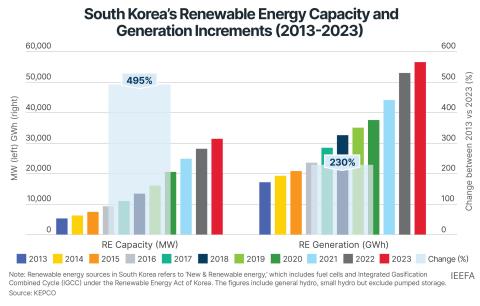




Latest South Korea Press Releases
See more >