India’s coking coal push needs a methane plan
Key Findings
Mission Coking Coal targets 140 million tonnes (Mt) by financial year (FY) 2030. Coking coal mining is around 50% more methane-intensive than non-coking coal, and as production shifts to deeper deposits, methane emissions could rise faster than output itself.
An analysis of 30 operating mines shows 81% of emissions come from just seven mines, mostly in Jharkhand. Additionally, seven proposed mines alone could add around 10% to India’s ongoing coking coal mining methane emissions by 2030. Mines are long-lived assets that risk locking in decades of higher emissions if abatement is not built in at the start.
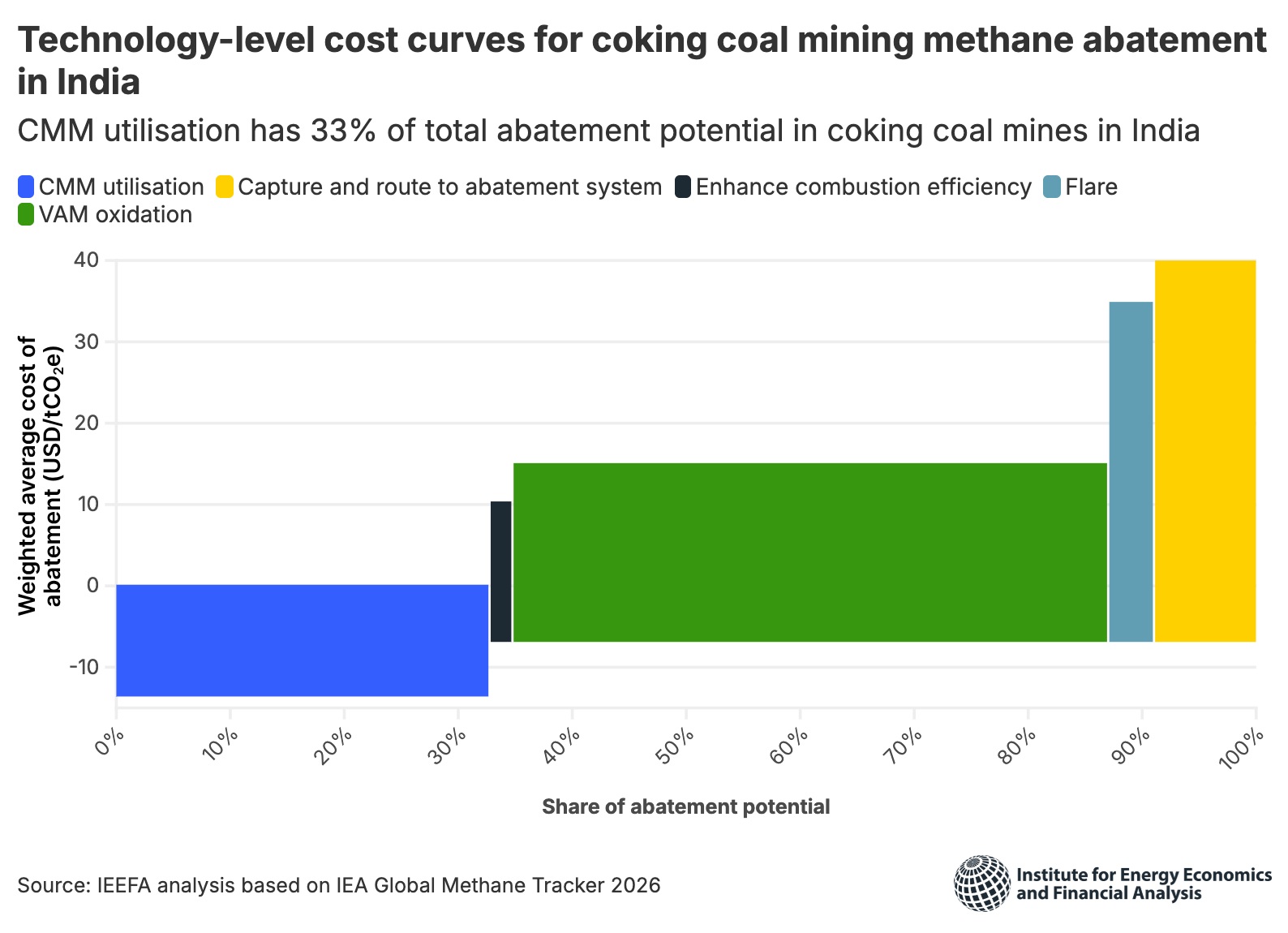
Around 87% of India’s abatable coking coal mine methane (CMM) can be mitigated for under USD20(INR1,895)/tonnes of carbon dioxide equivalent (tCO₂e). CMM utilisation (33% of abatement potential) actually has a negative cost of USD11.9(INR1,127)/tCO₂e because recovered methane can be used to generate revenue.
India is preparing to double its coking coal output by 2030, especially to meet its steel manufacturing needs. While carbon emissions from coal use are well known, coal mining also produces methane emissions, which warrant early attention. If monitoring and abatement measures are not incorporated at the planning stage, it could lock in higher emissions in mining operations for decades.
Methane is a potent greenhouse gas and is formed in coal mines during the coalification process. It remains trapped within the coal seam and is released when mining disturbs or exposes the seam to the atmosphere. These emissions are called coal mine methane (CMM) and occur during multiple stages of the mining cycle, including extraction, drainage, and ventilation, as well as post-mining activities such as coal processing, storage, and transport. Coking coal mining is particularly methane-intensive, with around 50% higher methane intensity than non-coking coal.
When heated in the absence of air, coking coal converts into coke: a strong, porous material, low in ash and moisture and free of volatile matter. Coke’s use as a fuel and a reducing agent in steel production sets it apart from non-coking coal, which is primarily used for energy generation.
Why is India planning for more coking coal?
In the absence of good-quality domestically produced coking coal, India imports around 90% of the coking coal required by its steel sector, which needs low ash and sulphur content and caking properties. India’s domestic coking coal production is still falling short. It mined 66.8 million tonnes (MT) of raw coking coal in 2023-24, but only about 5.4 million tonnes was washed to the quality needed for steelmaking.
India has launched Mission Coking Coal to increase domestic production to around 140 MT by financial year (FY) 2030, up from 66 MT in financial year 2025. This increase is expected to support India’s proposed steelmaking capacity to rise from the current 200 million tonnes per annum (MTPA) to 300 MTPA by 2030.
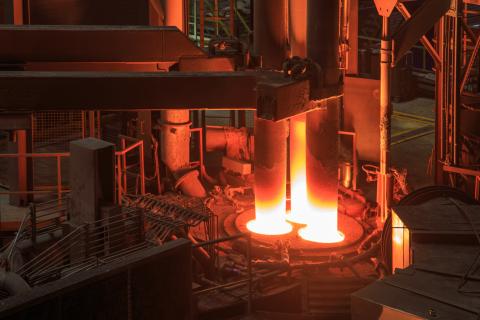
India’s main steelmaking process is the conventional blast furnace-basic oxygen furnace (BF-BOF) route with coking coal as the key input. It accounts for around 62% of current steel production and around 59% of announced or under-construction production. Alternative steelmaking technologies that use other fuels like natural gas, green hydrogen, or scrap steel lower coking coal use in steel production but are not currently popular in the country. The BF-BOF process requires 770 kilogrammes (kg) of coking coal per tonne of crude steel. With 208 MTPA of BF-BOF capacity expected to come up in India, this would create an additional coking coal demand of 160 MTPA.
Coking coal expansion means more methane emissions
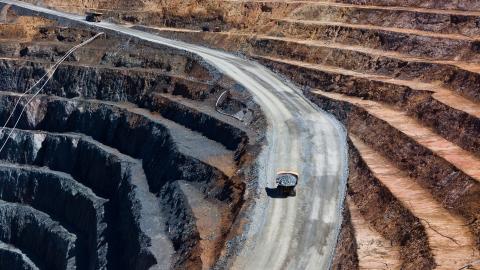
Higher methane emissions from the proposed coking coal expansion could become more significant as India seeks to access better-quality, deeper coking coal deposits. Methane content varies by geology, depth, and coal rank, but generally tends to increase in deeper and higher-rank coal deposits. Currently, around 97% of India’s coking coal mining is surface-based, with easily accessible reserves dwindling. Only around 35% of the remaining reserves are suitable for surface mining, while around 41% lie deeper than 300 metres, requiring underground mining. Globally, underground mines account for around 85% of methane emissions from coking coal mining. As India increasingly moves toward deeper deposits, methane emissions could rise faster.
The Institute for Energy Economics and Financial Analysis (IEEFA) conducted an analysis of proposed coking coal mines expected to be operational by 2030. The analysis showed that seven mines could increase methane emissions by around 10% over current operations, resulting in 234.7 kilotonnes (kt) of methane emissions in 2025, even though most are surface mines. As this estimate excludes allocated mines for which peak-rated capacity is not yet available, eventual methane impact could be larger.
India needs a robust methane mitigation roadmap
Strategic interventions can help reduce the rate of increase in methane emissions, especially as higher emissions are concentrated in a relatively small number of mines. IEEFA’s analysis of 30 operating mines shows that 81% of emissions come from just seven mines, mostly located in Jharkhand. Therefore, targeting methane mitigation in these mines and embedding methane management into Mission Coking Coal could deliver rapid, cost-effective emissions reductions while avoiding long-term emissions lock-in.
Making mine-level pre-feasibility studies mandatory can help assess expected methane emissions and identify appropriate mitigation options before major infrastructure and investment decisions. This is especially important for deeper and potentially more methane-intensive mines. The appropriate abatement technology depends on factors such as mine type and depth, methane emissions intensity, and methane gas concentration.
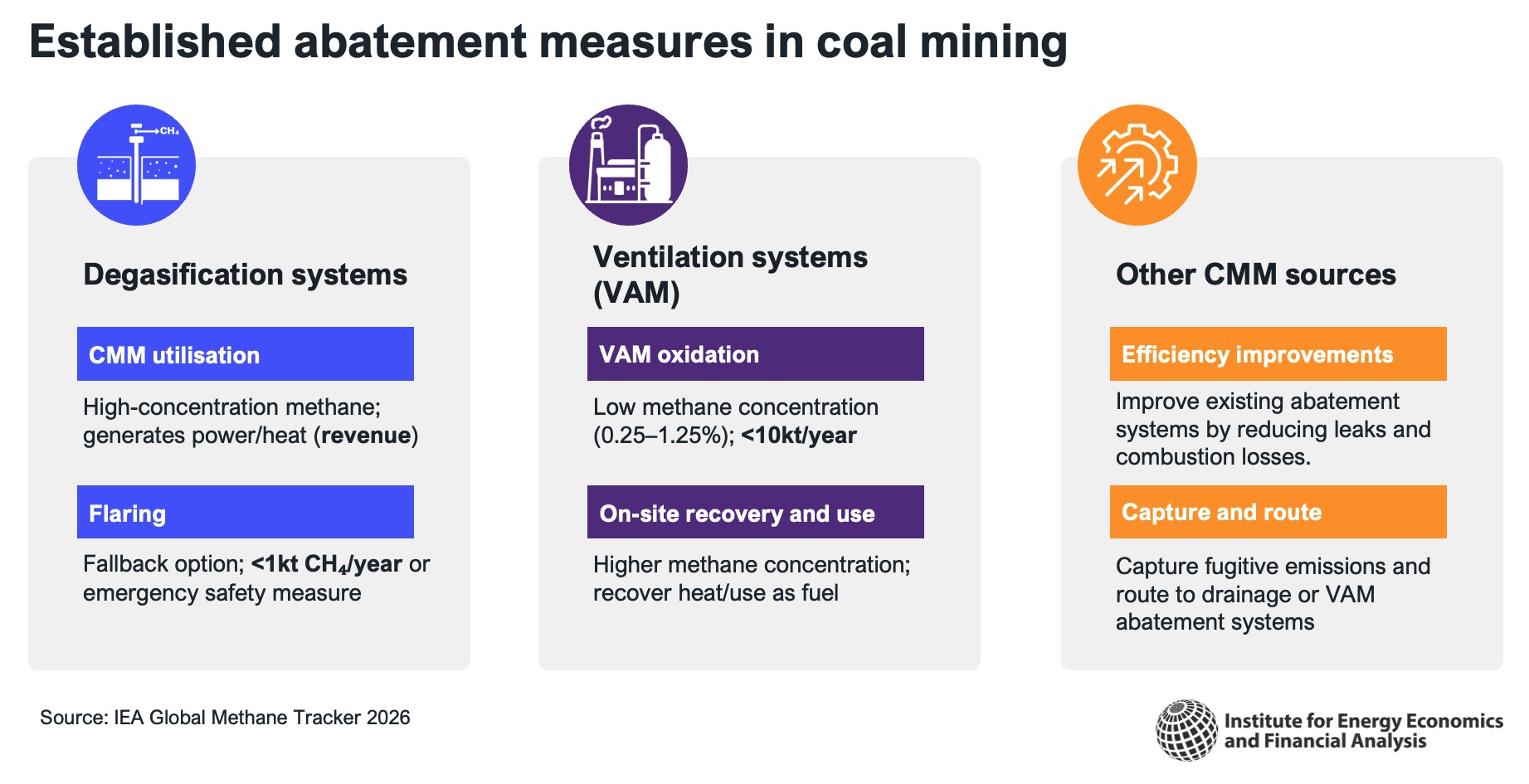
Potential abatement measures include degasification and CMM utilisation, ventilation air methane (VAM) oxidation, and capture-and-route approaches. Degasification systems use wells and drainage boreholes to capture higher-concentration methane from coal seams. This can then be utilised for power or heat generation or flared where utilisation is not feasible. VAM oxidation uses thermal or catalytic technologies to destroy methane in the highly diluted air exhausted from underground mines. In contrast, on-site recovery and use can recover heat or use VAM as a supplementary fuel where methane concentrations are higher. Capture-and-route approaches address fugitive emissions by capturing or sealing sources and directing methane to drainage or VAM abatement systems.
The economics of methane management
In India, around 87% of abatable coking coal mine methane emissions can be mitigated for less than USD20 /tonne of carbon dioxide equivalent (tCO₂e). This aligns with global estimates from the International Energy Agency (IEA), which found that 90% of abatable CMM would cost USD20/tCO₂e or less to mitigate globally. CMM utilisation accounts for 33% of total abatement potential in coking coal mines in India. It will have a negative average abatement cost of around USD11.9/tCO₂e, largely because recovered methane can generate revenue. VAM oxidation represents the largest share of the abatement potential, at 52%, with an average cost of USD18.9/tCO₂e.
IEEFA’s analysis shows that appropriate abatement measures could reduce methane emissions by around 125 kilotonnes (kt) across India’s major operational and proposed coking coal mines. The technology and abatement potential vary considerably from one mine to another, reinforcing the need for a targeted, mine-level approach rather than a one-size-fits-all solution.
Expanding productive uses for methane is not just limited to CMM but also to Coal Bed Methane (CBM), which is extracted from unmined coal seams. Exploring ways to do so at scale will help strengthen the commercial case for methane recovery and utilisation in power and industrial applications, especially in the steel sector. For instance, a CMM demonstration project at Moonidih in Jharkhand used recovered methane to generate electricity on site. Similarly, Tata Steel conducted a trial to inject CBM into a blast furnace at its Jamshedpur plant, demonstrating its potential to reduce coking coal consumption. Such applications at scale could help turn recovered methane into a productive resource while supporting efforts to decarbonise the steel sector.
Lowering coking coal dependence
Alongside supply-side methane abatement measures, demand-led reductions in methane emissions are also possible. This can be achieved by focusing on more efficient use of coking coal and shifting to alternative steelmaking technologies that require less coking coal.
One such technology is direct reduced iron-electric arc furnace (DRI-EAF), which uses natural gas or green hydrogen as the reducing agent. Scrap-based EAF steelmaking can further reduce coking coal requirements significantly. It requires an average of 12 kg of coking coal per tonne of steel, compared with the BF-BOF route’s 770 kg. In another significant step towards reducing coal demand, India has also set a goal for 50% of its steel production to be fed by scrap by 2047, up from the current 23%.
Steps such as integrating methane abatement into coking coal mining, putting recovered methane to productive use, and using steelmaking technologies that reduce coking coal demand altogether, could help reduce emissions and support the decarbonisation of India’s steel sector and its pathway to net zero by 2070. Abatement measures are technically feasible and relatively low-cost, making them suitable for inclusion in future mining activities.
India must act early by targeting high-emitting mines and building methane management into new projects to meet its growing steel needs while avoiding long-term emissions lock-in.
This article was originally published in Mongabay India.


Related Content