Why NSW should not cave in to HVO’s coalmine ultimatum
Key Findings
HVO’s argument that a 19-year extension allows it to withstand coal price cycles ignores the fact the market is in structural decline, and that it may face increasing emissions reduction costs.
When mines become uneconomic they will either close or be “mothballed”, leading to material local community impacts in the absence of an exit plan.
HVO’s owners have shown a few years is enough to create and implement post-mine development plans to sustain the economic and social health of the region.
If the extensions are needed for HVO to meet its rehabilitation requirements, it suggests HVO may be in breach of its legislated commitments.
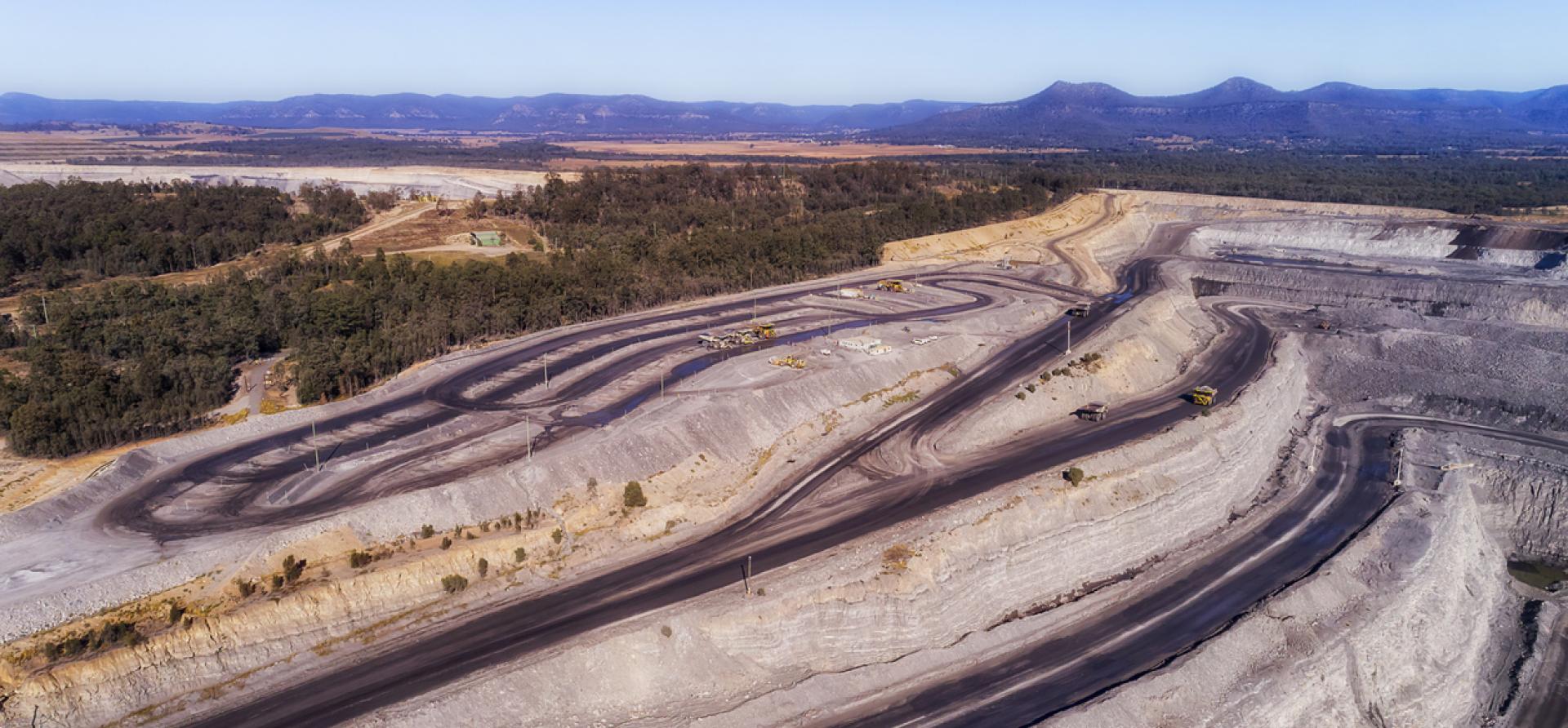
Hunter Valley Operations (HVO) is digging in over its highly contentious plans to extend operations at two thermal coalmines to 2045, despite the potential cost to the community and NSW government.
In response to a “please explain” from the NSW Independent Planning Commission (IPC), HVO issued a warning that any change to its long-term plans would amount to a rejection of its applications and the closure of its HVO North and South mines.
Uncertain financial future
HVO is sticking to its 19-year timeline for the mines, despite requests from the IPC for consideration of shorter alternatives. HVO asserts the long extension is necessary for it to weather market price cycles. While IEEFA acknowledges the thermal coal market is volatile, it cannot mask the fact that the market is in structural decline. This conclusion is supported by data from Yancoal itself and other independent entities such as KPMG.
Allowing extra time for a project in a declining market could merely prolong the period of structural losses to which the project is exposed, which is markedly different to managing short-term price fluctuations.
Mines routinely cease operations as soon as revenue is insufficient to meet their operating costs. As stated by the Hunter Valley coal producers in a recent submission to the Australian Competition and Consumer Commission (ACCC), “it will make economic sense for coal producers to continue operating these assets whilst they remain cash flow positive”.
In recent years, several mines have ceased and/or restarted operations in line with market fluctuations. The fallout can be felt further afield, affecting jobs, education and community investment, as was highlighted by BHP’s responses to the deteriorating economic performance of its coalmines earlier this year.
If HVO’s 19-year term is subject to market prices providing sufficient revenue to cover operating costs, it implies that the lengthy extension term merely gives HVO the option to operate the mine as long as it’s in its economic interests.
Should HVO decide to mothball the mines instead, the consequences of that closure will still be felt by the community, exacerbated by the lack of any mine exit planning.
HVO’s financial situation may be materially worsened by its high emissions intensity. To meet its emissions reduction requirements under the Safeguard Mechanism, HVO plans to rely on purchasing carbon offsets rather than onsite abatement, a key focus of the recent Commonwealth Government consultation paper. The possibility of constraints on the use of offsets calls into question HVO’s ability to implement its abatement strategy over the 19-year term, with potential cost impacts arising from any change.
Hunter Valley coal producers forecast total production, and hence emissions, will remain steady for the next 10 years. Based on HVO statements that offset purchases will not be limited to NSW for economic reasons, it is reasonable to conclude that Hunter Valley coal production will not contribute to any emissions reductions to meet NSW targets within a decade.
Time to develop an exit plan
HVO has suggested that consultation on mine closure with affected stakeholders would take three to five years. However, no such consultation has commenced despite the fact the license for one of the mines, HVO North, expires this year. It should be noted that this is the closest HVO has come to formulating an exit plan for the mines since it was first required to develop one as a condition of a lease extension in 2004.
Therefore, any uncertainty arising from a potential mine closure stems in part from HVO’s own failure to develop a mine exit plan over the past 22 years.
Moreover, HVO’s majority owner, Yancoal, was able to develop a full post-mining land-use proposal for its closed Stratford mine to be completed within six years (including four years implementation post the mine closure in 2024).
The Stratford Renewable Energy Hub in the northern Hunter region represents an investment of AU$1.8 billion, creating significant employment opportunities in the region. The planned time frame for development, approved in July, reflected two years of pre-closure engagement. This is consistent with the three-year closure notification runway proposed in the draft NSW Future Jobs and Investment Authority Bill.
Elsewhere in the Hunter, BHP’s Mt Arthur transformation project incorporates a variety of potential uses, potentially creating 5,900 jobs, consistent with key recommendations of last year’s NSW parliamentary inquiry into post-mining land use.
Without proper preparation, a snap closure of the mines, which employ approximately 1,500 people, would force “an abrupt, economically devastating structural shock” on the region.
Of particular concern is HVO’s argument that the extension will provide cash flow to support rehabilitation of the mines. In NSW, rehabilitation obligations are legally enforceable and covered by a bond held by the state government, with significant penalties for any breaches.
However, HVO’s comments suggest that its AU$266.1 million security deposit may be insufficient to meet its liabilities, and that it is not up to date with its ongoing rehabilitation requirements. This may warrant further investigation.
With Hunter Valley coal producers publicly assuming in their ACCC submission that all future mine extension applications will be granted, rewarding HVO’s strategy would legitimise this stance. However, approving these mine extensions would not provide certainty to the community but merely give HVO a 19-year option to exit at a time of its choosing.
Based on this evidence as well as the substantial issues previously identified with the HVO proposal, IEEFA recommends that the IPC not accede to HVO’s demands but rather allow an extension of the licence to produce coal at current levels for HVO North to 2030, and reject the HVO South application to provide adequate time to develop the post-mine plan.
Note: IEEFA presented a submission at the IPC public hearings, and a supplementary submission to HVO’s response, complementing its previous commentary recommending the application be rejected.

Related Content