Key Findings
The number of orphan wells in New Mexico is growing faster than the state can plug them.
Well-plugging costs are rising rapidly, with one 2025 estimate putting the low end of liabilities at $700 million.
The annual average number of wells falling into inactive status—where last production took place more than a year prior to classification change—quadrupled between 2016 and 2025.
Slightly more than 1 in 5 of the 576 New Mexico registered owners had only inactive wells in 2025.
Executive Summary
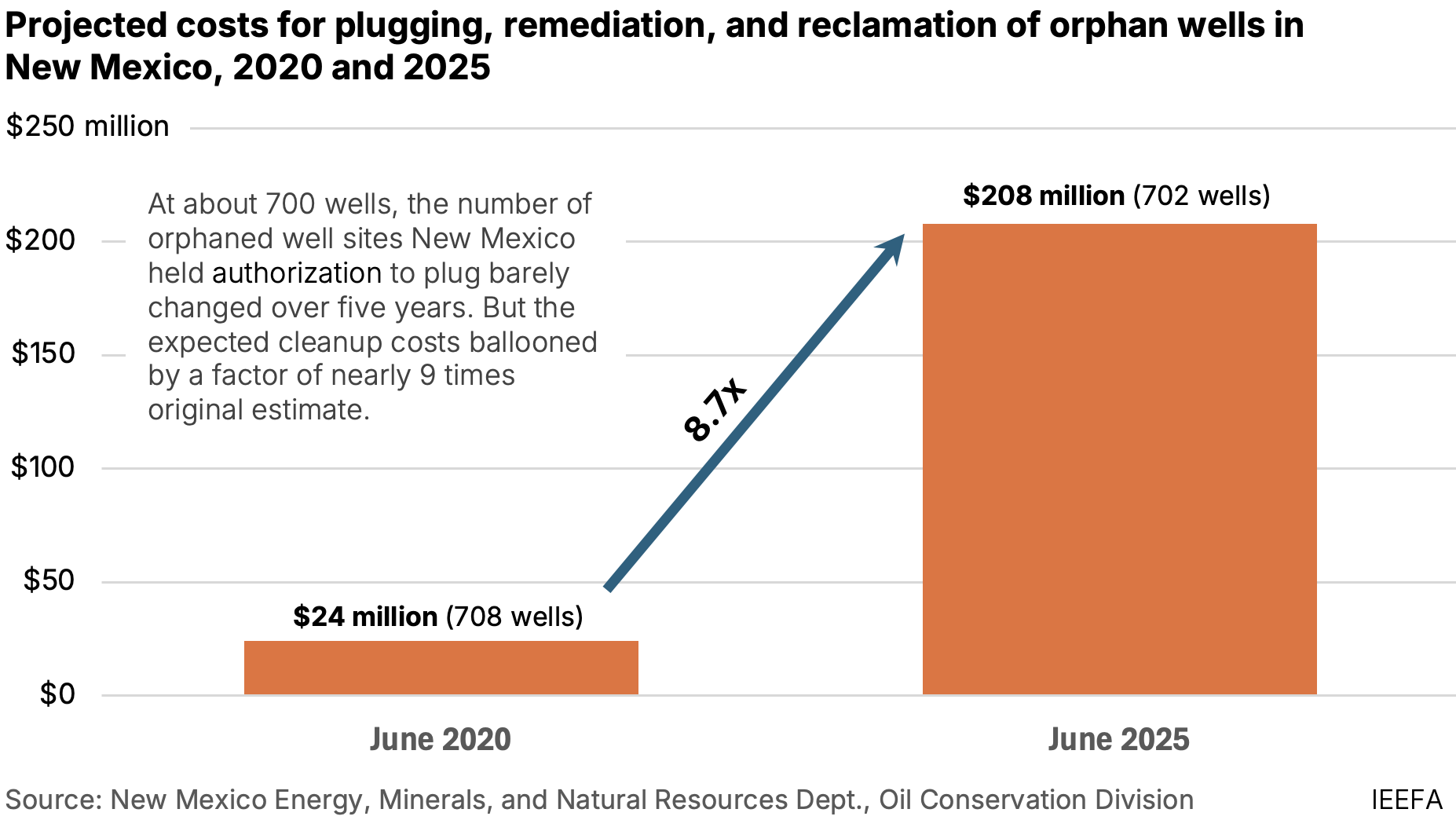
New Mexico has doubled its annual rate of plugging orphan wells and is updating financial assurance rules for well operators. But the number of wells producing less than 2 barrels of oil equivalent (BOE) per day—wells that are likely to become orphans—is growing faster than the state can plug and remediate its existing inventory of idle wells. Making matters worse, orphan well costs are skyrocketing: The state’s total estimated costs for plugging and remediating orphan wells have risen more than 750% since 2020, even though the number of approved orphan wells has remained roughly constant.
Figure 1:
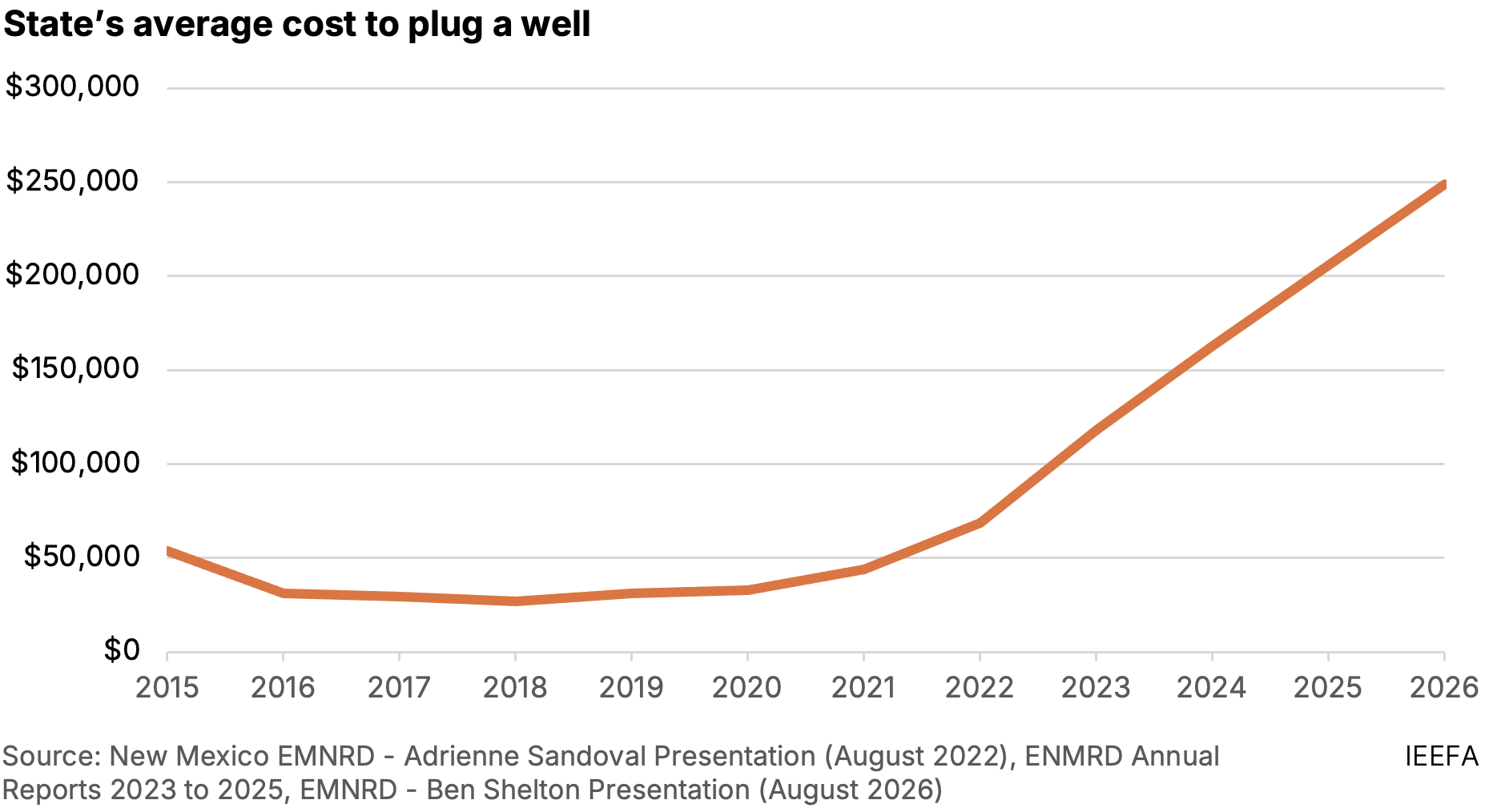
A modicum of cost inflation in plugging, remediation, and reclamation services over a five-year period is expected. But this is not what the state’s plugging program has experienced. Before 2021, the state's average cost to plug a well hovered around $50,000. However, by 2026, that figure had ballooned to $250,000, a fivefold increase. The steep rise in average plugging costs underscores the state's failure to control these expenses in recent years. In other words, this hockey stick-shaped surge suggests that more than just normal market pressures are at play.
Figure 2:

Related Content