Key Findings
As Phase 2 of LNG Canada’s export facility in Kitimat, B.C., reaches FID, key questions remain.
The investment case for Phase 2 is somewhat different from Phase 1 and should be considered on its own terms.
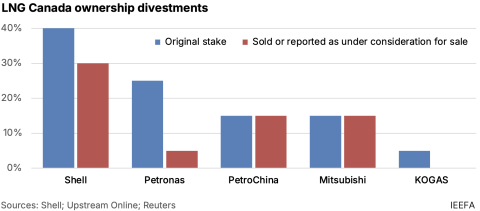
LNG Canada Phase 2 is approaching FID with potentially 50% of the combined project for sale and possible new ownership.
Phase 2 must contend with greater uncertainty around construction costs, economic inflation, potential global oversupply, and a turbulent trade environment.
Executive Summary
The investment case for LNG Canada Phase 2 warrants careful scrutiny on its own merits and should not merely be assumed from the execution of Phase 1. Both phases share the same site, overlapping ownership, and broad commercial characteristics. But the economic and market conditions prevailing before FID are noticeably different. This briefing outlines some key risks facing investors, policymakers, and other project stakeholders. Construction of Phase 2 will have to contend with volatility and increases in the prices of labour, steel, equipment, debt and other input costs. Statistics Canada’s non-residential construction price index has risen sharply since 2019-20, and the current construction cost base is substantially above that prevailing in 2018. Investors in Phase 1 were able to partially insulate themselves from the effects of cost overruns by transferring this risk to contractors via lump sum, fixed-payment contracts.
However, it is uncertain if Phase 2 can secure comparably favorable commercial terms in today’s volatile cost environment. Pre-FID commercial agreements are already signaling a new reality leaving investors more exposed to inflationary risks. The requirement for incremental feed gas must also be assessed against expected production levels in western Canada. The projects ownership structure is also shifting. Potential shareholder divestments and changes in project ownership at a critical time when new capital is needed to fund the expansion raise critical questions. The U.S-Canada trade war also introduces another element of risk that was absent in earlier stages of the project. While a more favorable regulatory environment will help expedite approvals, it also flattens the first-mover advantage that Phase 1 enjoyed, increasing competition for labour, contractors and construction capacity from other proposed LNG projects. Phase 1’s environmental record may also weigh on community support for the expansion effort.
Lastly, Phase 2 is seeking FID and offtake commitments just as a historically large volume of competing LNG supply is approaching the market. Current supply disruptions from the conflict in the middle east are unlikely to offset this impending supply glut. LNG Canada Phase 2 is not simply a duplication/twinning of Phase 1; it faces a materially different risk environment. Investors, policymakers, and industry stakeholders are exposed to significant uncertainties and face critical questions as the project reaches FID.

Related Content