Do headline cost estimates for projects like Ksi Lisims understate stakeholder risks
Key Findings
Initial cost estimates for the Ksi Lisims LNG project ranged from CAD$8 billion to $9 billion.
Recent announcements, however, now estimate costs could be as high as $30
billion.
Major Canadian fossil fuel projects have repeatedly experienced substantial cost
overruns.
Headline figures should be interrogated and stress-tested, not simply taken at face
value.
When the Ksi Lisims LNG project was first proposed, the sponsors of the liquefied natural] gas (LNG) export terminal on the coast of British Columbia estimated it could be delivered for between CAD$8 billion and $9 billion. With a proposed capacity of 12 million tonnes per annum (MTPA), this implied capital costs of CAD$690-750 per tonne. This appears to have been an underestimate.
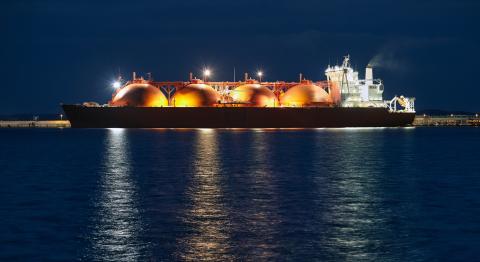
Unlike a conventional onshore LNG terminal, Ksi Lisims is designed to include two floating near-shore LNG production, storage and offloading facilities (FLNG). The project plans to incorporate liquefaction equipment, LNG storage and marine loading infrastructure alongside a new pipeline, power production and other infrastructure.
In a previous report, IEEFA reviewed recorded capital costs for existing LNG facilities, revealing the cost to deliver a floating LNG plant with similar characteristics ranged from CAD$1,500-$2,450 per MTPA of LNG. We flagged the relatively low capital intensity of the Ksi Lisims project and concluded that after factoring variables such as inflation, currency volatility and potential project challenges, it was extremely unlikely that the facility could be delivered within its initially proposed budget.
That discrepancy between the initial estimate and industry benchmarks now appears to have narrowed as indications emerge that the project’s budget has risen substantially. Recent public announcements are quoting a CAD$30 billion budget for the facility—more than triple its initial CAD$8.3billion to $9 billion estimate.
A project does not automatically become uneconomic simply because earlier estimates were off the mark. However, a substantial enough difference may alter the economics of the venture as well as amplify risks faced by investors and stakeholders. And where government subsidies or tax incentives are involved, the public faces risks as well.
At some point investors will have to re-evaluate whether the project’s economics remain sufficiently robust when measured against revised capital commitments. A significant increase in the amount of capital to be committed means greater financing requirements, higher required equity, higher debt servicing costs, and likely a higher LNG price needed to achieve an acceptable return.
The experience with Ksi Lisims is not an isolated incident and must be considered against Canada’s record of large-scale infrastructure development. Major Canadian fossil fuel projects have repeatedly experienced substantial cost overruns and significant increases in capital requirements relative to initial estimates. These include the Trans Mountain expansion project, Coastal Gas Link pipeline and Woodfibre LNG.
And while the sources of cost overruns are often legitimate—due to factors such as inflation, delays, engineering complexity and changes in scope—the recurring nature of these discrepancies is concerning. It raises questions not only about effective planning but also about public transparency.
Canada is now actively trying to accelerate the development of major infrastructure. When governments seek to speed a project forward, capital cost assumptions can influence the decision-making process. Advocates have an obvious desire to demonstrate that a proposed project is economically competitive, and the headline capital cost is a key part of their case.
However, if a proposed project has materially lower implied capital intensity than comparable developments, that difference warrants some scrutiny. While initial estimates may ultimately prove justified due to project-specific advantages, such justification should not simply be assumed. Overly optimistic cost estimates represent project risk, and governments and other funding counterparties may end up committing to a project without having a full view of the investment and capital commitments required. An estimate that appears attractive in isolation becomes less credible when compared with industry standards; headline figures should be interrogated and stress-tested, not simply taken at face value.
There are also opportunity costs in the context of Canada’s energy transition. Government subsidies, loan guarantees, insurance arrangements, and other forms of support provided to a more expensive project represent public resources that cannot be simultaneously deployed to de-risk alternative, lower cost investments that are more aligned with Canada’s climate objectives.
With Ksi Lisims, the warning signs were visible even before construction commenced—an unusually low proposed cost per tonne of annual liquefaction capacity. For the investors and policymakers evaluating Canada’s next generation of large-scale, fossil fuel projects, caution is warranted when using headline cost estimates to assess project economics and benefits. The gaps among the original, revised, and ultimate capital outlays can change the risk-return profile of an investment with implications for all stakeholders, including the public.

Related Content