Without reservation, Beetaloo gas could increase domestic prices by 50%
Key Findings
The Australian Senate is about to decide whether the government’s proposed domestic gas reservation policy goes ahead.
If the policy does not go through, eastern Australia will need new sources of gas to meet forecast shortages. Gas from the Beetaloo field in the Northern Territory has been put forward as a key option.
However, transport costs from the Beetaloo to eastern Australia are likely to be very high due to the limited potential customers. Coupled with Beetaloo’s already high costs, this will increase gas bills by more than 50% in eastern Australia, and up to 75% in Melbourne.
Australia’s federal government is scheduled to present its domestic gas reservation bill to the Senate tomorrow. There is significant uncertainty on whether it will be adopted, with both the Coalition and Greens set to oppose the current proposal.
Both eastern and Western Australia are facing gas shortfalls in the coming years, and while recent reductions in eastern Australian gas demand have improved the short-term outlook, new sources of gas will be needed in the next decade as Victoria’s supply dwindles.
IEEFA has previously found that diverting greater domestic supply from liquified natural gas (LNG) exporters, which is the intent of the domestic gas reservation policy, is the most rapid and cost-effective way to meet those shortfalls.
The Coalition has, however, stated that “the answer to our gas supply challenges must be to produce more gas, not simply shuffle existing supplies around.” One of the key fields that is being considered to supply eastern Australia is the Beetaloo basin located in the Northern Territory. It is by far the largest project being considered for development with a possibility of linkage to eastern Australia by pipeline.
IEEFA analysis to be published in the coming weeks challenges this notion, showing that the new pipeline being proposed to bring Beetaloo gas to eastern Australia has a high risk of being unviable financially. It also shows that if the pipeline is built, it could significantly increase the domestic gas price due to the high cost of delivering gas to the southern states of Australia. In the interest of informing the Senate discussions tomorrow, IEEFA is releasing a subset of results early.
The Beetaloo pipeline may never be built
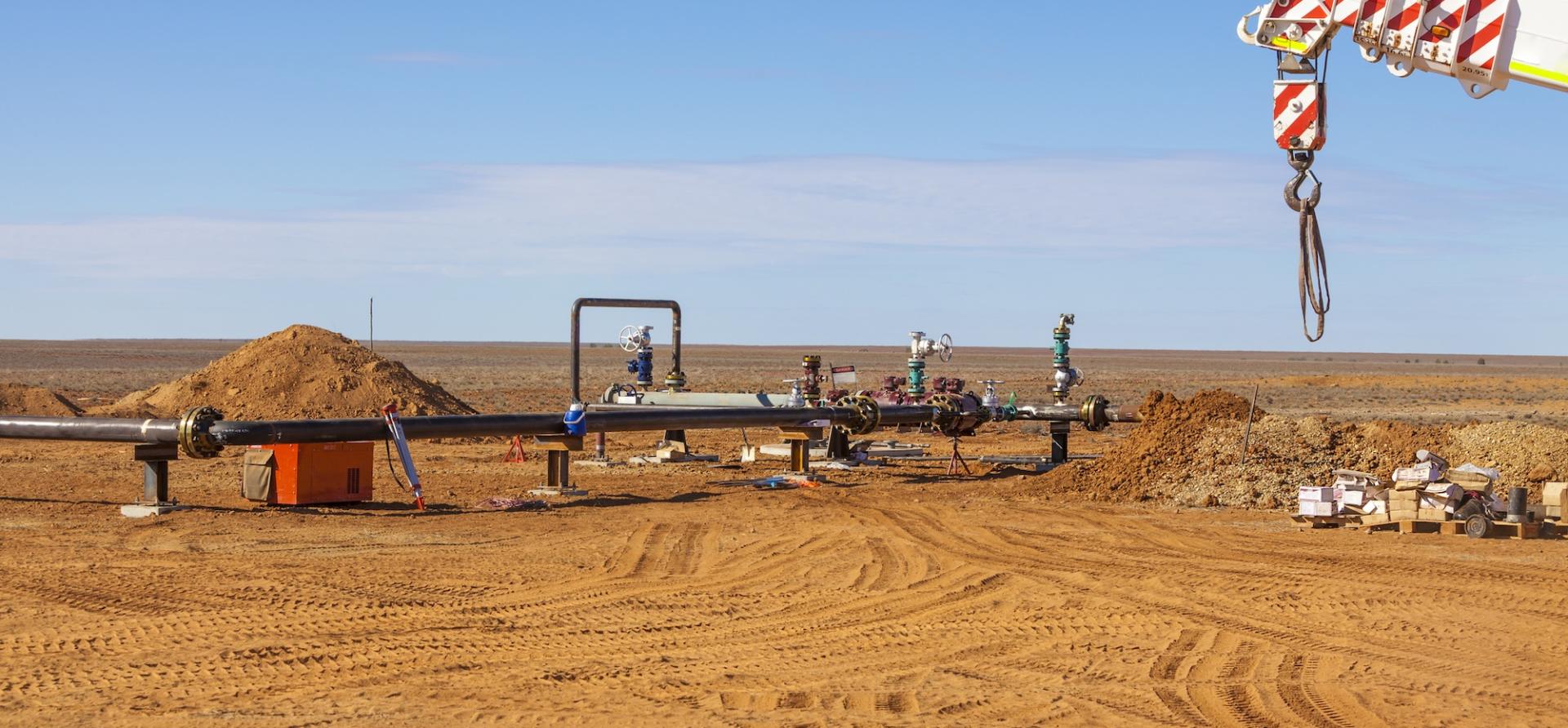
The Beetaloo basin is remote and requires a new pipeline to link it to eastern Australia if it is to supply large gas volumes. APA Group (APA), Australia’s largest gas pipeline operator, has plans to build the 1,561km North to East Australia (NEA) Pipeline to transport Beetaloo gas to eastern Australia, both for domestic use and for LNG exports from Gladstone.
APA has stated that the Beetaloo project is largely intended as an “export play”. However, IEEFA analysis finds that using Beetaloo gas to backfill Queensland LNG plants is unlikely to be financially viable. IEEFA’s upcoming report estimates that the cost of LNG made from Beetaloo gas and transported from Gladstone to Asia would likely be 31%-86% higher than LNG prices in Asia for the first half of the 2030s according to forecasts by the International Energy Agency and Goldman Sachs. This means that Gladstone LNG exports using Beetaloo gas would not be able to recover their costs.
There are many other risks associated with the NEA pipeline, including that it is still in the scoping phase, and APA has not yet confirmed pipeline capacity or cost. The planning phase is expected to take two years, and the construction phase an additional three years, meaning it wouldn’t start operating before 2032–34.
The Beetaloo basin itself is still in a pilot phase; expansions will depend on whether pilots are successful. The first focus of the most advanced projects is on supplying Northern Territory customers, with no timing on further expansions to supply eastern or LNG customers.
The pipeline’s high capital costs also raises concerns about APA’s ability to finance it without diluting shareholder value and while maintaining a strong balance sheet.
If the pipeline is built, it could increase domestic gas prices by more than 50%
If the pipeline does get built, the cost of transporting gas from the Beetaloo down to the southern states is likely to drive domestic gas prices up.
If the pipeline does not transport gas for LNG exports and instead is sized to only supply domestic demand, it is likely to have a lower capacity, which will drive its tariff up. Domestic demand is unlikely to materially exceed IEEFA’s “low demand” scenario (from our upcoming report), which results in a tariff of about $3.8 per gigajoule (GJ) just to bring the gas from the Beetaloo basin to Ballera in Queensland.
Transporting the gas from Ballera to Melbourne adds another $4.7/GJ. As a result, the delivered cost of gas in Melbourne would be about $15.7-$17.6/GJ. Given the volume of gas that would be sourced from the Beetaloo, it would likely set the price in southern states. The average wholesale gas price in Victoria from July to October 2026 was about $10/GJ (though prices have increased in November), so this means Beetaloo gas delivered to Melbourne could increase gas prices by more than 50%, and up to 75% (Figure 1).
Figure 1: Beetaloo gas could materially increase domestic gas prices
In comparison, the likely cost delivered in Melbourne of gas from existing fields held by LNG exporters in Queensland would be about $8.7/GJ.
The last time domestic gas prices went above $15/GJ was after the Russian invasion of Ukraine in 2022. In just two years, manufacturing gas use in eastern Australia experienced an unprecedented drop of nearly 20% as energy-intensive facilities closed down. In many cases those facilities named high gas prices as the key driver.
Australia now has the opportunity of implementing a domestic gas reservation policy which, if effective, could prevent both gas shortfalls and price increases driven by expensive new fields. When the Senate votes tomorrow, let’s hope they consider the options cautiously.

Related Content