From oil shocks to resilience: What BRICS’s new agenda needs to address
Key Findings
Between March and August 2026, the West Asia crisis disrupted energy flows through the Strait of Hormuz and cost importers significantly more for seaborne crude oil, oil products and liquefied natural gas (LNG) than pre-war futures markets had anticipated. With crude above USD100 (INR9,500) per barrel for much of 2026, that cost feeds straight into inflation, borrowing costs, currency stress and public budgets.
The COVID-19 demand collapse, the Russia-Ukraine price spike and now the Hormuz crisis mark three major fossil-fuel shocks in six years, each exposing a system built on concentrated, geopolitically sensitive supply. That risk cannot be hedged through supplier diversification alone.
Renewable capacity alone cannot translate into reliability or resilience without grid infrastructure. As variable generation rises, power systems need stronger grids, storage, demand-side flexibility and markets that can balance supply and demand. The BRICS Summit’s institutional steps, including the BRICS Digital Centre of Excellence for Smart Grids and Energy Storage launched in June and the new Solar PV Cooperation Roadmap, are in the right direction.
India hosted the 18th BRICS Summit in New Delhi on 12–13 September, where the New Delhi Declaration, adopted unanimously, set out positions on energy security, clean technology cooperation, and global governance reform. On energy, it adopted an Action Plan for a photovoltaic (PV) Industry Working Group and a Solar PV Cooperation Roadmap, endorsed guiding principles on smart grids and energy storage, and advanced cooperation on low-emission hydrogen standards. These commitments reflect a shift in how BRICS defines energy security. The next step now is closing the gap between renewable capacity and the grids that make it deliverable.
BRICS’s 11 members account for 49.5% of the world’s population, around 40% of global gross domestic product (GDP), and 26% of global trade. They are scaling renewable energy rapidly, even as fossil fuels remain embedded in their economies.
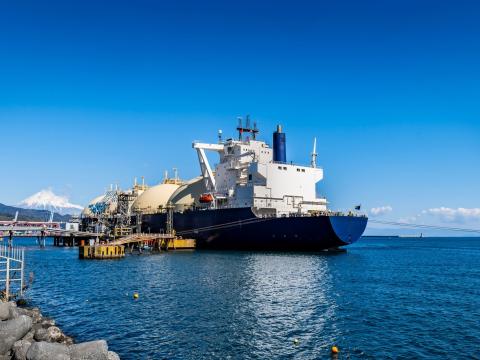
Since the West Asia conflict disrupted energy flows through the Strait of Hormuz, fossil-fuel-importing economies have borne substantial costs. Between March and August 2026, importers paid an estimated USD330 billion (INR31 lakh crore) more for seaborne crude oil, oil products, and liquefied natural gas (LNG) than pre-war futures markets had anticipated. BRICS importers bore a significant share, with China and India alone accounting for USD35 billion (INR3.3 lakh crore) and USD22 billion (INR2.1 lakh crore), respectively, of this. Crude prices also surged and have remained above USD100 (INR9,500) per barrel for much of 2026.
The effects extend beyond energy markets, feeding into inflation, borrowing costs, currency stress, and weaker investment conditions. Tanker freight rates for oil shipments to India climbed by around 150%, adding to the cost of imported crude. This is not new. Covid-19, the Russia-Ukraine war, and now the Hormuz crises mark three major fossil fuel shocks in six years. These are recurring features of a system built on concentrated, geopolitically sensitive supply, making these systemic economic risks, not one-off disruptions.
Supplier diversification has limits
India has expanded crude sourcing to 40 countries, with around 70% of imports now routed from outside the Strait of Hormuz. That buys flexibility, but supplier diversification does not insulate importers from benchmark price shocks. Higher freight and insurance on longer routes compound the delivered price. The more durable response is to reduce the amount of imported fossil energy the economy requires.
Renewables are cheaper, but the transition is uneven
The economics favour the shift to renewables. Solar module prices have halved, and battery prices have fallen by 36% since 2022. If LNG prices stay 50% above 2025 averages, gas-fired power costs would rise by 32–37%. By contrast, solar costs would rise by around 3%. For BRICS importers, the transition is no longer just about emissions, but about reducing the systemic vulnerability fossil dependence creates. BRICS members are acting on this. Global Energy Monitor’s BRICS data (excluding Saudi Arabia) show solar and wind additions reached a record 497 gigawatts (GW) in 2025, with a utility-scale pipeline of 2,317GW, around 2.5 times the 927GW fossil pipeline.
But the transition remains uneven. The same year saw 125GW of new coal, oil, and gas capacity added, the largest net annual increase in fossil capacity on record. Across much of the bloc, fossil projects still outnumber renewables in development, keeping it vulnerable to the next shock.
Megawatts without grids will not deliver security
Renewable capacity without grid infrastructure delivers neither reliability nor resilience. Across BRICS nations, this gap is widening.
In India, renewable capacity additions amid slower transmission infrastructure deployment could expose more than 35GW to grid curtailment in financial year (FY) 2027. In Brazil, grid-connection bottlenecks kept the utility-scale solar pipeline flat in 2025 despite strong resource potential. In China, an estimated 360 terawatt-hours (TWh) of wind and solar output, up 49% year-on-year, was curtailed in the first half of 2026 as grid infrastructure in the northwest could not move power to demand centres in the east.
The summit’s institutional steps, from the BRICS Digital Centre of Excellence for Smart Grids and Energy Storage, launched in June, to the new Solar PV Cooperation Roadmap, point in the right direction. But grid planning, storage deployment and market design need to move from principles to projects.
Not different barrels, but fewer
Economies dependent on imported hydrocarbons remain vulnerable regardless of where those hydrocarbons come from. The risk is systemic. Energy security in the coming decades will depend less on securing the next barrel of oil and more on building economies that need fewer barrels in the first place.
This article was first published in The Hindu BusinessLine.


Related Content