Key Findings
Many opportunities to reduce industrial emissions while delivering cost savings remain untapped, including: energy efficiency, low grade heat, underground mine electrification, renewables in remote sites, clinker substitution in cement, and capturing fugitive methane emissions.
Many of those opportunities can deliver material benefits to industry beyond cost savings, including improved productivity, better working conditions for employees and enhanced energy security.
Australia lags other industrialised countries on their uptake due to a range of barriers and lack of effective policy incentives. Reforming the Safeguard Mechanism and introducing complementary policies in line with what has worked overseas could put Australia back on track.
Unlocking Australia’s cost-effective path to industrial decarbonisation
As the federal government reviews the Safeguard Mechanism — Australia’s primary policy to reduce industrial emissions — public debate on what is actually achievable in industrial decarbonisation has intensified. BHP’s Australian president Geraldine Slattery declared in March that, “decarbonising large industrial sectors depends on technologies that are not yet commercially viable at scale, rely on immature supply chains, or lack established markets”. Meanwhile, the federal government argues that the transition is in Australia’s economic interests and vital to ensure its industry remains competitive.
IEEFA identified six opportunities — "low-hanging fruit" — that could deliver immediate emissions reductions, cost savings and a range of other benefits, such as productivity improvements, better working conditions, and improved energy security.
Energy efficiency: Companies that implemented energy management best practices globally achieved 25% energy savings in seven to nine years, with many of the measures low or no cost. But Australia has the lowest uptake of energy management certification in the world’s top 25 energy-consuming countries, with only 29 companies certified in 2023 compared with 24,000 in Germany.
Improving energy efficiency in industrial facilities can deliver other benefits, such as reduced materials and maintenance costs, and improved process stability and control. For every dollar saved on energy, these benefits can add up to more than one additional dollar in value for the business. Short-term fuel efficiency savings in road freight transport and mining could also materially contribute to alleviating cost and supply pressures in the context of the Iran crisis.
Short-term efficiency gains in road freight can deliver big diesel savings
Source: IEEFA, Efficiency first: How Australia’s freight industry can lead on cutting diesel risk
Electrification of low-grade heat processes: Industrial heat pumps could cut energy use by 80–90% in the food and beverage sector, and deliver other benefits, such as reduced water and chemical use, improved automation and throughput, and increased comfort. Yet, implementation in Australia is still emerging, while New Zealand has already captured about a quarter of the country’s potential.
Electrification of underground mine equipment: Shifting to battery electric vehicles (BEVs) in underground mining can cut costs due to reduced ventilation and cooling needs. A mine found its electricity consumption could be lower with an electrified fleet than with a diesel fleet. In Canada, 15%-30% of haul trucks were already BEVs in 2024, yet Australian companies are delaying their plans to electrify.
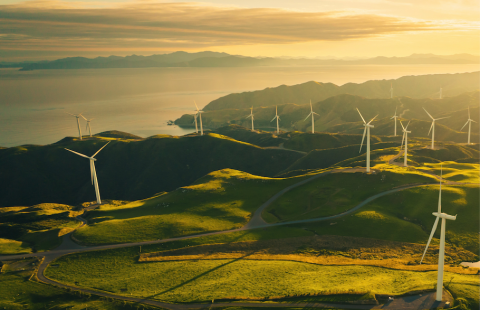
Renewables in remote sites: Several mines have already adopted renewables to cover 80%-100% of their electricity needs, with benefits including reduced diesel costs and improved energy security. In Chile, mining companies including BHP and Rio Tinto have adopted a 90% renewable electricity target in line with the government’s objective. However, in WA’s Pilbara region, where these miners also operate, renewables only make up 2% of the electricity mix.
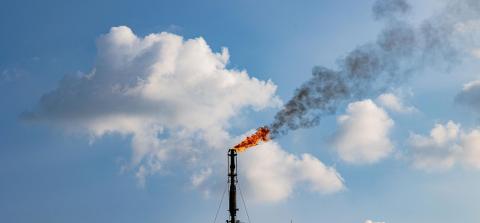
Methane capture and use in coal and gas operations: Vast amounts of methane could be captured instead of released in the atmosphere, at a cost-benefit or a lower cost than carbon offsets as the methane recovered can be sold or used onsite. Despite this, coal, oil and gas companies are using carbon credits instead of taking action on methane, representing more than two-thirds of units surrendered under the Safeguard Mechanism.
Coal, oil and gas producers are the largest users of carbon credits, and growing fast
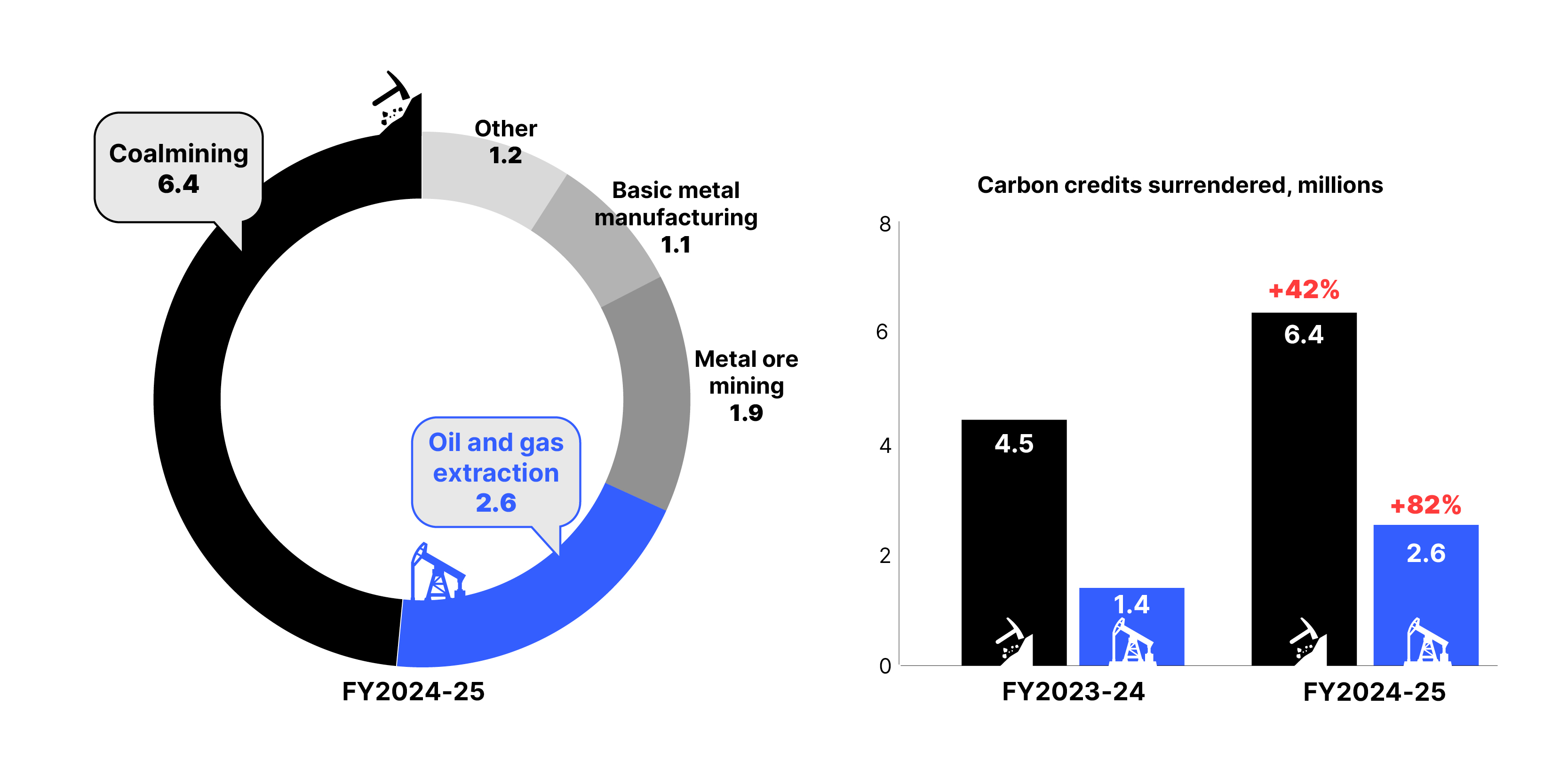
Source: IEEFA, The coal-fired carbon market
Clinker substitution in cement: Reducing the share of clinker in cement by substituting it with recycled materials or natural products is one of the easiest ways to reduce the sector’s emissions. Yet Australia lags globally with 84% clinker content compared with the 71% global average.
Adoption of these cost-effective measures is limited by a range of barriers, including regulatory hurdles, lack of policy support and incentives, tight competition for capital, electricity supply challenges and low business priority.
IEEFA recommends reforming the Safeguard Mechanism to constrain the use of carbon offsets, especially when companies have access to emissions reduction opportunities at a lower cost, as an important first step to accelerate industrial decarbonisation.
Complementary policies would be required to overcome several of the barriers, as well as for facilities not covered by the Safeguard Mechanism. Examples of what has been implemented successfully by other countries include:
• Energy management policies
• Financial incentives for IHPs, mining BEVs and decarbonisation plans
• Cement standards update
• Mining renewable electricity targets
• Methane capture requirements
Material reductions in industrial emissions could be achieved by 2035, and make Australia’s industry stronger and more competitive internationally. But it requires stronger and broader policy intervention than the existing framework provides.


Related Content