Funding Southeast Asia’s renewable investment through import savings
Download Briefing Note

Key Findings
Southeast Asia’s reliance on imported fossil fuels poses significant macroeconomic and energy security risks. Fossil fuels met over 70% of incremental energy demand between 2015 and 2024, and the region’s import bill is estimated to rise from USD82 billion to USD245 billion by 2035 under current policies.
Southeast Asia could reduce its reliance on imported fossil fuels by accelerating renewable energy deployment. A 450-gigawatt (GW) buildout of solar and wind by 2035 could add around 83 terawatt-hours (TWh) of clean generation annually, displacing a further 17% of power generated from imported fuels each year.
Replacing fossil fuel imports with renewable assets could deliver significant foreign-exchange savings for Southeast Asia. A 450GW solar and wind buildout would require an estimated USD288 billion in capital expenditure, including USD170 billion in imported equipment, while avoided fuel imports could save an additional USD8.2 billion each year.
Accelerating renewable deployment could improve Southeast Asia’s fiscal and external balances while enhancing energy security. Reducing reliance on dollar-denominated fuel imports could ease balance-of-payments pressures, limit subsidy burdens, and strengthen sovereign creditworthiness by lowering exposure to fuel-price and currency volatility.
Southeast Asia faces growing macroeconomic risks from its reliance on imported fossil fuels. Between 2015 and 2024, fossil fuels met more than 70% of the region’s incremental energy demand. Its energy import bill reached USD82 billion in 2024 and, under current policies, is projected to increase to USD245 billion by 2035. The Middle East supplies 60% of the region’s crude oil imports and one-third of its gas imports.
Power generation accounts for approximately 30% of Southeast Asia’s fossil-fuel import bill, or around USD48 billion annually, when coal is included. This could rise to USD60 billion under current policies. Imported fuels are estimated to account for 35% of the region’s total electricity generation.
Renewable energy offers a way to reduce this exposure. Southeast Asian countries have set significant renewable energy targets to support decarbonization. Indonesia, Vietnam, the Philippines, Thailand, and Malaysia seek to add 450 gigawatts (GW) of solar and wind capacity by 2035, requiring an estimated USD288 billion in capital expenditure (capex).
Approximately 40% of this would be spent domestically on civil works and labor, rising to 50% for major solar equipment exporters such as Vietnam and Malaysia. The remaining imported equipment costs are estimated at USD170 billion over the decade, or equivalent to approximately USD17 billion annually.
The economic case for replacing recurring fuel imports with one-time capital investments is compelling. Achieving 450GW of new solar and wind capacity over a decade would require annual additions of 45GW. Each year’s additions would produce 83 terawatt-hours (TWh) of clean generation, displacing about 17% of power-sector fuel imports and saving USD8.2 billion in incremental foreign exchange (forex) annually. Net forex outflows would narrow to just USD0.6 billion in year three, turning into a USD7.6 billion saving in year four. Cumulative forex savings would exceed to date equipment import costs by the end of year five, and imported fuels for electricity would be fully displaced in about six years in such a scenario. Ember estimates that generating equivalent power from solar instead of the 200GW of natural gas-fired capacity projected for the Association of Southeast Asian Nations (ASEAN) would save up to USD67 billion annually in fuel costs.
This transition would also reduce the region’s exposure to balance-of-payments, currency, and fiscal risks. As fossil fuel trade is generally priced in United States (US) dollars, higher commodity prices and depreciating local currencies can reinforce each other, driving imported inflation and widening current-account deficits. In Thailand, every USD10-per-barrel increase in crude prices reduces the current-account balance by 1.1 percentage points of gross domestic product (GDP). In the Philippines, a current-account deficit of 3.5% leaves the peso structurally exposed to external shocks. In Indonesia, every USD1 increase in crude prices adds IDR7 trillion to the fuel subsidy bill, increasing the risk of exceeding the 3% statutory ceiling.
These pressures have constrained fiscal headroom and contributed to decisions by some major credit rating agencies to lower their sovereign rating outlooks for Indonesia and the Philippines. Public debt remains elevated across the region, reaching 66% of GDP in Malaysia and 64% in the Philippines, while governments continue to provide emergency extra-budgetary assistance, price caps, and subsidy fund loans.
Accelerating renewable deployment would replace recurring, dollar-denominated fuel imports with domestic clean energy generation. This would reduce exposure to fuel-price and currency volatility, ease pressure on public finances, strengthen sovereign creditworthiness, and enhance energy security.
Southeast Asia’s fossil fuel import bill could triple without faster clean energy investment
Southeast Asia is among the world’s fastest-growing economic regions, accounting for around 4% of global GDP in 2024. Rapid economic expansion, rising incomes, and population growth have driven an increase in energy consumption. Between 2015 and 2024, the region accounted for about 10% of global energy demand growth, with total demand rising by 40% over the same period — equivalent to an average annual increase of 4%.
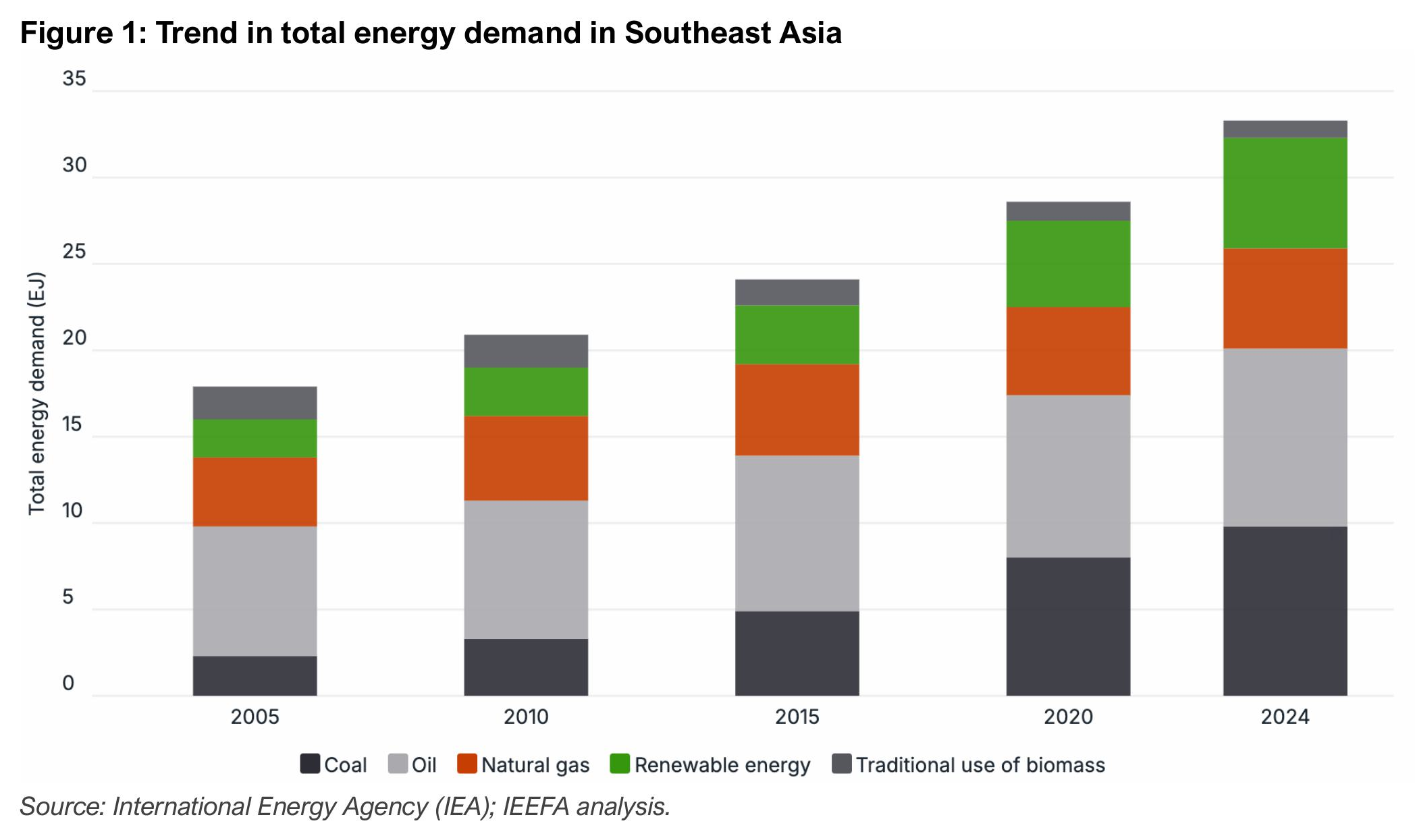
Fossil fuels remain the dominant energy source in Southeast Asia (Figure 1), meeting more than 70% of the region’s additional energy demand since 2015. Renewables accounted for around one-third of the increase, while traditional biomass use declined. As domestic production has failed to keep pace with demand, the region has become increasingly reliant on imported fossil fuels, particularly oil. This dependence has left it exposed to disruptions in global fuel markets, such as recent tensions around the Strait of Hormuz. According to the International Energy Agency (IEA), the Middle East supplies around 60% of the region’s crude oil imports and one-third of its gas imports. Approximately 45% of the region’s refined oil products are made from Middle Eastern crude.
Southeast Asia is projected to account for 20% of the increase in global energy demand by 2035, potentially deepening its dependence on imported fuels without structural changes to its energy system. In 2024, the region’s total energy import bill stood at USD82 billion. Under the IEA’s Current Policies Scenario (CPS), which reflects energy transition measures already embedded in existing laws and regulations, the bill could triple to around USD245 billion by 2035. However, if countries deliver on their Announced Pledges Scenario (APS), including their Nationally Determined Contributions (NDCs) and net zero targets, fossil fuel import costs could be halved over the same period. Clean energy investment reached USD47 billion in 2025, up from USD30 billion in 2015, but remains significantly below the estimated USD190 billion required annually in 2035 to meet these pledges.
Currently, eight of the eleven Southeast Asian countries have announced net zero commitments, with Myanmar, the Philippines, and Timor-Leste as the exceptions. Most countries target 2050 for achieving net zero emissions, while Indonesia and Thailand have set later timelines of 2060 and 2065, respectively.
The 2026 Middle East energy crisis highlights a recurring vulnerability
Energy mixes vary across Southeast Asia, but the region remains heavily dependent on fossil fuels (Figure 2), which accounted for an average of 76% of its total regional energy supply in 2023. Renewable energy was present in only a few countries.
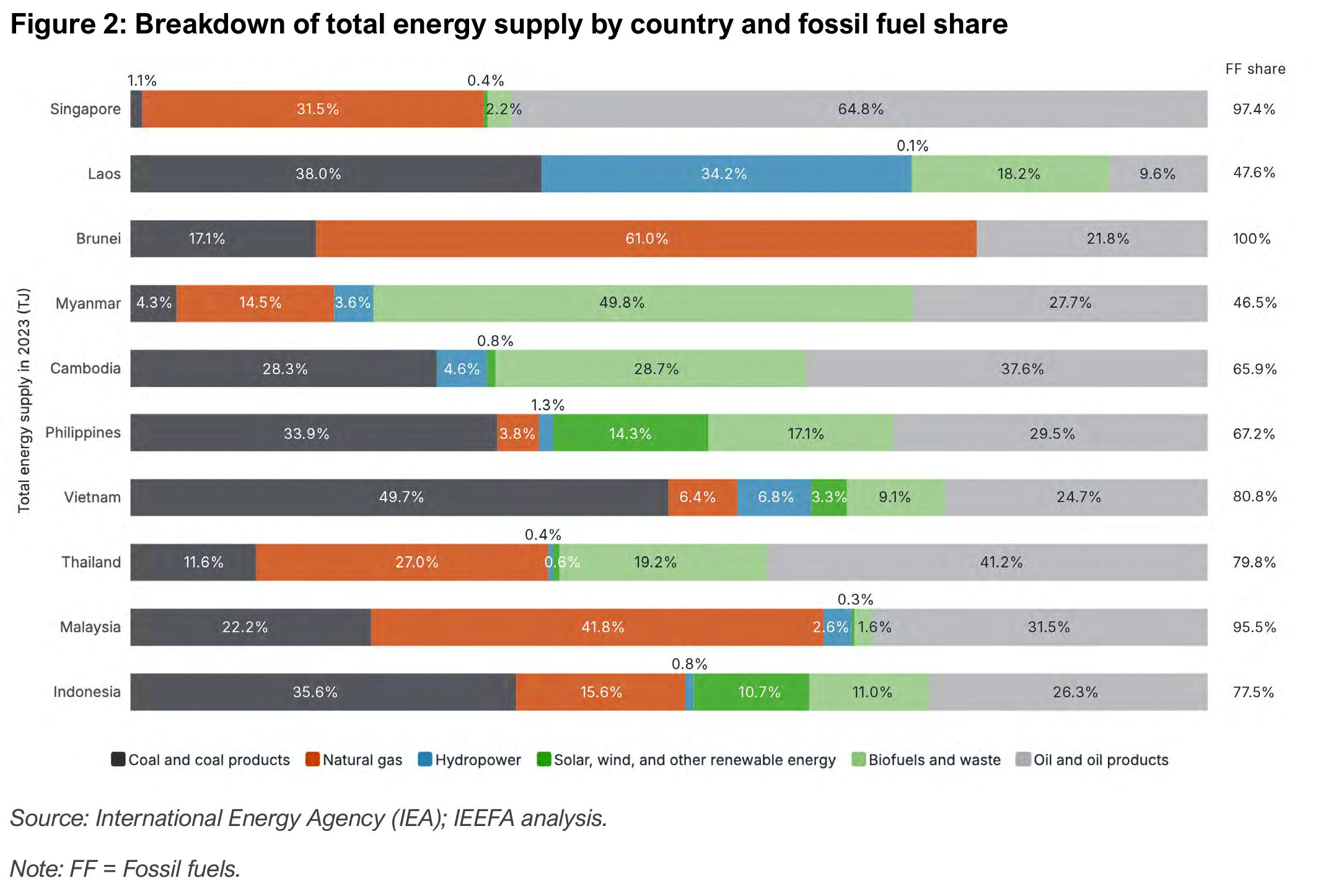
Most Southeast Asian countries are net energy importers, leaving them exposed to global fuel price volatility. Russia’s invasion of Ukraine in 2022 pushed up fuel costs and import bills across the region, while supply disruptions following the 2026 Middle East conflict have triggered another sharp increase in energy import bills.
Fossil fuel import trends by country
A closer look at fossil fuel imports in selected Southeast Asian countries shows that import bills have increased since the 2026 Middle East conflict.
Vietnam
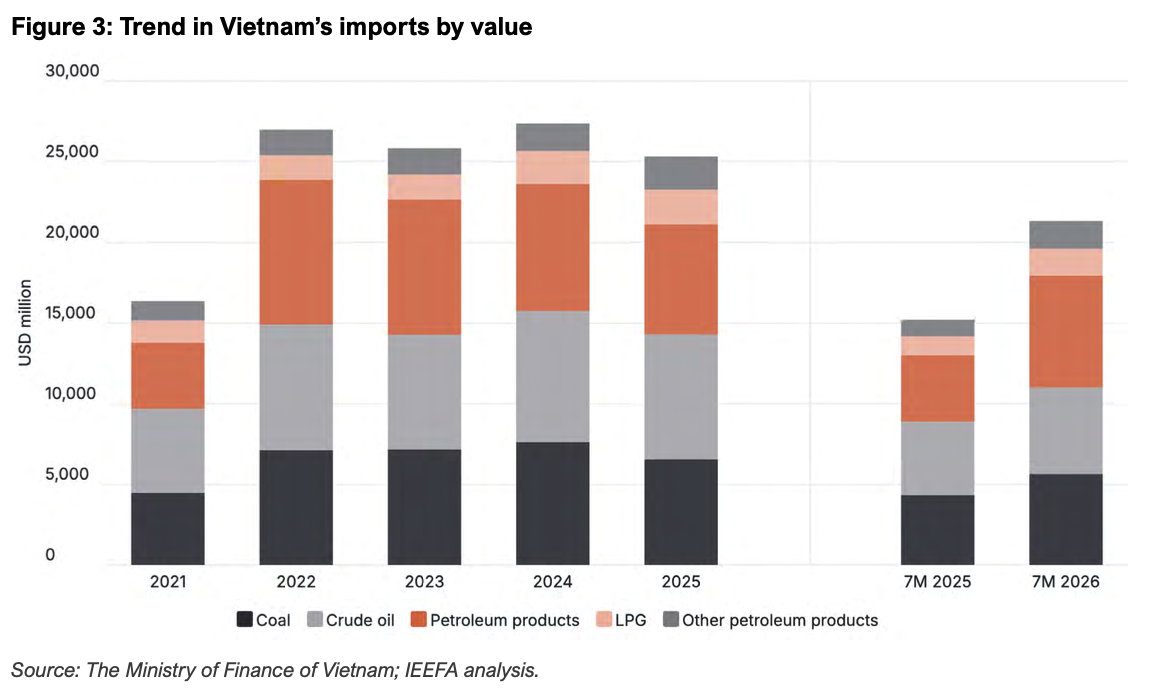
Vietnam’s energy import bill reached USD25.3 billion in 2025, up by 55% from 2021 (Figure 3). Coal remained a major component of the country’s imports, accounting for 26% of the total import value, while crude oil and petroleum products accounted for 31% and 27%, respectively. In the first seven months of 2026, the energy import bill rose by 40% year-on-year (YOY) to USD21.3 billion, with coal import volumes increasing by 10% to 47.4 million tonnes (Mt).
Coal imports reached a record 65.4Mt (USD6.6 billion) in 2025, up from 36.3Mt (USD4.5 billion) in 2021. This increase was driven by the continued expansion of coal-fired power generation, with installed coal capacity reaching 28GW by the end of 2025, accounting for 32% of total installed power capacity. Coal import demand is expected to remain high at 60–100Mt annually between 2025 and 2030. In June 2026, Vietnam introduced a special mechanism allowing domestic coal mining license holders to extract coal beyond the limits specified in their permits, citing national energy security concerns following recent energy supply disruptions.
Thailand
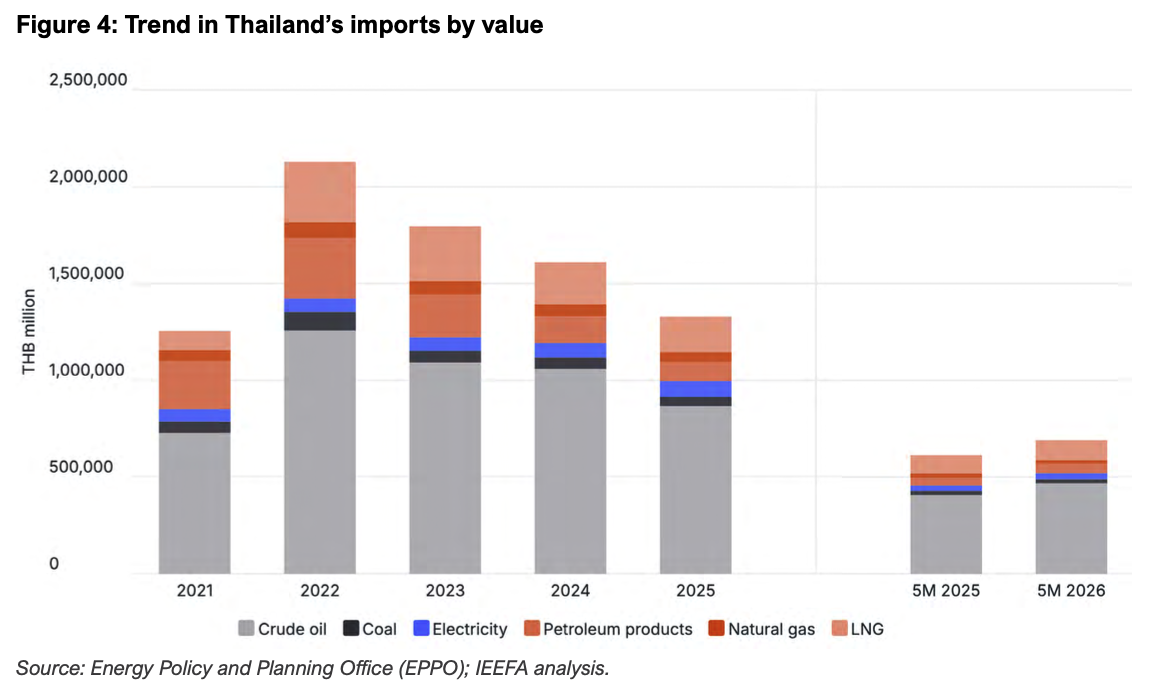
Thailand’s fossil fuel import bill reached THB1.3 trillion (USD39.3 billion) in 2025. This was slightly higher than in 2021 but below the 2022 peak (Figure 4). Crude oil continued to dominate the energy import bill, accounting for 65% of the total import value in 2025. Crude oil import volumes rose by 12% between 2021 and 2025, from 50.1 billion liters to 56.3 billion liters, while spending on crude imports increased by 19%, reflecting higher global crude oil prices. In the first five months of 2026, crude import volumes fell 3% YOY, from 24.8 billion liters to 24.0 billion liters, but their value rose by 15%.
The transport sector, which relies heavily on oil-based fuels, accounts for nearly half of Thailand’s final oil product consumption. This reliance persists despite the rapid uptake of electric vehicles (EVs), supported by various government incentives. EVs accounted for 23% of new passenger car sales in 2025, compared with just 1% in 2020. However, they still represent a small share of the overall vehicle fleet.
The Philippines
The Philippines’ heavy reliance on fossil fuels leaves it vulnerable to global energy market disruptions. The country imports 98% of its crude oil from the Middle East, while the transport sector accounts for about two-thirds of total final oil product consumption. This dependence on imported oil has heightened the impact of recent supply disruptions, prompting the government to declare a national energy emergency in March 2026. The declaration gives the government more control over fuel price adjustments and allows it to take measures to secure fuel supplies and contain prices. The government has also resorted to emergency suspensions of the fuel excise tax to shield consumers from rising pump prices.
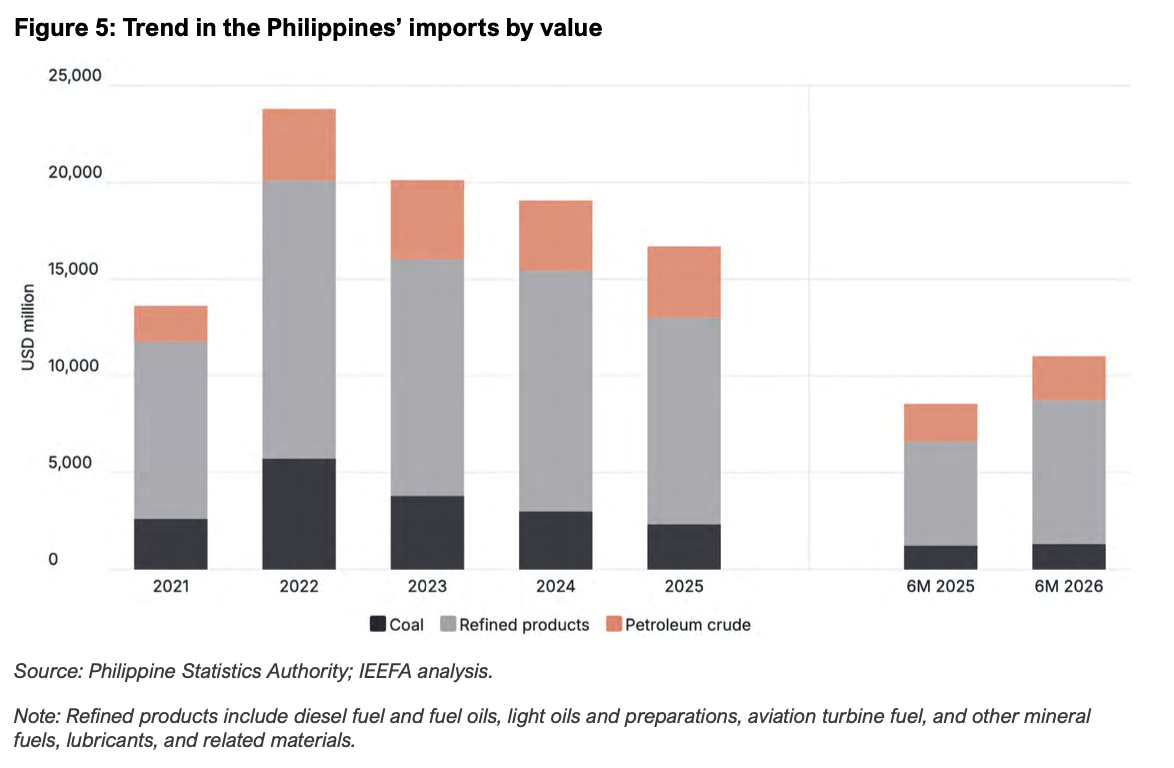
Fuel costs also significantly impact the power sector. The Philippines has the second-highest electricity prices in Southeast Asia, after Singapore. In response to higher fuel costs and energy security concerns, the government has sought to boost output from existing coal-fired power plants. Coal imports reached 19.1Mt (USD1.3 billion) in the first half (H1) of 2026, slightly higher than in H1 2025. Most of these imports came from Indonesia.
Malaysia
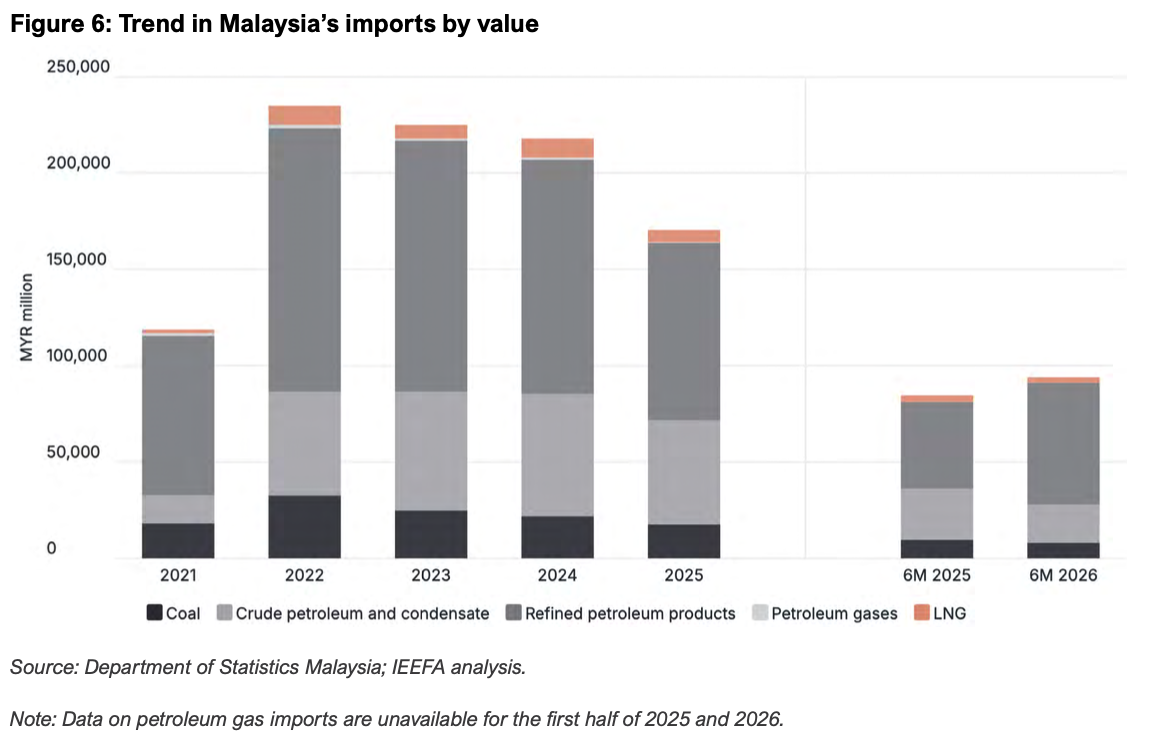
Malaysia remains a net energy exporter, mainly because of its substantial exports of liquefied natural gas (LNG) and refined petroleum products, which totaled 63.3Mt in 2025. However, this surplus masks a growing dependence on imported oil. Crude oil and condensate imports more than tripled from 6.5Mt (USD3.5 billion) in 2021 to 22.9Mt (USD13.2 billion) in 2025. The increase in crude imports reflects the widening gap between declining domestic oil production as fields mature and the country’s refining and consumption needs. This leaves Malaysia increasingly exposed to global oil price volatility and adds to the government’s fuel subsidy costs. Fuel subsidies in 2026 may reach MYR40 billion (USD9.8 billion), or approximately 1.9% of GDP, more than double the MYR15 billion (USD3.7 billion), or 0.7% of GDP, initially allocated in the national budget.
Indonesia
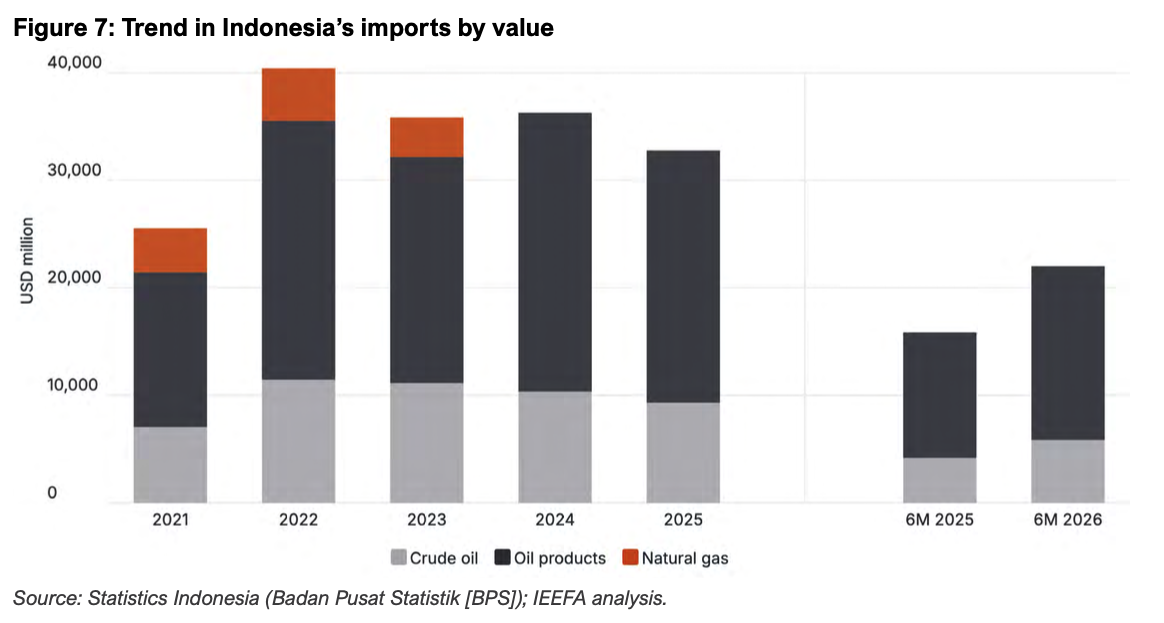
Indonesia has been a net oil importer since 2003, as domestic crude production has declined while demand has continued to rise. The transport and industrial sectors together account for more than 80% of the total final consumption of oil products. In 2025, Indonesia imported 55.3Mt of oil and gas, valued at USD32.8 billion. Similar to Malaysia, Indonesia’s growing import dependence exposes the country to global oil price volatility and adds pressure to the government’s fuel subsidy bill. In the first six months of 2026, the value of these imports was approximately 40% higher than in the same period in 2025, driven by higher global market prices amid the Middle East conflict.
Rising fossil fuel import and subsidy bills are compounding fiscal pressures
Recent analyses from the Institute for Energy Economics and Financial Analysis (IEEFA) have highlighted the high cost and energy security risks of relying on imported fossil fuels, particularly LNG, as well as the fiscal burden of fossil fuel subsidies. These pressures underscore the opportunity to shift towards more secure and lower-cost renewable energy as renewable technologies become cheaper and more widely available.
Fiscal and balance-of-payments pressures can contribute to sovereign rating downgrades and higher interest rates, particularly during periods of external stress. This is especially relevant now, as several Southeast Asian sovereigns were already facing rating pressures before the start of the Middle East conflict.
Indonesia faces negative sovereign rating outlooks from Fitch (BBB/Negative) and Moody’s (Baa2/Negative), reflecting concerns over weak policy predictability, governance, and large government spending plans. These pressures are compounded by a rising fuel subsidy bill amid higher global oil prices, significant foreign capital outflows, and rupiah depreciation. The central bank has also raised interest rates by a cumulative 100 basis points in 2026. Higher fiscal costs, external financing pressures, and tighter monetary conditions could further weaken Indonesia’s economic and sovereign credit profile.
The Philippines’ negative outlook from Fitch (BBB/Negative) reflects risks to public investment from a contraction in public construction and high borrowing costs, as well as exposure to global energy shocks given its high dependence on fuel imports. Targeted fuel consumption subsidies introduced to cushion households from rising prices add to fiscal pressures. Imported inflation also contributed to the pressures that prompted the Philippine central bank to hike rates by a cumulative 75 basis points in 2026.
Thailand also faced a negative outlook from Fitch until recently, with the agency affirming its BBB+ rating while citing policy uncertainty, slowing global demand, delayed tourism recovery, and household deleveraging. Fitch revised the outlook to stable on 18 September 2026. However, substantial subsidies for liquefied petroleum gas (LPG) and oil have left the country’s Oil Fuel Fund in significant deficit, leading the government to approve loans to shore up the fund. Baht depreciation has further increased the cost of imported energy, and the country’s narrowing current-account surplus could eventually turn into a deficit, adding to external vulnerability.
Southeast Asia has experienced sovereign credit deterioration before. During the 1997–1998 Asian financial crisis, several regional sovereigns, including Indonesia, Thailand, and Malaysia, suffered substantial rating downgrades as currency depreciation, capital outflows, banking-sector stress, and weakening fiscal and external positions reinforced one another. The downgrades led to increased sovereign borrowing spreads and higher financing costs. Indonesia and Thailand both received financial assistance from the International Monetary Fund (IMF). While the current energy shock is less severe, prolonged high energy prices could set off a similar, if milder, chain of pressures.
According to S&P Capital IQ Pro data, public debt remains elevated across the region, reaching 66% of GDP in Malaysia in 2025, followed by the Philippines (64%), Thailand (59%), Vietnam (49%), and Indonesia (41%). Fiscal deficits are also sizeable, with the Philippines recording the largest deficit at 5.6% of GDP in 2025, followed by Thailand (4.1%), Malaysia (3.8%), Vietnam (3.6%), and Indonesia (2.9%). Debt and deficit levels could rise further if disruptions to Middle East export routes and uncertainty in the fossil fuel markets persist into 2027.
Currency vulnerability from fossil fuel dependence
Fossil fuel dependence also affects national finances and stability through the trade balance, balance of payments, and exchange rate. Fossil fuel imports are typically denominated in US dollars, which a country must either earn through exports or buy from international forex markets. A weaker currency raises the cost of energy imports, regardless of any change in global commodity prices. In turn, higher import prices mean that more dollars are needed for the same volume of imports, which can weaken the local currency as it is sold to buy US dollars. These dynamics can reinforce each other when fossil fuel prices rise. Fuel subsidies also create a direct fiscal link between exchange rates and public expenditure, an effect particularly evident in Indonesia and the Philippines in recent years.
The Indonesian rupiah has been under pressure since late 2024 and fell to a record low in June 2026. Fossil fuel dependence is a key structural driver of these price and exchange rate pressures. Indonesia’s oil and gas import bill rose sharply in early 2026, nearly eliminating the trade surplus. Fuel subsidies, budgeted at IDR381 trillion (USD22.5 billion) for 2026 based on a USD70 per barrel assumption, are now substantially underfunded. Every USD1 increase in oil prices adds an estimated IDR7 trillion (USD409 million) to the fuel subsidy bill. Combined with the rupiah’s depreciation to IDR16,900 per US dollar, these pressures could add more than IDR200 trillion (USD11.83 billion) to the fiscal burden. Indonesia’s finance minister has also stated that the increase in oil prices would likely raise the fiscal deficit to 3.6% of GDP, above the legal ceiling of 3%, which could require budget cuts elsewhere. Based on an assumed cost of USD500,000 per megawatt (MW) and 25–40% domestic content, the USD11.83 billion could instead fund 22GW of solar photovoltaic (PV) investment.
The Philippine peso also fell to historical lows against the US dollar in early 2026. While the Philippines does not operate broad-based retail fuel subsidies, the impacts of oil price increases and currency depreciation are passed directly through to consumers, driving cost-push inflation. With a current account deficit of 6.4% of GDP, the peso is structurally one of Asia’s most vulnerable currencies to oil price shocks.
Thailand’s domestic inflation is highly sensitive to the impact of oil price increases. A USD10 per barrel increase in crude prices is estimated to reduce the current account balance by 1.1 percentage points of GDP and raise the Consumer Price Index (CPI) by about 0.8 percentage points. Thailand caps diesel prices through a dedicated fund, creating a fiscal obligation that increases with global oil prices or the baht’s depreciation.
In Vietnam, the State Bank of Vietnam sold approximately USD9.4 billion in forex reserves in 2024 to help stabilize the dong, partly due to energy import pressures. The country’s Fuel Price Stabilization Fund, financed by petroleum excise revenues, has faced renewed strain amid higher oil prices, necessitating a VND8 trillion advance from the central budget in 2026.
Breaking the dependence on imported energy: Costs versus savings
Reducing reliance on imported fossil fuels could help Southeast Asian countries mitigate fiscal and external pressures. Cutting foreign-currency spending on energy imports and transitioning to renewables would likely strengthen energy self-sufficiency, ease pressure on domestic currencies, and improve countries’ balance of payments.
Potential for fossil fuel displacement in the power sector
As demonstrated by Vietnam and Pakistan, the power generation sector can transition rapidly from fossil fuels to renewable energy, particularly solar, when supportive policies and incentives are in place. This analysis focuses on fossil fuels imported for electric power generation to estimate the share of fuel consumption that could be displaced by renewables combined with battery storage. While the transportation sector accounts for the bulk of regional fossil fuel consumption, its transition to electrification is likely to occur over a longer timeline; therefore, a cost-benefit analysis is not attempted here.
For Southeast Asian countries, IEEFA’s analysis of the existing mix of coal, gas, and oil use against reported country-level import volumes indicates that about 30% of fossil fuel imports are used for power generation. This is the component that is likely to be directly displaced by solar, wind, and battery storage.
Recent energy disruptions have strengthened momentum for renewable energy deployment. The Philippines, for instance, became the second-largest destination for Chinese solar exports in the first quarter (Q1) of 2026, with imports around three times higher than in Q1 2025. Indonesia has also launched its 100GW solar power program, targeting completion by 2029, to reduce reliance on fossil fuels and strengthen energy security.
Existing country targets and favorable market conditions indicate significant potential for renewable energy growth and fossil fuel displacement. This could have a material impact on fiscal balances in Southeast Asia. While the investment costs of transitioning to renewables and storage are substantial, they can be offset over time by savings from reduced fossil fuel imports, strengthening economic and fiscal resilience.
Costs and foreign exchange savings from renewable energy deployment
The cost of installing renewables varies by country, depending on labor costs, tariff policies, and project location. For comparison, this analysis uses a range of costs based on published data from the International Renewable Energy Agency (IRENA), IEA, Bloomberg New Energy Finance (BNEF), and Lazard.
The capex assumed for Southeast Asia is approximately USD600 per kilowatt (kW) for utility-scale solar and USD800–1,400/kW for onshore wind. These figures represent total installed system costs, including equipment that may be imported and paid for in foreign currency, such as solar panels (modules or cells) and wind turbines. Based on prior IEEFA studies, balance-of-systems (BOS) costs typically range from 50–65% of total investment and can largely be supplied domestically. As a result, the total installed cost of projects includes a significant domestic share that requires no forex.
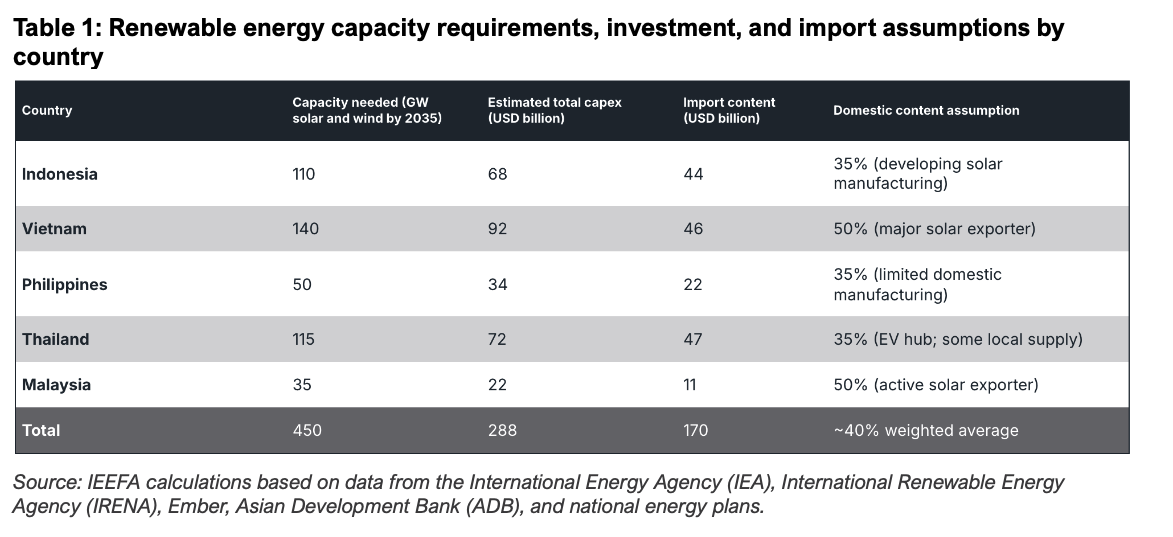
In a solar PV system, the modules and core equipment, which are often imported, typically account for about two-thirds of the total project cost. Based on this guideline, domestic content in Indonesia, Thailand, and the Philippines is estimated at 35–40%, mainly reflecting civil works, labor, and locally sourced mounting structures. This share could increase further as deployment expands and domestic supply chains and supporting industries develop.
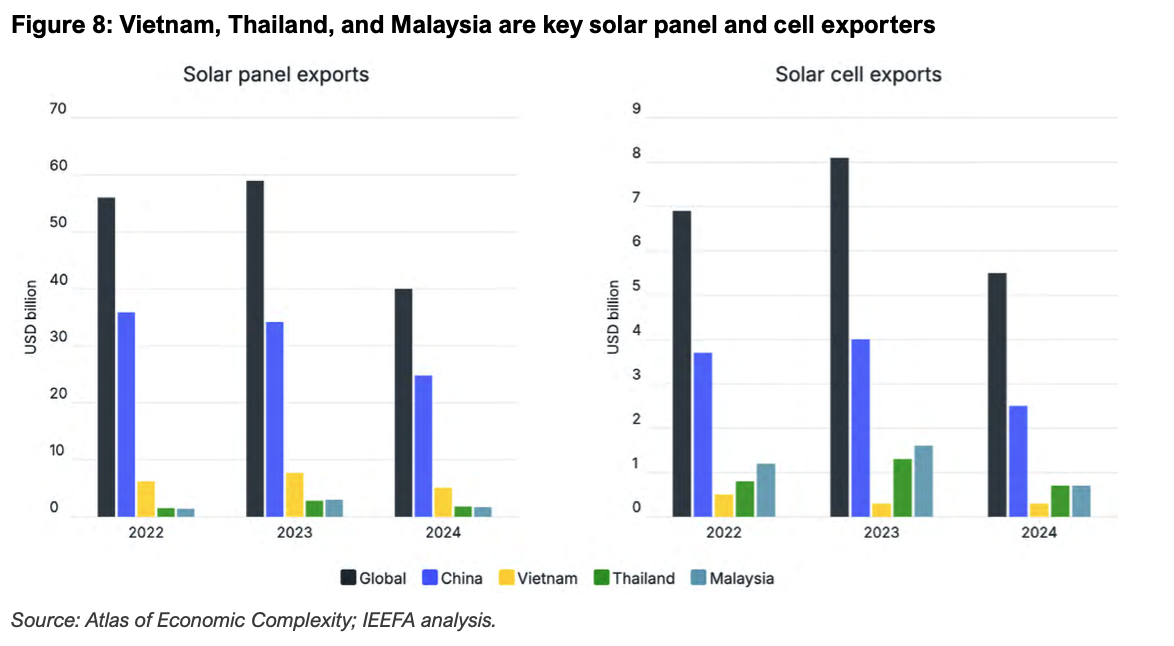
Domestic content is likely to be higher in Vietnam, Thailand, and Malaysia, which are already significant exporters of solar modules and panels (Figure 8). In 2024, these countries accounted for 12%, 6%, and 5% of global exports, respectively. Expanding domestic solar deployment in these markets could therefore retain a greater share of equipment value within the national economy through local manufacturing capacity and associated export earnings.
For this analysis, approximately 60% of renewable energy capex is assumed to be imported, covering solar modules, inverters, wind turbines, and transformer equipment.
Renewable investments can reduce fuel import costs
Southeast Asia’s renewable capacity stood at 120GW in 2024. Under current policies, this is projected to nearly triple to 360GW by 2035. Achieving announced targets would increase capacity fivefold to around 600GW over the same period. Separately, Agora Energiewende's 2024 benchmarking study estimates that Southeast Asia needs to add at least 23GW of solar capacity and 2–6GW of wind capacity annually through 2030 to remain on a net-zero-compatible trajectory — reaching approximately 300GW by 2030 and 450GW by 2035.
This analysis models the addition of 450GW of solar and wind capacity based on countries’ announced commitments. With falling renewable equipment prices, this investment could translate into lower levelized costs of electricity (LCOE) and power prices compared with LNG- and coal-based power.
The benefits are also significant from a balance-of-payments and foreign-exchange perspective. Southeast Asia has an annual fossil fuel import bill (including coal) of USD160 billion. Approximately 30% of this, or USD48 billion annually, is used for electricity generation. This figure could rise to USD60 billion if the total fossil fuel import bill exceeds USD200 billion in 2–3 years under the IEA’s CPS. Imported fuels are estimated to account for approximately 35% of power generation (around 490TWh). (Refer to Appendix I for estimation methodology.)
By comparison, establishing 450GW of solar and wind capacity would require an estimated USD288 billion in investment (Table 1). IEEFA estimates that USD170 billion of this would be spent on imported renewable machinery and components by 2035 (approximately USD17 billion per year). Assuming the 450GW capacity is added evenly over the 10 years, each year would add 45GW, generating an estimated 83TWh of additional renewable energy (based on a 21% capacity factor for the newly installed capacity). This would be equivalent to a 17% reduction in generation from imported fuels. At this pace, Southeast Asia could substantially reduce its reliance on imported fossil fuels for power generation within six years, potentially eliminating much of the current import requirement. (Refer to Appendix II for more details.)
Foreign exchange savings could offset renewable equipment imports
Replacing fossil fuel imports with renewable energy could substantially reduce the region’s forex requirements. Under IEEFA’s deployment scenario, installing 45GW of renewable capacity annually would require USD17 billion in equipment imports each year. Assuming no fuel import savings in the first year, annual savings would begin at USD8.2 billion in year two, reducing net forex outflows to USD8.8 billion.
In the third year, annual forex savings from reduced fuel imports would nearly offset the year’s equipment import costs, resulting in a net annual outflow of just USD0.6 billion (USD17 billion minus USD16.4 billion). In the fourth year, annual savings would be an estimated USD7.6 billion, with the net annual benefit increasing by USD8.2 billion in each subsequent year. By the end of the fifth year, cumulative forex savings from reduced energy imports would be almost equal to cumulative spending on renewable equipment imports. By year 10, annual forex savings would be four times the annual cost of equipment imports.
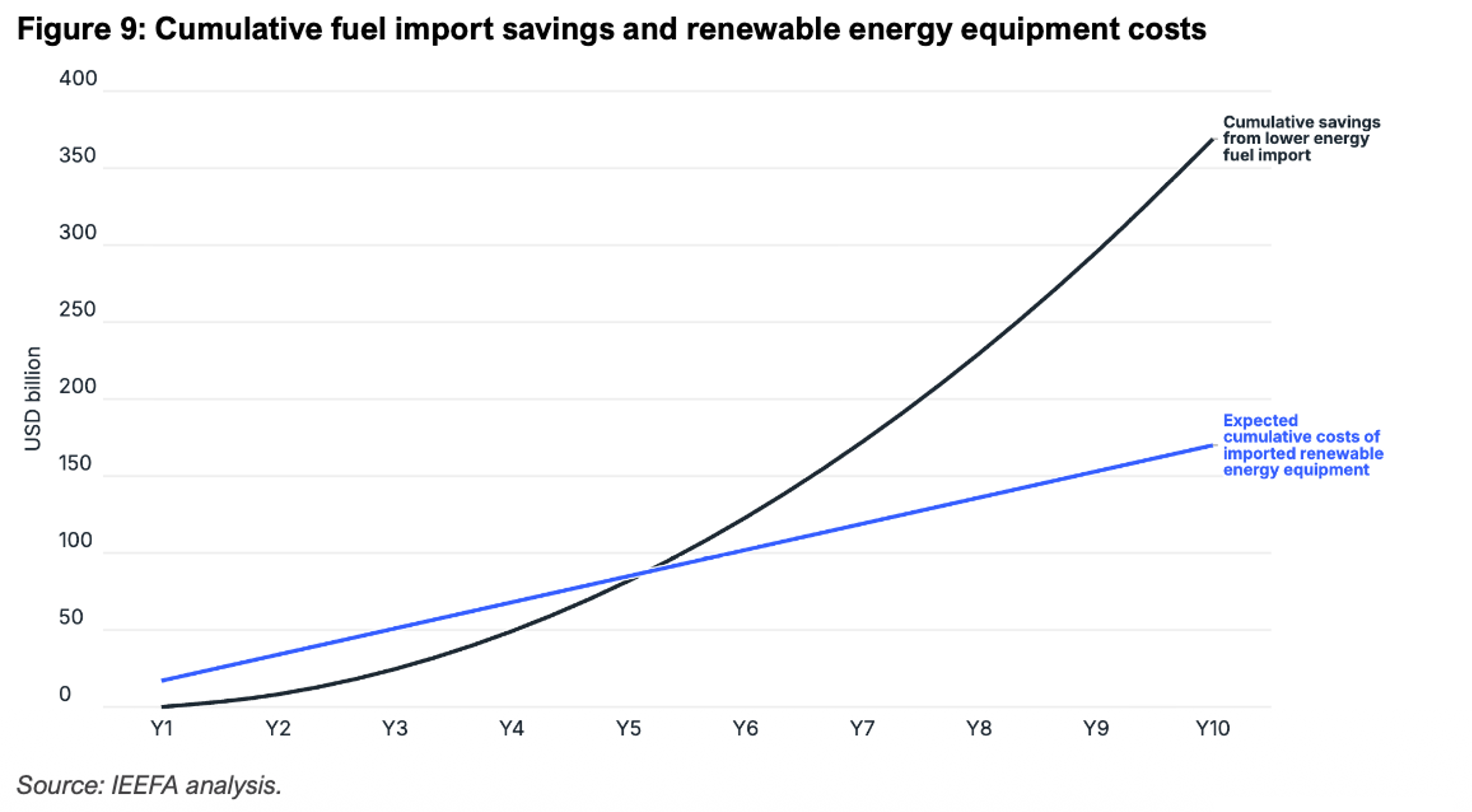
These estimates are illustrative, and actual benefits may vary depending on implementation, policy conditions, and the pace of renewable deployment. However, effective implementation could deliver substantial savings. While this analysis does not account for storage costs, other forms of generation would continue to provide firm power in the initial years, when renewable generation would represent a relatively small share of the system. By around the fifth or sixth year, as renewable generation accounts for a more substantial share, the forex savings could be used to finance additional storage investment.
There is a fundamental and significant difference between spending forex on recurring imports of fossil fuels over the next 20–25 years and the one-time cost of importing renewable energy equipment. Research by Jakob and Overland (2025) estimates that countries could save USD140 billion by 2030 if they pursued their NDC goals. These findings provide further evidence of the economic benefits of reducing fossil fuel dependence.
Similarly, according to Ember, gas-fired generation capacity in ASEAN is projected to reach 200GW by 2030 under the region’s energy transition scenario. The think tank had estimated in March 2026 that at the then Japan-Korea Marker (JKM) LNG price, generating electricity from this gas capacity would cost approximately USD71 billion annually. The JKM price of LNG has since nearly doubled to USD27.76 per million British thermal units (MMBtu). In contrast, producing the same amount of electricity from solar would cost around USD42 billion, potentially saving up to USD100 billion.
Renewables capacity added since 2010 has already reduced countries’ reliance on imported fossil fuels. Without this capacity, global coal and gas imports in 2023 would have been around 45% higher, and fuel-importing countries would have spent an additional USD1.3 trillion on these imports between 2010 and 2023. In Southeast Asia, imported fuels would have supplied 55% of Thailand’s electricity generation in 2023, compared with the actual 42%, while Vietnam’s reliance would have increased to 30% from 16%. Even at the current moderate levels of renewable deployment, the strategy of transitioning from fossil fuels towards renewables is delivering economic benefits.
Renewable energy as a fiscal and macroeconomic stabilizer
The shift to renewable energy provides a long-term buffer against fossil fuel price fluctuations and associated currency volatility. Once installed, renewable generation typically has relatively stable operating costs and limited exposure to fuel price volatility. Over time, lower energy costs could strengthen external balances, ease the fiscal burden of energy subsidies, and reduce pressure on sovereign creditworthiness. Greater fiscal and external stability could, in turn, boost investor confidence and reduce the risk of higher borrowing costs during periods of external stress.
The implications are particularly pronounced for Indonesia and the Philippines. Indonesia's 2026 energy subsidy budget of USD22.5 billion could be exceeded by more than USD11 billion if Brent crude averages USD92 per barrel instead of the budgeted USD70 per barrel. Redirecting an equivalent amount of fiscal resources could finance more than 20GW of solar generation capacity, sufficient to meet Indonesia's planned annual renewable energy additions for several years. This illustrates how reducing exposure to fossil fuel prices can lower subsidy burdens and free up resources for investment in the renewable energy transition.
Southeast Asian economies can reduce energy costs, strengthen energy security, and limit macroeconomic and forex-related volatility by replacing imported fossil fuels with renewables. Forex savings are likely to more than offset the capital costs of this transition. The time is ripe for the region to reduce its exposure to the risks associated with imported fossil fuels.
Appendix I
For Southeast Asia, the estimated split of fossil fuel imports by energy content is based primarily on data from the IEA’s Southeast Asia Energy Outlook 2024 and 2025. Crude oil and refined products make up an estimated 65–70% of the region’s fossil fuel imports, followed by coal (20–25%), and natural gas, primarily LNG (10–15%).
Oil and refined products are primarily used in the region’s transportation sector. The use of oil as a source for large-scale power generation is negligible. Conversely, most imported coal is used for power generation, and LNG is also primarily used for power generation.
This analysis assumes that 30% of Southeast Asia’s fossil fuel imports are used for power generation. This share represents the portion of fossil fuel imports that could potentially be displaced by renewable energy over time.
Appendix II
A 21% capacity factor implies that each annual 45GW tranche would generate 45GW × 8,760 hours × 21% = 83TWh of electricity. This would displace about 17% of the 490TWh of current electricity generation from imported fossil fuels (35% of Southeast Asia's total annual generation of 1,400TWh).
Southeast Asia imported fossil fuels (including coal) worth USD160 billion in 2024, of which approximately 30%, or an estimated USD48 billion, was used for power generation. A 17% reduction in power generation from imported fossil fuels equates to a USD8.2 billion reduction in the import bill. Each year would see a further USD8.2 billion reduction in the import bill. These savings would be set against annual renewable equipment imports of USD17 billion.


Related Content