Planning for an effective energy transition in Bangladesh

Key Findings
In the face of volatile fossil fuel import costs, rising subsidies, and other pressures on the power and energy sectors, Bangladesh needs to plan for an effective energy transition as more than just a climate imperative.
Bangladesh is paying 30% to 150% more for spot liquefied natural gas (LNG) than before the Middle East crisis, with per-unit subsidies approaching BDT95 per cubic metre.
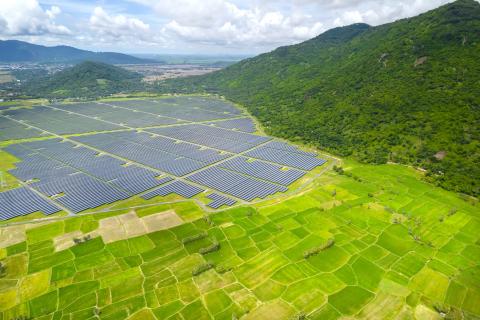
Rooftop solar leads the government’s 10,450-megawatt renewable energy roadmap, and the new 1% duty cap will cut upfront investment costs by roughly 25%.
Households drive more than 50% of grid power demand, making appliance efficiency incentives essential to managing peak load growth.
The energy transition in Bangladesh has long faced a limited narrative of being only a climate imperative, and one too expensive for the country to bear. At the same time, the energy and power sectors have been in a state of continuous vulnerability. High import dependence, fuel price volatility, pressure on foreign currency reserves, payment backlog to private power producers, and rising power demand, among other things, now emphasise the financial need to pursue a planned energy transition.
Realising the prevailing challenges, the government has made efforts to increase the share of renewable energy in its power system. It has further addressed the long-standing concern of high import duties on distributed solar systems.
Rising import costs expose financial vulnerability
As Bangladesh prepared for its summer power demand, liquefied natural gas (LNG) prices hovered around USD10 per million British thermal units (MMBtu) in the Asian LNG benchmark, Japan-Korea Marker (JKM). Since 28 February, the Middle East crisis has changed that equation. The JKM price jumped to USD13.365/MMBtu on 2 March 2026 and has remained volatile ever since Qatar suspended its long-term supply under force majeure. By the first week of September 2026, JKM had crossed USD24/MMBtu (see Figure 1). Bangladesh paid even more, exceeding USD28/MMBtu for spot cargoes (see Figure 2). Further analysis shows that the country is effectively importing LNG at 30% to 150% above pre-crisis import price of around USD12/MMBtu.
A closer inspection also indicates that there are significant subsidy implications. At an import price of USD20/MMBtu, the government absorbs more than Bangladeshi Taka (BDT) 60 per cubic metre (m³), equivalent to USD0.49/m³. At USD28/MMBtu, that burden exceeds BDT95/m³ (USD0.77/m³). These figures alone make a financial case for accelerating the shift away from imported fossil fuels.
The high cost of imported diesel presents a similar situation. The fuel accounts for roughly 60% of Bangladesh’s annual petroleum consumption of around 7 million tonnes, with long-distance transport consuming about 60% of that diesel, making a strong case for a shift to EVs. Couple that with replacing one-third of operational diesel-run irrigation pumps in the country with solar-powered systems, and annual diesel imports could reduce by an estimated USD244 million, illustrating the scale of savings available through targeted electrification.
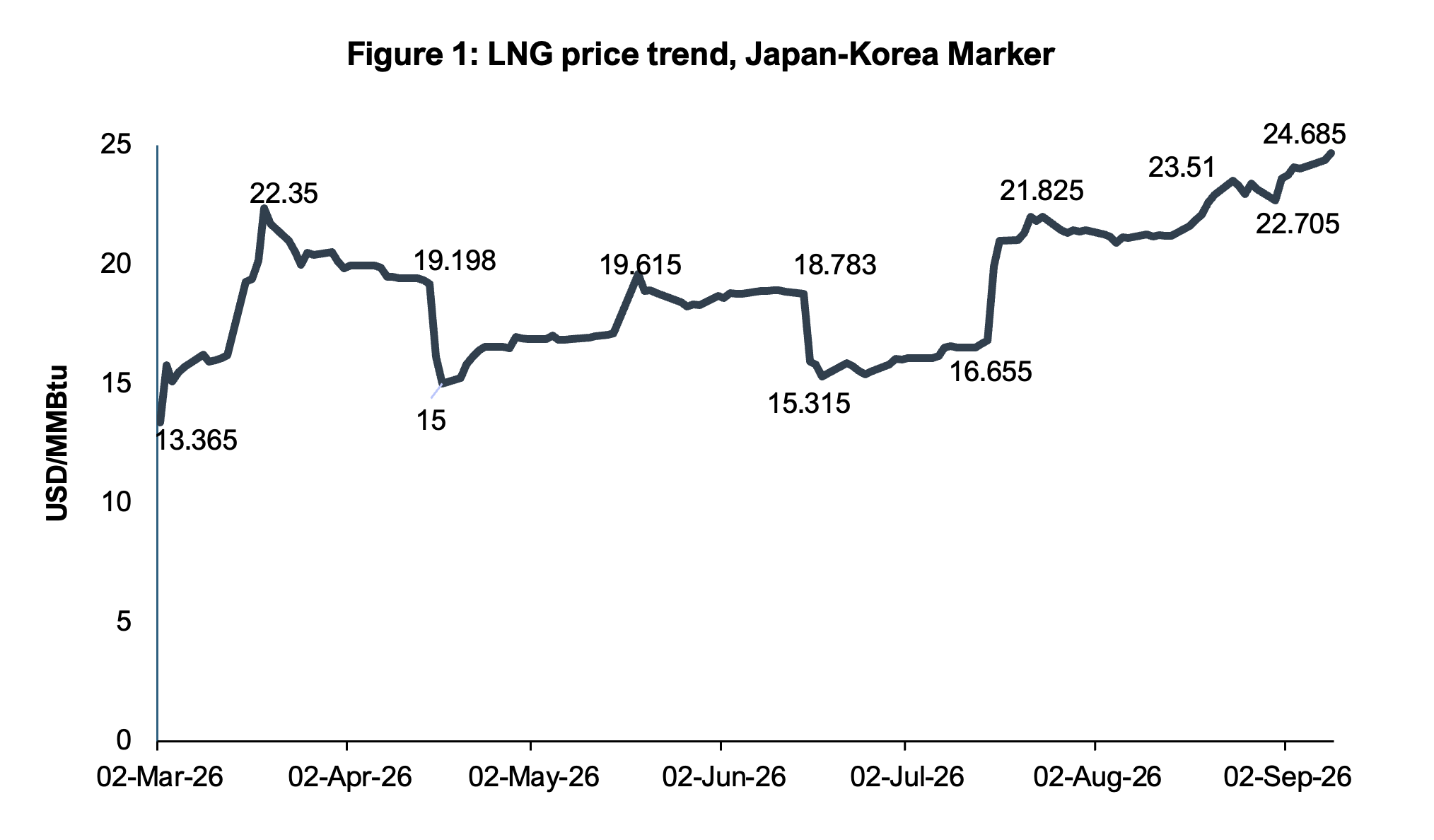
Sources: Investing.com; IEEFA analysis.
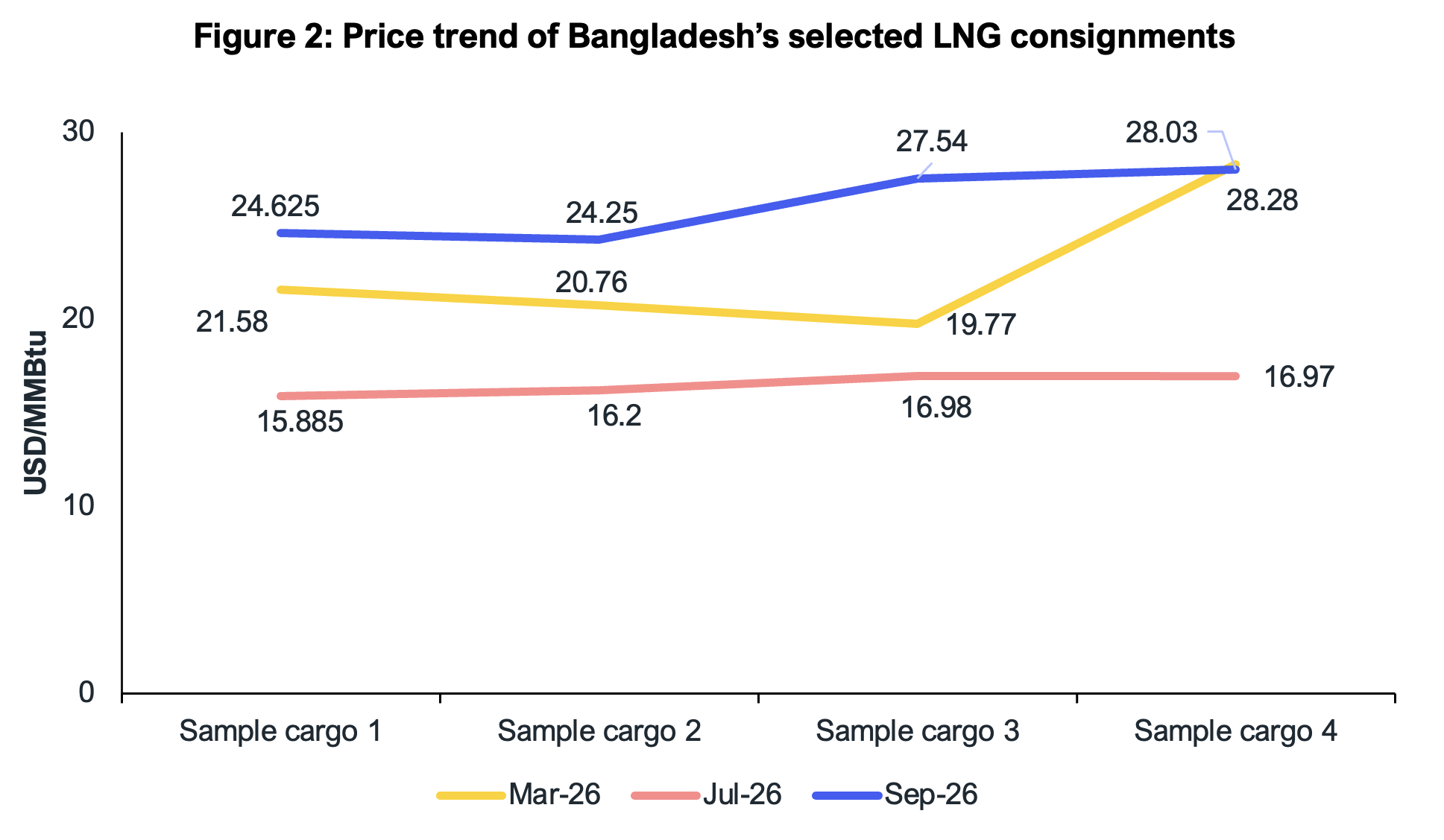
Sources: Just Energy News, Daily Star, Financial Express, IEEFA analysis.
A renewable energy roadmap
After years of slow progress, the government released a strategy document in July 2026 outlining a clear renewable energy roadmap through 2030. The plan targets 10,450 megawatts (MW) of new capacity, divided into measurable annual milestones. Rooftop solar is expected to contribute 5,500MW, more than half the total, followed by 4,500MW from utility-scale solar. Other renewable technologies account for the remaining 450MW. This level of specificity provides a valuable market signal for investors and project developers.
Rooftop solar duty reduction
To support rooftop solar deployment, the government has capped the overall import duty on solar components at 1% for six months down from previous duties ranging from 28.73% to 61.8%. This addresses concerns raised by stakeholders over the past four to five years about high import duties that disproportionately increased the cost of distributed renewable energy projects. The duty reduction will lower upfront rooftop solar investment by roughly 25%, creating a meaningful incentive for large energy consumers. However, the government should extend this six-month period to achieve the target of rooftop solar.
Transport electrification
Bangladesh already has more than five million electric three-wheelers that charge from the grid between 11PM and 7AM. While this strains an already overstretched power system, it also presents an opportunity. Shifting even half of these vehicles to solar-powered charging stations, which supply power during daylight hours, would move that demand into the day and off the overnight peak. The Institute for Energy Economics and Financial Analysis (IEEFA) estimates the shift could reduce overnight grid demand by more than 1,000MW. A battery swapping mechanism, apart from available measures like fast charging, will help reduce waiting time at the charging stations.
The government’s target of raising EVs to 30% of the fleet by 2030 will require far more charging infrastructure. Its import duty waiver on charging stations provides a clear signal; the private sector must now respond with investment.
Energy efficiency and conservation
On the demand side, households already account for more than 50% of grid power consumption and are the primary driver of demand growth. Peak power demand reached 19,027MW in August 2026, an increase of 11.3% over the 2025 record (see Figure 3). Rising incomes and temperatures are accelerating the adoption of air conditioners, electric cookstoves, and other appliances. Without intervention, inefficient appliances will lock in high energy consumption for years.
The government should design incentive mechanisms to encourage the purchase of efficient appliances, which carry higher upfront costs than their energy-intensive alternatives. It should also front-load energy efficiency measures across industrial and commercial sectors. IEEFA assessments show that Bangladesh improved energy efficiency by 1.52% per annum between 2014–15 and 2023–24, with most gains taking place after 2018–19. Identifying which sectors have progressed and which lag behind would allow more targeted policy interventions.
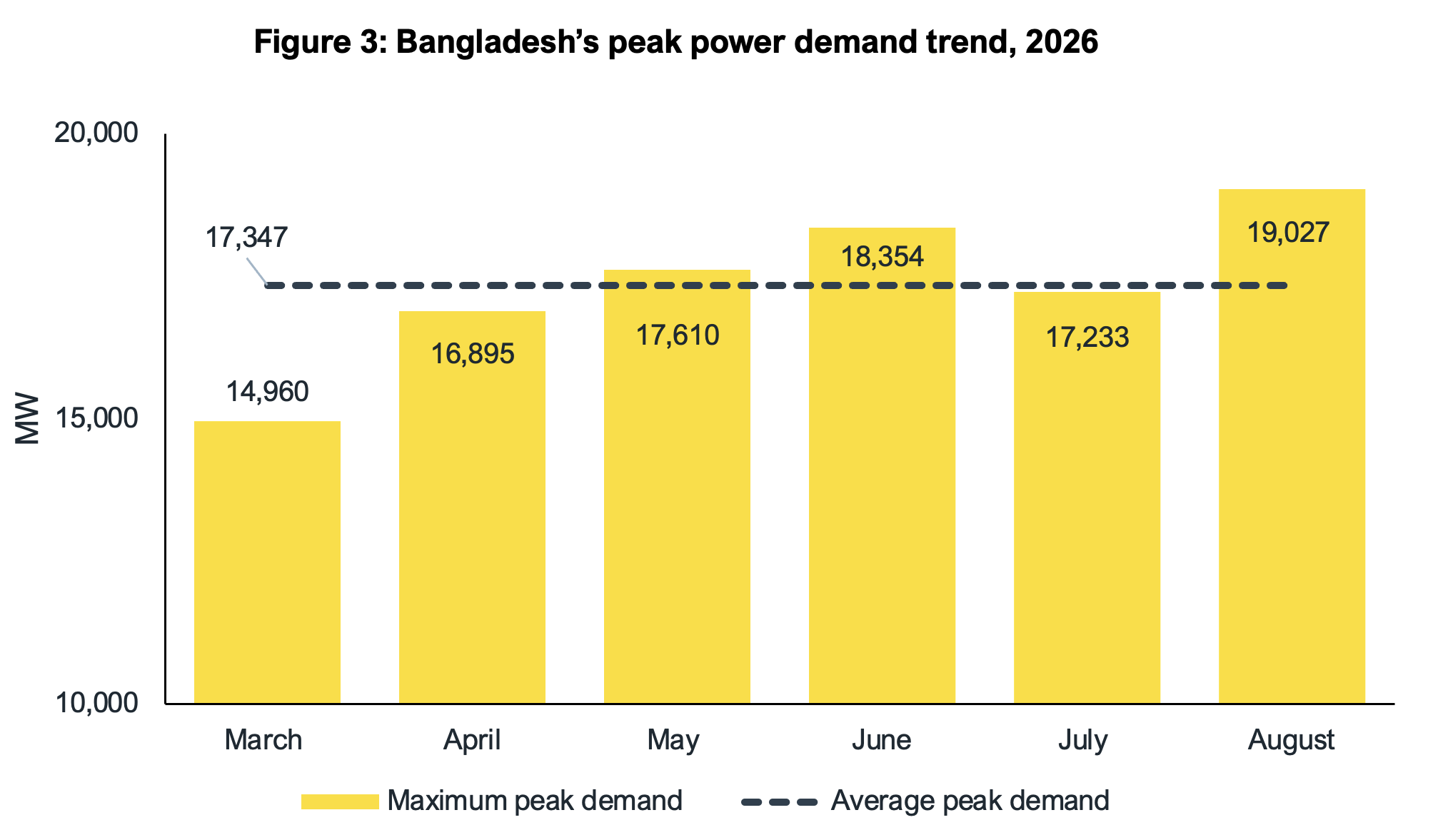
Sources: Power Grid Bangladesh PLC, IEEFA analysis.
Note: Average peak demand is based on the mean of the maximum monthly peak demands.
Skill development
To spearhead its energy transition successfully, Bangladesh will need a sufficient flow of skilled workforce. The country will require technicians capable of designing, procuring, installing, and maintaining renewable energy systems. Post-installation maintenance is of particular importance as there is evidence that there is 4–5% per annum loss in solar yield due to soiling.
Similarly, improving energy efficiency requires human resources capable of conducting energy audits, managing energy systems, and bringing up fresh ideas for demand-side technologies.
The government should therefore provide support to the Sustainable and Renewable Energy Development Authority (SREDA) to continue its capacity development efforts to create skilled renewable energy and energy efficiency professionals.
Bangladesh’s energy transition is overdue, but it is not too late. The financial costs of continued fossil fuel dependence are mounting, and the government’s recent policy signals, from the renewable energy roadmap to solar duty reductions and EV incentives, mark a welcome shift. A well-planned transition will deliver not only cleaner energy but also greater fiscal stability and energy security.
This article was first published in the October 2026 issue of Energized Bangladesh, the Bangladesh Energy and Power Research Council (BEPRC) newsletter.

Related Content