HVO coalmine application reveals state of inconsistencies
Key Findings
Hunter Valley Operations (HVO)’s proposal to extend two of its open-cut thermal coalmines in New South Wales (NSW) would increase gross emissions in part as a result of using 3.2 billion litres of diesel, with no committed strategy for methane abatement.
The NSW government must update its economic assessment guidelines for coalmines to ensure the cost of all emissions created in the state is considered.
HVO has yet to develop an exit strategy, leaving workers and the community in limbo with no clarity on the employment and regional economic opportunities beyond coalmining.
Inconsistency with the Net Zero Commission’s and government’s legislated emissions targets, and an application that needs significant updates, would justify the IPC refusing HVO’s lease applications.
Note: This analysis is for information and educational purposes only, and is not intended to be read as investment advice. Please click here to read our full disclaimer.
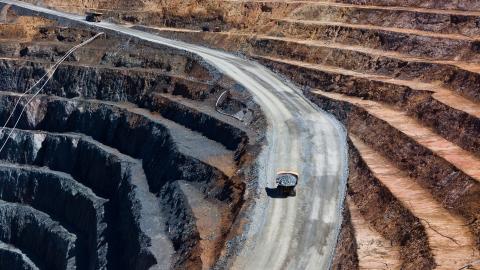
Hunter Valley Operations (HVO) is seeking approval to extend two of its open-cut thermal coalmines and ramp up production in a closely watched test case for the industry’s future in Australia.
The HVO North and South mines, which straddle the Hunter River in Central NSW, are due to cease operations this year and in 2030, respectively, when their leases expire. The HVO Continuation Project aims to extend mining into the mid-2040s, with a combined maximum extraction limit of 26 million tonnes a year of coal from 2027, significantly higher than current levels (Figure 1).
This comes at a time when coalminers face diminishing returns amid rising production costs and declining exports as Australia’s key markets phase out or down coal or seek cheaper domestic or foreign sources of supply.
Figure 1: HVO proposed production limits
HVO’s application, which was the subject of public hearings by the NSW Independent Planning Commission (IPC) last month, has attracted more than 8,000 submissions; two-thirds in favour and one-third against.
IEEFA, which presented a submissionat the hearings, recently published analysis of the use of cost-benefit analysis in coalmine applications, focusing on HVO as a case study. It found the NSW Guidelines for the Economic Assessment of Coal Mines were out of date. Indeed, the guidelines allowed HVO to account for only 0.33% of the emissions it will produce in NSW in its cost-benefit analysis. It also priced the emissions at the US Environmental Protection Agency’s 2023 social cost of carbon rather than the cost calculated by NSW Treasury to abate emissions consistent with NSW’s legislated emission targets. If instead all of the emissions produced in NSW were counted and valued at the higher NSW Treasury carbon cost, the net economic benefit of the project would be greatly reduced, and could be eliminated in some scenarios.
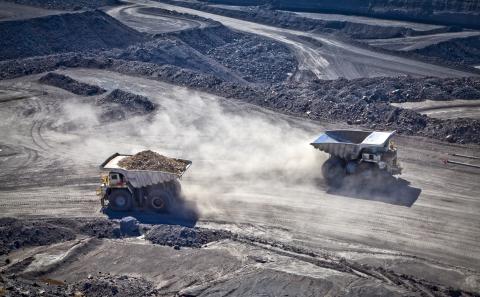
The extensions would increase the mines’ emissions to 15.3Mt of carbon dioxide equivalent (CO2e), with almost 60% coming from the estimated 3.2 billion litres of diesel that will be consumed over the life of the mines.
As highlighted in its response to the IPC’s questions arising from the first two days of public hearings, HVO has committed to the use of offsets (through the purchase of carbon credits) to meet its baseline emission requirements under the Safeguard Mechanism. In addition, HVO will purchase additional voluntary carbon credits to help NSW meet its emissions reduction targets. However, there is no firm commitment to any onsite emissions abatement strategy, and no commitment that offsets would be sourced from NSW given cheaper options are available in other states — which would not contribute to achieving the state’s emissions targets.
IEEFA’s analysis of HVO’s application has highlighted several inconsistencies between it and the findings of the NSW Net Zero Commission’s Spotlight report on coalmine emissions. These findings have all been either accepted or noted by the state government (Table 1) in its response to the Spotlight report. This alone makes it difficult to see how the government can approve the mine extensions.
Table 1: HVO application alignment with Net Zero Commission Spotlight report findings
The role of the NZC’s findings in framing the IPC’s decision on the HVO application was addressed in its response to questions on notice from the IPC. HVO’s legal advice asserted the NZC had no formal role in the assessment process, and hence the IPC was under no obligation to prioritise the NZC’s position on emissions. Instead, it argued the IPC should prioritise the NSW Coal Industry 2026-2050 (“Coal Framework”) as government policy.
HVO’s advice states the NSW government’s response to the Spotlight report is consistent with the Coal Framework, which is defined as government policy. Using this same logic, In IEEFA’s view, therefore, those parts of the Spotlight report that have been accepted by the government, should also be considered to reflect government policy.
Given IEEFA’s analysis suggests the HVO application is inconsistent with all of the NZC’s Spotlight findings, therefore, IEEFA’s extension of the HVO logic with this analysis supports IEEFA’s conclusion that the HVAO application is also inconsistent with NSW government policy.
During the IPC hearings, it emerged that HVO has no exit strategy for the mines, which employ 1,500 people. A media report suggested that a 2004 HVO lease condition to develop a mine exit strategy was never met and, further, the condition was absent from a lease extension granted last year. Many submissions have highlighted the economic uncertainty that would arise should the applications be declined. This economic and community uncertainty is enhanced by the failure to develop, and communicate, a mine exit plan. IEEFA believes the absence of a mine exit plan represents a moral hazard, and should not be grounds for granting an extension. In IEEFA’s view, this would effectively reward operators for failing to develop an alternative use strategy, and incentivise them not to develop exit plans in the future.
The mayors of nearby Singleton and Muswellbrook, towns dependent on the coal industry, have called for action to support the region’s economic transition to a post-coal future. Recent post-mine developments focused on clean energy precincts proposed by Yancoal, Idemitsu and BHP point the way forward.
Due to the shortfalls in federal and state policy priorities, IEEFA recommends:
- The Guidelines for the Economic Assessment of Coal Mines be immediately updated to reflect NSW Treasury Guidance.
- Export coalmining jobs must be included in the Net Zero Economy Authority Energy Industry Jobs Plan.
- The NSW Parliament should pass the Future Jobs and Investment Authority Bill as a priority.
Given the inconsistencies with NSW’s legislated emissions pathway and the state government’s coal policy, and given that the application needs significant updates, the IPC has many reasons to reject HVO’s application as it stands. If the IPC feels compelled to approve a continuation of mining at HVO, IEEFA considers that any such approval should be for a limited period (e.g. to 2030) to allow time to develop and implement an alternative land-use strategy post mining.

Related Content