Japan
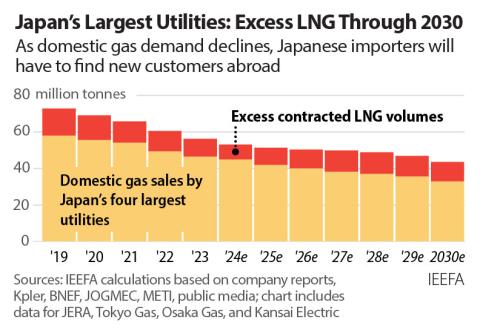
Japan is pursuing ambitious energy transition goals, including tripling renewable capacity by 2030 and achieving net zero emissions by 2050. However, structural and policy challenges continue to shape the pace of the transition. The country’s power sector remains heavily reliant on fossil fuel and nuclear generation, while investment in renewable energy has progressed more gradually. Liquefied natural gas (LNG) accounts for over 30% of its electricity generation.
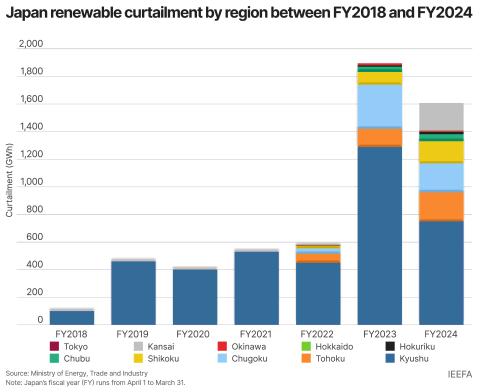
Renewable energy deployment has also been constrained by grid and market barriers, including limited transmission capacity, grid access constraints, curtailment practices, and evolving policy frameworks. Japan's Green Transformation (GX) strategy, introduced in 2023 and updated annually, continues to support a diverse mix of energy technologies, including LNG, hydrogen, ammonia co-firing, nuclear power, and renewable energy.
IEEFA’s research and stakeholder engagement examine the policy, market, and investment priorities shaping Japan’s energy transition. Through independent analysis, IEEFA identifies opportunities to strengthen energy security, accelerate renewable energy deployment, improve grid integration, and support a more resilient, affordable, and low-carbon energy system.
Japan’s renewable integration is constrained by its grid connection framework
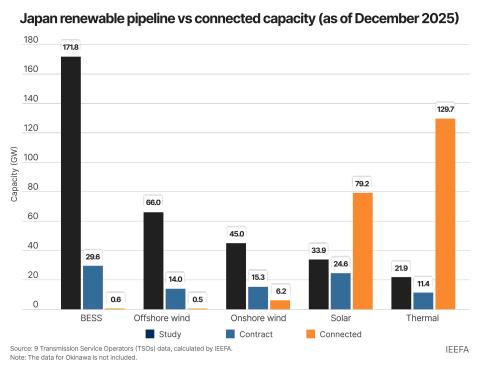
Japan’s renewable energy pipeline is expanding, but the conversion of projects from application to physical grid connection remains weak.
Latest Japan Research
See more >

Latest Japan Reports
See more >



Latest Japan Press Releases
See more >