Why 2026 could see momentum return to the steel technology transition
Key Findings
After a couple of years of slower progress, the steel technology transition away from fossil fuels could gain renewed momentum in 2026.
The anticipated commissioning of Stegra’s new 100% green hydrogen-based steel plant looms as a landmark in the steel transition.
A 2026 DRI final investment decision in Oman would set a benchmark for countries like Australia.
The ramp-up of the Simandou iron ore mine in 2026 will further incentivise Australia to add value to its biggest export.
After a period of slowing progress, there is hope for renewed momentum in the global steel technology transition away from fossil fuels.
Expectations for green hydrogen production cost reductions had a reality check that hit global plans for fossil fuel-free direct reduced iron (DRI) in particular. But around the world, key developments expected in 2026 could help get the transition ball rolling again.
Assuming its new financing round is successful, Stegra still aims to commence operations at its northern Sweden plant in 2026. The timeline has been extended by three months, with operations to begin based on the electric arc furnace (EAF), with the DRI shaft furnace to follow. The start-up of a DRI plant running on 100% green hydrogen will be seen as a major landmark in the global steel technology transition.
While other DRI projects aiming to start on gas before transitioning to hydrogen have floundered, Stegra’s a project starting up on 100% green hydrogen will have succeeded by securing binding offtake agreements with steel consumers able to absorb the higher cost of truly green steel. There are other steel consumers around the world that could underpin similar first-mover projects.
Outside northern Sweden, the transition plans of other major European steelmakers have been slowed by factors including the high cost of green hydrogen and power, and low steel prices amid global overcapacity. The implementation of the Carbon Border Adjustment Mechanism (CBAM) in 2026 may help address some of these issues, including support for domestic steel prices in Europe.
The application of CBAM, accompanied by the phase-out of free allowances for the steel industry under the EU Emissions Trading System, should help drive the steel technology transition both inside and outside the EU.
There have been some calls to delay the phase-out of free allowances. However, the arrival of CBAM and the allowances phase-out is no surprise. It has been signalled for years, and steel technology investment decisions have been made in response.
This impact is clear within the EU and beyond. Meranti Green Steel intends to produce hot briquetted iron (HBI) in Oman for export to Europe to take advantage of anticipated growing demand for lower-emissions steel inputs as the EU’s carbon market enters its new phase. Meranti will also ship HBI to its own EAF-based steel plant in Thailand, and aims to make a final investment decision (FID) in 2026.
Significantly, Meranti’s DRI plant will start using a mix of 85% methane and 15% green hydrogen before progressively ramping up the latter. Oman is establishing itself is a global leader in the steel technology transition with its support for green hydrogen production. This is underpinned by a requirement that new DRI developments use some green hydrogen in their reduction mix from day one, despite Oman having relatively cheap gas available. Numerous other DRI and related steel industry developments are planned in the country, further cementing Oman’s world-leading position.
Given the recent slowdown in its adoption by the global steel industry, a 2026 FID on a new DRI plant using 15% green hydrogen would be an important signal of momentum while providing a benchmark for other nations considering a shift to DRI, such as Australia.
Australia has an opportunity to add value to its iron ore exports
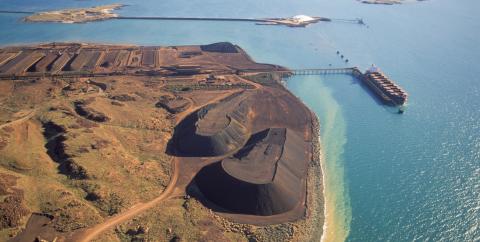
The world’s largest exporter of iron ore by far, Australia has an opportunity to turn to DRI and HBI exports to add value to its largest export amid forecasts of declining iron ore prices.
In November 2025, the giant Simandou iron ore mines started operations in Guinea, West Africa. Output from Simandou will start ramping up in 2026 as steel demand from Australia’s biggest iron ore customer by far continues to decline. At the time of writing, China’s 2025 crude steel output was running 4% below the previous year, a trend that is not expected to change as its economy continues to mature. Output from Simandou is eventually expected to reach 120 million tonnes a year (Mtpa), with most of it destined for China.
Increased supply from Simandou is expected to put downward pressure on prices, which are forecast to decline from about US$100 per tonne in late 2025 to US$85 or even US$75 by 2028. The Australian government’s latest medium-term forecast highlighted an expectation that the value of the nation’s iron ore exports will decline by AU$36 billion (31%) by FY2029-30.
DRI is an opportunity for Australia to add value to its iron ore by processing it into iron domestically for export. But Australia faces a key choice in 2026 – will it add that value using gas or green hydrogen?
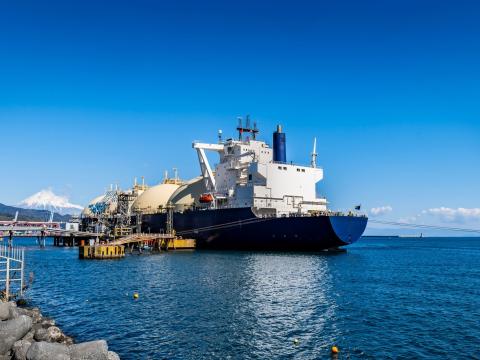
Australia is a major gas producer and one of the largest LNG exporters in the world. But those exports have come at a cost to the domestic gas market with supply shortfalls forecast and high prices. This has led Australia’s biggest steelmaker, BlueScope, to call for new gas reserves to be opened up to try and address this. BlueScope says it needs domestic gas prices below AU$10 per gigajoule for it to transition from blast furnace to DRI. However, the potential new sources of gas in Australia are expensive and unable to supply gas below that level.
Gas is likely to serve as a temporary bridge between metallurgical coal and green hydrogen – as exemplified in Oman – but Australia risks locking in gas use in its iron and steel sector for decades if it decides to support new infrastructure such as gas pipelines and carbon capture and storage (CCS). The latter looks unable to satisfactorily decarbonise gas-based DRI. Even Midrex has expressed doubts about the role of CCS, stating, “its practical use in steelmaking remains limited”.
Alternatively, Australia could turn to green hydrogen, and capture early demand for truly green iron in the Asia-Pacific region. Such premiums will not be available to gas-based HBI. Although still very nascent, Asia-Pacific green iron demand has significant potential. Meranti Green Steel intends to exploit this potential in Thailand – one of the region’s major carmakers – a sector that could underpin early demand growth.
COP31 will be in Turkey in 2026 but, in an unusual deal, Australia’s Climate Change and Energy Minister will be “president of negotiations”, giving Australia the opportunity to put green iron demand and offtake high on the agenda.
This year will be turning point for Australia as to whether it backs green hydrogen for its iron and steel sector or risks locking in gas. One of Australia’s two integrated steel plants is for sale with a deal expected to be completed in 2026. The most prominent interested party is a consortium of major Asia-Pacific steelmakers – BlueScope, POSCO Nippon Steel and JSW Steel.
The Australian and South Australian governments are providing AU$2.4 billion to support the Whyalla steel plant, including AU$1.9 billion to help fund its transition from blast furnace-based steelmaking to DRI-EAF. The key question remains as to whether a new DRI plant at Whyalla will run on gas for the long-term or quickly transition to green hydrogen.
Australia’s gas versus green hydrogen choice is further exemplified by two key technology projects expected to make progress in 2026.
Given the vast majority of Australia’s iron ore production is well below DR-grade, new developments that can apply DRI to its lower-grade ores are under way. The NeoSmelt project, led by a consortium including Rio Tinto, BHP, BlueScope and Woodside, expects to reach FID in 2026. The presence of Australia’s largest gas producer, Woodside, highlights that this DRI-based project will run on gas.
Meanwhile, Rio Tinto has also partnered with Calix to test the latter’s ZESTY ironmaking technology in a demonstration plant this is also expected to reach FID in 2026. Both NeoSmelt and Zesty can run on Australia’s blast furnace-grade ores. A key difference is that the ZESTY demonstration will run on hydrogen.
In recent years, the steel technology transition has largely focused on DRI, a mature technology running on methane but which key technology providers have made clear is ready to run on green hydrogen. But 2026 may see progress in direct electrification technologies that avoid the need for green hydrogen. In November 2025, Australia’s Element Zero officially launched a pilot-scale green iron plant using its electrochemical process in the presence of the Premier of Western Australia.
In the US, Electra will begin operating its direct electrification demonstration plant in mid-2026 – a key step in its low-temperature electrochemical-hydrometallurgical technology.
The early 2020s showed significant and encouraging momentum in the global steel technology transition away from coal. More recently, this has slowed as expectations for green hydrogen supply and cost declines were not met. There is still a need to refocus green hydrogen development on fewer uses where it can really make a difference, including iron and steel. It will also be important to ensure the steel sector doesn’t replace one fossil fuel with another, by locking in gas for the long term.
However, there are enough milestone events expected in 2026 to suggest this year could see an upswing in steel decarbonisation momentum once again.
Originally published in the Jan/Feb issue of Steel Times International.

Related Content