EU Clean Energy Investment Strategy underestimates barriers slowing renewables deployment
Key Findings
The EU’s new Clean Energy Investment Strategy fails to address the structural bottlenecks impacting renewables: permitting delays, judicial appeals, supply chain fragility and workforce shortages.
The strategy correctly diagnoses the magnitude of the investment gap and acknowledges that private capital must provide the bulk of financing for the transition. But without explicit binding renewables deployment targets or enforcement tools, the strategy could remain wishful thinking.
Securitisation initiatives, hybrid bonds, balance sheet relief and aggregation mechanisms address real constraints in grid financing. But the success of the strategy will depend on whether Europe can accelerate the deployment of wind power, grids, energy storage systems and heat pumps.
The strategy overestimates how quickly certain emerging technologies such as hydrogen; carbon capture, utilisation and storage; and next-generation nuclear can scale without deeper structural reforms.
The EU Clean Energy Investment Strategy, launched by the European Commission on 10 March, correctly diagnoses the scale of the investment challenge facing Europe’s energy transition. Annual spending in the energy system must rise from roughly €250 billion historically to around €660–695 billion in the coming decades.
The difficulty lies elsewhere: The strategy largely assumes that financial engineering and modest public commitments can mobilise the vast private capital required. Whether these mechanisms can realistically close the investment gap remains uncertain.
The strategy focuses on four broad policy areas: improving investment visibility, expanding access to capital markets, de-risking investment through public funding and strengthening engagement with financial actors.
There is an imbalance between a lack of ambition in financial delivery mechanisms and overoptimism in deployment assumptions, particularly for emerging technologies.
Section one: Investment pipelines
- IEEFA regrets the lack of accountability in section one, which improves visibility but does not ensure delivery of targets.
The strategy’s emphasis on investor revenue predictability, National Energy and Climate Plans reform, and clearer post-2030 decarbonisation targets is aimed in the right direction. Investors need visibility beyond 2030, and the proposed Energy Needs Assessment for the Clean Transition (ENACT) could provide useful system-level clarity. However, the strategy largely assumes that improved planning transparency will automatically translate into accelerated deployment, which is not ensured.
The strategy recognises the scale of investment required but does not quantify sector-specific deployment gaps in detail. It also fails to address the structural bottlenecks preventing this scale-up: permitting delays, judicial appeals, supply chain fragility and workforce shortages. Inserting investment chapters in National Energy and Climate Plans does not guarantee Member States will deliver reform at the required pace.
In IEEFA’s view, there seems to be a lack of ambition regarding renewables integration. Without explicit binding renewables deployment targets or enforcement tools, the Clean Energy Investment Strategy could remain wishful thinking.
Another major omitted topic is how the strategy will benefit end users (retail and wholesale consumers), both in terms of electricity prices and security of supply. It is odd that the Commission does not address consumers, who should be the main beneficiaries.
Section two: Supporting access to capital markets
- Section two overestimates the flexibility of capital markets regarding structural regulatory risk, in IEEFA’s view.
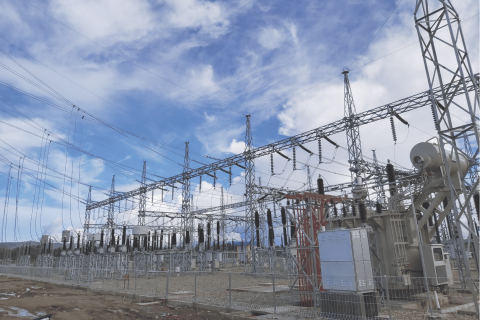
The strategy’s securitisation initiatives, hybrid bonds, balance sheet relief and aggregation mechanisms address real constraints in grid financing. Europe’s electricity networks are indeed the backbone of decarbonisation, and transforming grid assets into investment-grade securities could unlock capital.
Some other tools the strategy mentions include:
- A reform of the prudential framework for insurers under the Solvency II Delegated Regulation update, encouraging institutional investors to allocate capital to energy infrastructure.
- The Clean Industrial Deal State Aid Framework, designed to accelerate aid and grants for renewable projects.
However, this section reveals a deeper structural imbalance: Financial engineering is being asked to compensate for political and regulatory slowness. Capital is not absent because of a lack of securitisation vehicle; investors are cautious because revenue visibility, regulatory stability and long-term market design remain uncertain in several Member States.
Furthermore, while the strategy speaks of mobilising trillions in institutional capital, the actual European Investment Bank commitment is merely €75 billion in financing over the next three years, roughly €25 billion annually. This is a small fraction of the €660–695 billion yearly investment requirement identified by the strategy itself. The strategy implicitly assumes that limited public funding can mobilise vastly larger volumes of private capital. However, without clearly defined leverage ratios, risk-sharing structures or revenue guarantees, it remains uncertain whether the proposed instruments can realistically close the annual investment gap of at least €400 billion.
On energy efficiency, the proposed accelerator and voluntary labels make sense. However, previous experiences show that aggregating energy efficiency projects alone does not overcome administrative barriers that slow renovation rates. A tripling of renovation investment cannot be achieved through financial standardisation alone.
Section three: De-risking via strategic use of public funds
- In IEEFA’s view, section three is overoptimistic about the market readiness of hydrogen, and carbon capture, utilisation and storage.
The focus on innovation is necessary. The International Energy Agency estimates that 35% of the emissions reductions required by 2050 depend on not-yet-commercial technologies, highlighting the importance of de-risking early-stage projects.
Still, the document falls into technological overambition. It places floating wind, long-duration storage, small modular reactors, direct air capture, bioenergy with carbon capture and storage, and advanced geothermal within a similar support framework. These technologies vary enormously in maturity, cost trajectories and system relevance. For example, long-duration storage is indeed critical for high-renewable systems, while small modular reactors remain commercially uncertain in terms of cost, licensing timelines and social acceptance, as IEEFA has noted numerous times.
The strategy does not fully address demand-side uncertainties and economic conditions required for technologies such as hydrogen or carbon capture to scale.
Section four: Upgraded investment dialogue
The proposed Energy Transition Investment Council aims to institutionalise dialogue with investors. This makes sense from a governance point of view. However, consultation is not a substitute for reform. The key barriers identified above (slow permitting, and stable and predictable remuneration) require cross-border regulatory harmonisation instead of further advisory platforms.
Conclusion
The strategy correctly diagnoses the magnitude of the investment gap and acknowledges that private capital must provide the bulk of financing for the transition. It strengthens financial engineering tools and improves strategic signalling for investors.
However, in IEEFA’s view, it underestimates three systemic constraints:
- Technology delivery capacity (because of permitting, the skills gap and supply chain issues).
- Political fragmentation across 27 EU Member States and their regulatory regimes.
- The real-world scalability limits of certain emerging technologies. It likely overestimates how quickly several emerging or infrastructure-dependent technologies can scale without faster technology development.
The success of this strategy will ultimately not depend on securitisation instruments or advisory councils but on whether Europe can accelerate the deployment of wind power, grids, energy storage systems and heat pumps.

Related Content