Mining’s costly diesel addiction must be a budget priority
Key Findings
Mining is the largest user of diesel in Australia, accounting for 35% of total demand.
Fuel tax rebates to mining are growing alongside diesel use, and account for about half of Australia’s total fuel tax rebates.
Mining’s fuel tax credits are entirely unconditional – unlike on-road trucking which must meet environmental compliance. There is no equivalent criterion for off-road diesel use.
The federal government should make diesel tax credits conditional on Safeguard Mechanism compliance, and suspend credits for open-cut mining facilities whose emissions exceed their baseline by 30%.
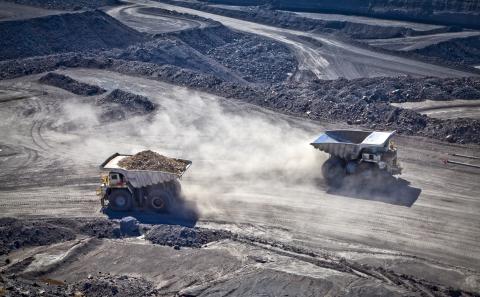
The government is funding the mining fleet that uses most of the nation’s diesel fuel. Mining accounts for 35% of Australia’s annual diesel use of about 10 billion litres, and the government provides about AU$4.5 billion a year to keep it operating. Unlike on-road heavy vehicles, where rebates are tied to vehicle emission standards, mining’s fuel tax credits are uncapped and growing. This could be fixed with one amendment to the Fuel Tax Act in the May budget.
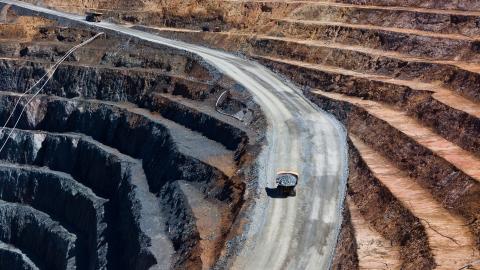
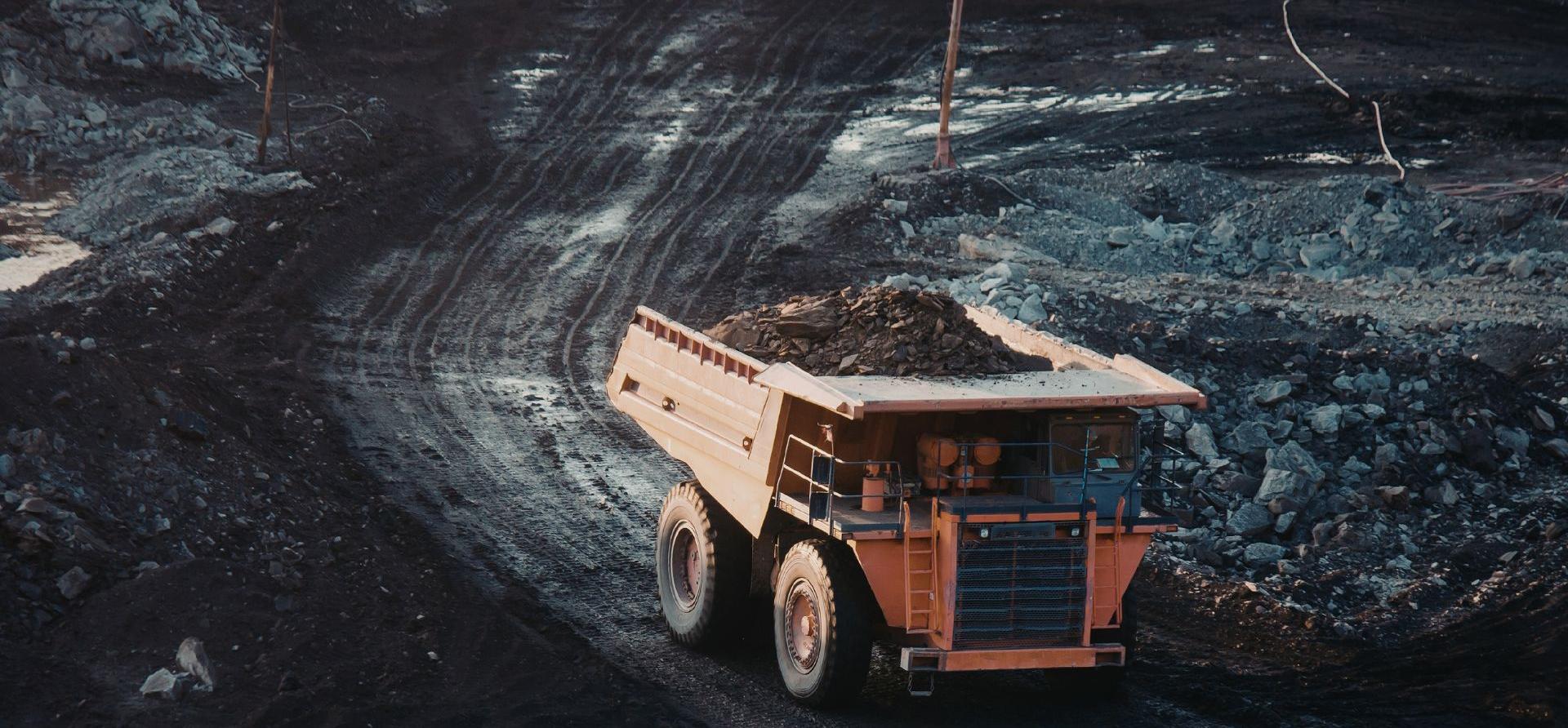
At 52.6c a litre, the Diesel Fuel Tax Credit (DFTC) roughly covers the purchase cost of an ultra-class haul truck (burning 150 litres an hour for 6500 hours a year) over its life. So, in effect, the government is effectively funding the purchase of the fleet, which the industry says it cannot economically replace with cleaner alternatives.
Mining’s diesel use has grown 90% since FY2010-11, while diesel intensity per tonne of coal produced increased by more than 50% in that period, according to IEEFA analysis. This is driven by more open-cut mining and deepening strip ratios – more material must be mined and transported further for each tonne of saleable coal produced.
The mining industry receives AU$4.5 billion a year in diesel rebates, accounting for 47% of Australia’s AU$9.6 billion fuel tax credit spend in FY2023–24, with most going to Tier 1 coal and iron ore mining companies.
Safeguard Mechanism for large emitters – the compliance gap
Australia’s Safeguard Mechanism applies to industrial emitters above 100,000 tonnes of carbon dioxide equivalent (CO₂e) a year. For each facility, the Clean Energy Regulator (CER) sets a declining annual baseline of allowable emissions; facilities exceeding it must buy or relinquish carbon credits.
A 30% exceedance requires an explanation of why onsite abatement was not undertaken. No further financial consequences apply, and the fuel tax rebate keeps flowing unconditionally.
The CER’s results found that nearly one in five Safeguard facilities had gross emissions 30% or more above (or below) their baselines in 2024, leading to significant credit use, with coalmines accounting for half. Explanatory statements commonly cited longer mining haulage distances for increased diesel consumption.
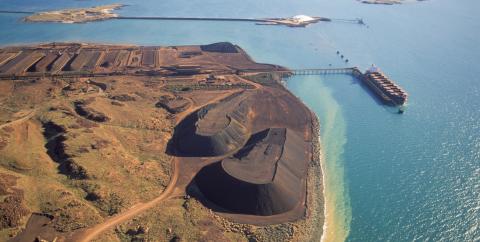
Five of Rio Tinto’s Hamersley iron ore mines in Western Australia exceeded the threshold, with the company stating: “Increased diesel consumption at this Mine was primarily due to a higher work index. As mining operations mature and expand further from processing facilities, mobile equipment must travel greater distances to move material, therefore consuming more diesel.”
Mining’s DFTC eligibility
A cap of AU$50 million per entity on the DFTC has been proposed to limit rebates and protect agriculture and small producers. By comparison, linking eligibility to environmental compliance would be a relatively minor measure. Whether a cap or targeted environmental compliance condition is used, the free issue of tax credits must be addressed.
The condition is a targeted instrument – it applies a performance threshold, and affects only those claiming the largest rebates while far exceeding their emissions baseline. The condition is straightforward: any open-cut mine whose gross annual emissions exceed its baseline by 30% is ineligible for the DFTC for the following claim period. When the facility returns to compliance, eligibility restores automatically. Notably, the 30% threshold is the CER’s own definition of substantial exceedance, and provides a buffer for extreme weather disruptions or production spikes.
Underground-only facilities, where fugitive methane dominates emissions, are excluded. New entrants to the Safeguard Mechanism receive a one-year grace period. By design, this amendment applies only to Safeguard facilities. It excludes farmers, smaller miners, agricultural contractors, regional businesses and builders that fall below the annual 100,000 tonne CO2e Safeguard threshold.
The DFTC is not a payment for mining's economic contribution, it is a rebate for off-road fuel use, which is uncapped, unconditional and inflation-adjusted. The question is not what the industry contributes to the economy, but whether these tax credits should remain the only major off-road fuel rebate in Australia with no environmental performance threshold.
Mining is in strong financial shape: thermal coal prices have risen to about US$140 per tonne in March with futures markets suggesting prices may stabilise at these levels.
New Hope’s March 17 earnings call illustrates the impact. It confirmed that diesel constitutes about 13% of the coalminer’s operating costs, rising to about 20% when rail logistics are included. On rising energy prices, CEO Rob Bishop said, “increasing diesel cost is far outweighed by the increase in revenue we received from coal”.
Major miners BHP, Rio Tinto, Glencore and Anglo American have all deferred diesel decarbonisation to beyond 2035.
Fortescue has a different strategy. It aims to achieve its first mine electrification – deploying battery drills, excavators, and haul trucks at scale – in the Pilbara this year. The technology exists. The investment decision is a matter of incentive, not readiness.
Mining companies have experienced growing unit costs – higher labour and other input costs are placing pressure on margins. Those that use the current environment to decarbonise their fleet will not only reduce their diesel dependence but will reduce long-term operating costs. Electrified equipment, while more expensive to purchase, offers lower operating and maintenance costs. Coalminers could predicate mine extension applications on fleet renewal. Without the right incentives, most will not.
There’s a further fiscal flow-on effect. Every year, extreme weather events cost Australia AU$4.5 billion in economic losses, equivalent to the annual diesel rebate. The government backs a AU$10 billion cyclone-flood reinsurance pool, and on 29 March, it announced powers to underwrite fuel purchases to increase fuel security. Conditioning the DFTC on Safeguard compliance is the type of risk-reduction measure the OECD recommends – financial support tied to mitigation, not writing blank cheques.
Based on CER's 2023-24 data, about 12 mines would be captured immediately – across coal, iron ore and gold mining. This will become clearer on 15 April when FY2024-25 data is published. But it could recover AU$400 million in the first year from July 1. IEEFA modelling indicates that, under business as usual, up to 40% of open-cut facilities could be captured by FY2029-30, as baselines continue to decline and strip ratios deepen. Preliminary CER insights for FY2024-25 show total Safeguard exceedances rose a further 48.9%.
A temporary fuel excise reduction, like the 50% cut announced today, will automatically reduce DFTC per litre for the period of operation – as occurred in 2022. That is cost-of-living relief, and a separate instrument. It does not create an incentive for fleet investment decisions made over 15-to 20-year asset lives, and it restores automatically when the honeymoon period ends.
Mining, Australia’s largest diesel user, is partly cushioned from rising fuel costs. The policy mechanism already exists. It’s updated annually, and provides a definitive measure of performance and a lever to create long-term structural change in diesel use.
This amendment needs to be in place before the cycle peaks – not designed during the next downturn, when the industry will again claim it cannot afford to act.

Related Content