Scale of investment needed for Australia’s green iron ambition
Download Briefing Note
View Press Release
Key Findings
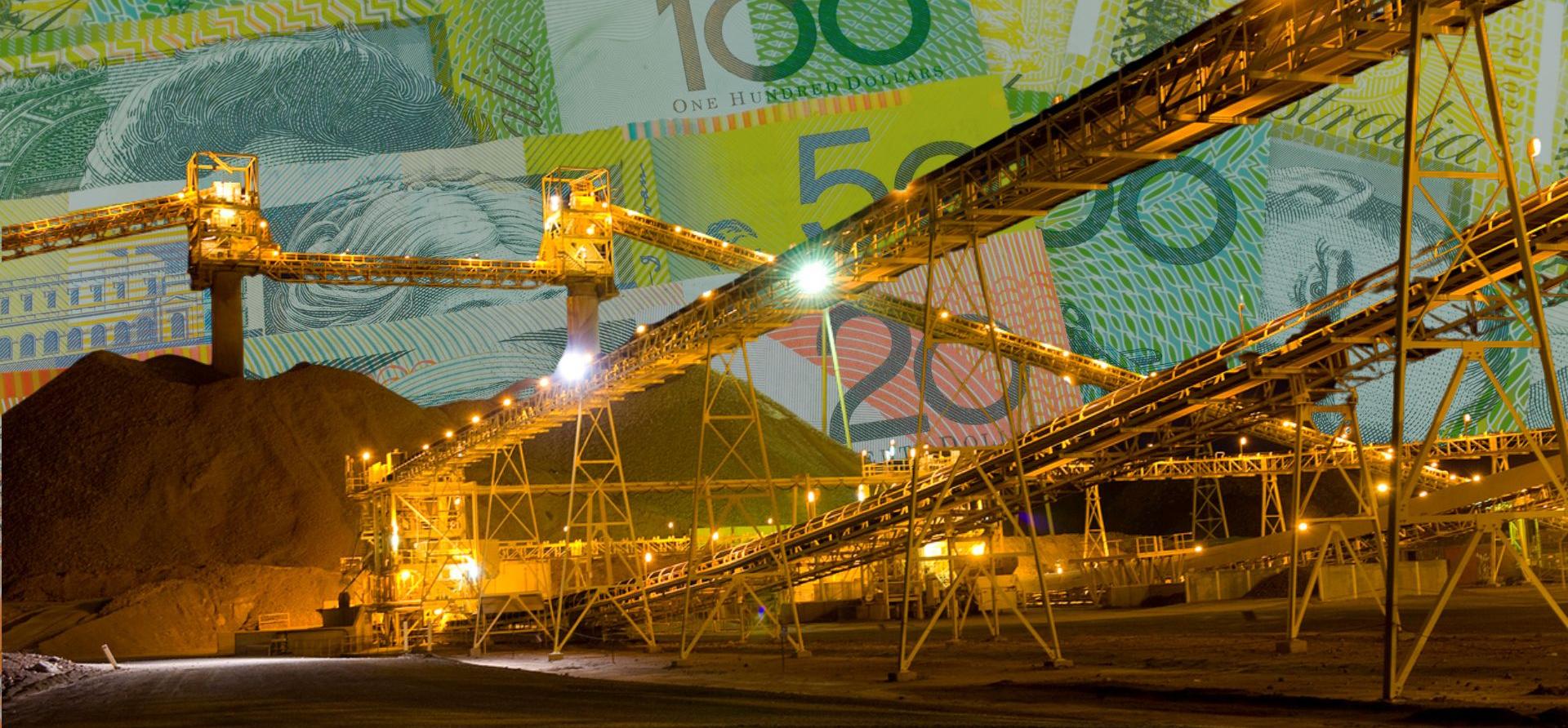
Green iron is capital intensive. Replacing Australia’s metallurgical coal exports with green iron by 2040 would require annual investment of AUD170 billion, on par with the mining boom peak.
Such a high level of investment requires co-ordination to quickly provide the necessary infrastructure across mining, logistics and clean electricity supply.
Investment requires a strong, sustained price signal. Emerging demand and carbon pricing among trading partners are insufficient to provide this signal in the near term.
Australia can leverage policy tools that were successful in renewables to fill the gap.
Australia is seeking to establish a green iron export industry. These exports would both support global emissions reductions and serve as a hedge against future declines in Australia’s traditional fossil fuel exports.
Green iron production is capital intensive. Each facility requires an ironmaking furnace and electrolysers together with supporting solar, wind, batteries and transmission infrastructure to supply clean electricity. In addition, rail and port facilities are required for both bulk supply of iron ore and export of green iron. This capital intensity is exemplified by Stegra’s green iron and steelmaking project in northern Sweden. Initially, the company raised EUR6.5 billion (one-third equity, two-thirds debt) before recently completing an additional EUR1.4bn raising to complete project construction. As a result, the project’s capital intensity is ~EUR4bn per million tonnes (Mt) of capacity. An equivalent project in Australia would be even more capital intensive as it would not have access to abundant existing hydropower.
Estimates for Australia’s potential export revenue from green iron are often based on assuming a fraction of current exports will be replaced by green iron. For example, the annual figure of AUD96bn by 2040, cited in the federal government’s Green Iron Investment Fund announcement, is based on replacing metallurgical (met) coal exports with an equivalent volume of green iron. Australia exports ~150MTPA of met coal, equivalent to ~270MTPA of green iron (as ~0.55t of metallurgical coal is used to make each tonne of iron in a blast furnace).
At current prices, 1Mt of green iron capacity in Australia would require AUD7–10bn in capital investment for ironmaking, electrolysers, solar, wind and batteries. At this cost, achieving 270MTPA of green iron exports by 2040 would require an investment of ~AUD170bn each year for the next 14 years. In comparison, the rapid industrialisation and urbanisation in China and other emerging economies in the early 2000s drove annual mining investment in Australia to a peak of AUD190bn (real terms) in 2012; today it is just AUD51bn.
Approximately half of the required investment for green iron is for the renewable energy needed to power the process. The pace of these renewable investments would also need to increase significantly to match the green iron export ambition given that in the June quarter of 2024 (latest available) renewables investment across Australia was AUD9.5bn annualised.
The large scale and pace of investment required can also be seen at the project level. South Australia (SA) has led the country in deploying renewables, already generating more than 70% of its electricity from solar and wind. This, combined with the excellent iron ore resources of the Middleback Range region and the existing iron and steelmaking facilities at Whyalla, made the case for SA to lead the development of green iron. While the state has made strong progress in renewable development, adding a green ironmaking facility at Whyalla would still require 2.5 times the total utility solar and batteries installed in SA’s grid plus an additional 1.1 gigawatts (GW) of wind power (a 40% increase).
Co-ordination Challenges
During the early 2000s mining boom, iron ore exports increased significantly faster than met coal. Iron ore exports have continued to increase (although forecast to decline from 2028) whereas met coal exports peaked in 2016, and have since declined by ~22%. The initial increase in iron ore exports occurred faster (than met coal) despite the steeper initial price rise in met coal (+116% between 2000 and 2005) than in iron ore (+72%). This is partly explained by more competition in met coal supply, including China’s domestic production (no significant import volumes before 2009), compared with iron ore where imports were already meeting half of China’s demand by 2005.
Sources: Department of Industry, Science and Resources, International Monetary Fund.
However, the differing response was also partly explained by ownership structure. Australian iron ore production is characterised by vertically integrated supply chains, with BHP and Rio Tinto (and later Fortescue) owning and operating the mines, railways and ports used to export. In contrast, met coal supply chains had different public and private owners for each of these components. This meant that expanding met coal production (in response to the price increase) required co-ordination among all these parties, and as a result was much slower to respond. Recognising these challenges, the Hunter Valley Coal Chain Coordinator was established in 2009 to co-ordinate operational capacity in the region. Given the large amount of additional renewable energy and industrial infrastructure needed for green iron exports, governments could similarly provide co-ordination role to help increase the pace of investment.
Pricing
Ultimately the high-level of investment during the mining boom was driven by pricing. In the two preceding decades, mining investment in Australia had been low (<2% of GDP) due to a sustained period of low commodity prices (iron ore hovered around AUD20/t throughout the 1990s). Stronger Asian demand (particularly in China) following the 2001 recession drove increased commodity prices and investment. In fact, it took a sustained price increase to convince mining companies of the need for further investment, and mining investment as a share of GDP did not rise to above-average levels until the second half of the 2000s.
There is not an equivalent price signal to push green iron investment due to its cost premium compared with coal-based pathways. Achieving price parity would require firmed renewable electricity at USD30–40 per megawatt hour (MWh), which might be achieved in certain countries by 2035 through continued economies of scale and technology improvements. Prior to this crossover, any price push for green iron investment will need to come from valuing its lower environmental footprint. There are signs of emerging voluntary corporate demand for near-zero emissions iron and steel at a 20–30% price premium.
Policy can also establish the required price signal. The European Union is implementing a carbon border adjustment mechanism, which provides a carbon price signal to importers, although changes in tariffs/quotas for steel may block any significant import volumes. China, Japan and South Korea all have carbon pricing or emissions trading regimes, into which they are integrating the steel sector. However, prices are too low (<USD20/t of carbon dioxide equivalent/CO₂e) to provide a strong impetus for investment.
Table 1: Steel sector carbon pricing in selected countries
For Australia, with an export focus, policy that can establish a green premium in those exports is needed. Several successful models which established a premium for renewable energy including renewable portfolio standards, contracts-for-difference and feed-in tariffs could be adapted to green iron. Crucially, any such policy must have sufficient scale and funding assurance to provide the investment certainty needed. Without it, Australia is unlikely to attract the large amounts of capital needed to deliver on its green iron ambitions.

Related Content