Costing Australia’s green iron export ambitions
Investment required to kick start industry rivals mining boom
Key Takeaways:
Green iron is capital intensive. Replacing Australia’s metallurgical coal exports with green iron by 2040 would require annual investment of AUD170 billion, close to the mining boom peak.
Such a high level of investment requires co-ordination to quickly provide the necessary infrastructure across mining, logistics and clean electricity supply.
Investment requires a strong, sustained price signal. Emerging demand and carbon pricing among trading partners are insufficient to provide this signal in the near term.
Australia can leverage policy tools that were successful in renewables to fill the gap.
6 August 2026 (IEEFA Australia): Australia’s fledgling green iron industry will require massive investment and government support if it is to capitalise on the global transition to low-carbon steelmaking, according to a briefing note released today.
Green iron export revenue could reach AU$96 billion a year by 2040, based on forecasts cited by the federal government. To achieve this target would require an annual investment of AU$170 billion for the next 14 years, approaching the peak of the 2000s mining boom, finds the note, Scale of investment needed for Australia’s green iron ambition.
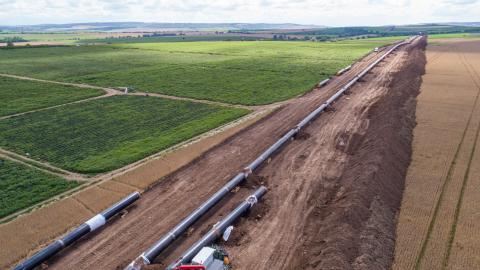
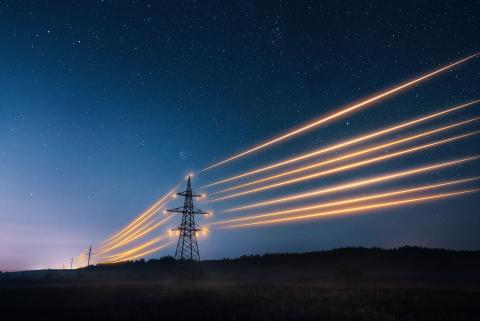
“Green iron production is capital intensive,” says the author Lachlan Wright, energy finance analyst, global steel, at IEEFA. “Each facility requires an ironmaking furnace and electrolysers together with supporting solar, wind, batteries and transmission to supply clean electricity. In addition, rail and port facilities are required for both bulk supply of iron ore and export of green iron.”
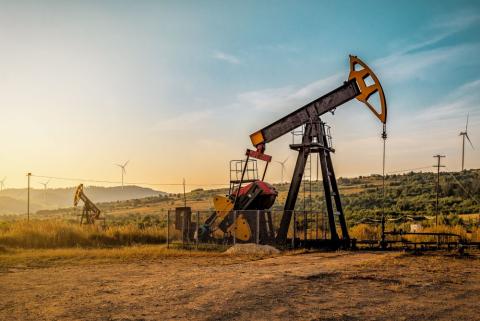
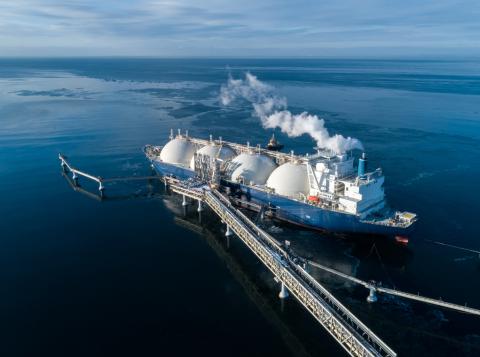
As the global steel industry decarbonises, demand for green iron is rising just as some of Australia’s top exports – coal and gas – are forecast to decline. But despite commanding a price premium, green iron is not yet cost competitive due to its energy-intensive production process.
“Australia is seeking to establish a green iron export industry,” Mr Wright says. “These exports would both support global emissions reductions and serve as a hedge against future declines in Australia’s traditional fossil fuel exports.
“The annual figure of AU$96 billion by 2040, cited in the federal government’s Green Iron Investment Fund announcement, is based on replacing metallurgical coal exports with an equivalent volume of green iron.”
Australia exports ~150MTPA of metallurgical coal, equivalent to ~270MTPA of green iron (~0.55t of met coal is used to make 1t of iron).
“At current prices, 1 million tonnes of green iron capacity in Australia would require AU$7–10 billion in capital investment for ironmaking, electrolysers, solar, wind and batteries,” Mr Wright says.
Renewable energy, essential to green iron, makes up half the capital investment required for any project in Australia. Even South Australia, the nation’s renewable energy powerhouse, would need to more than double its utility solar and battery capacity to power the Whyalla green iron project.
However, Australia, with its abundant resources, can draw on its successful renewable energy initiatives to stimulate investment in green iron.
“Several successful models which established a premium for renewable energy, including renewable portfolio standards, contracts-for-difference and feed-in tariffs could be adapted to green iron,” Mr Wright says.
“For Australia, policy that can establish a green premium in those exports is needed. Crucially, any such policy must have sufficient scale and funding assurance to provide the investment certainty needed.
“Without it, Australia is unlikely to attract the large amounts of capital needed to deliver on its green iron ambitions.”
Read the note: Scale of investment needed for Australia’s green iron ambition
Media contact: Will Poole, ph +61 408 030 524, [email protected]
Author contacts: Lachlan Wright, [email protected]
About IEEFA: The Institute for Energy Economics and Financial Analysis (IEEFA) examines issues related to energy markets, trends, and policies. The Institute’s mission is to accelerate the transition to a diverse, sustainable and profitable energy economy. (ieefa.org)