Texas petrochemical expansion lacks rewards for host cities
A regional look at the recent wave of Texas Gulf Coast ethane cracking capacity growth
Key Takeaways:
Promises of boosted economic conditions and new jobs have failed to materialize for the Texas cities hosting the wave of petrochemical expansion the industry experienced over the last 15 years.
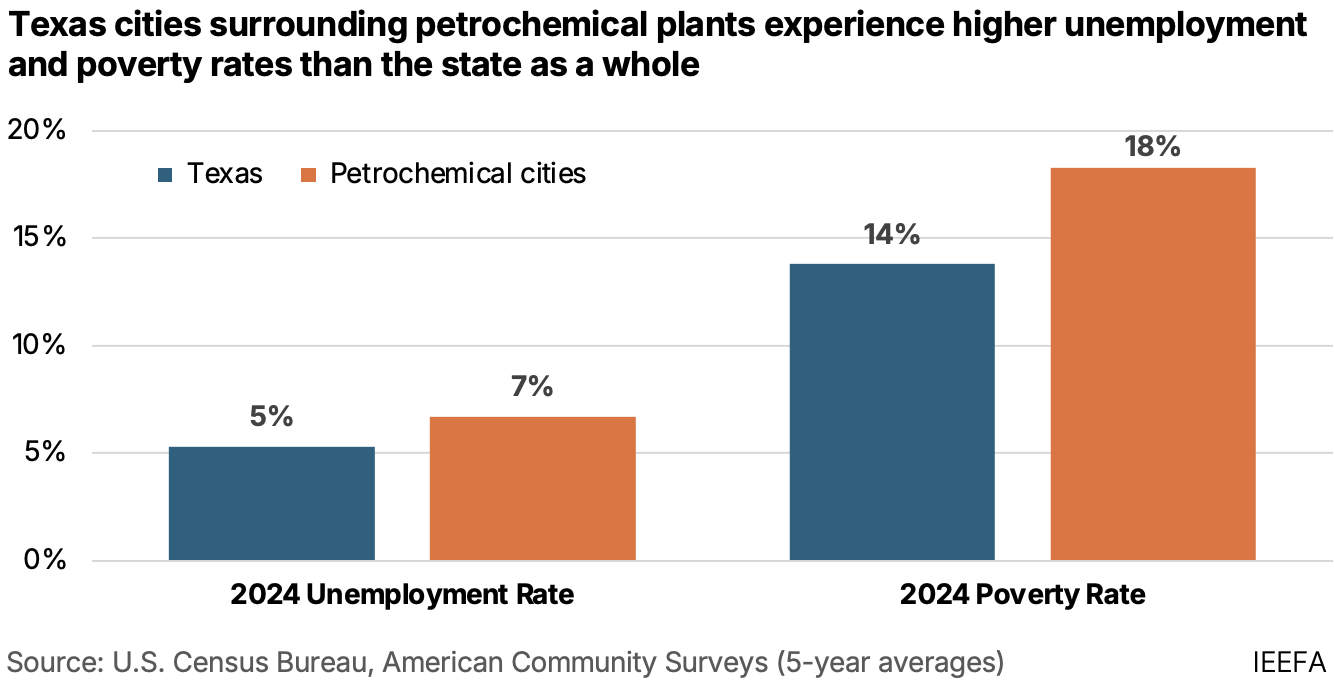
Lower median incomes, slower population growth, and less job growth coupled with higher city debt levels per person, higher unemployment, and higher poverty levels are characteristics of petrochemical cities during this time of industry expansion—contrary to industry claims of economic improvement.
In addition to bad economic outcomes, the Texas buildout has resulted in additional health costs associated with elevated levels of toxic pollutants affecting communities closest to petrochemical plants.
Petrochemical host cities were expecting prosperity but are getting blight, health issues, and devalued property in return for the industrial development they support.
September 3, 2026 (IEEFA) – Petrochemical host cities across Texas were expecting economic booms but are instead experiencing blight, health issues, and devalued property. According to the latest Institute for Energy Economics and Financial Analysis (IEEFA) report, promised jobs and economic prosperity have failed to materialize in correlation with the wave of petrochemical expansion the industry has experienced over the last 15 years.
The report focuses on cities along the Texas Gulf Coast where much of the state’s petrochemical activity occurs, and finds that these areas are experiencing lower median incomes, slower population growth, and less job growth when compared to statewide figures. The report does not find that the petrochemical facilities caused this downturn, but finds that the common claims from oil and gas companies that petrochemical capacity expansion will economically benefit communities are overblown.
Executives have claimed that every one job at a petrochemical plant results in another seven jobs in the community. Economic indicators have not proven this to be true in the Coastal Bend, the Houston Ship Channel, or the Golden triangle—the three key host communities where most of the buildout occurred.
“When deciding to expand these petrochemical facilities, local and state officials and industry proponents looked at the initial investment to the community,” says Trey Cowan, IEEFA energy finance analyst and author of the report. “What they should have done is looked beyond the temporary stimulus to the cities. Looking at the size and number of expansion projects undertaken, it is clear that there is a disconnect between the economic benefits promised and what was delivered.”
Besides a lack of long-term economic gains, the Texas buildout has resulted in additional health costs associated with elevated levels of toxic pollutants affecting communities closest to the petrochemical plants. Other communities with proposed petrochemical facilities should take note and assess the lingering risks before investing in these projects.