Solar sharers: How to make the most of free power
Key Takeaways:
Increasing policy support for electrification would enable more households to benefit from solar sharer tariffs, which reward the flexible use of electric appliances including hot water systems and air conditioners.
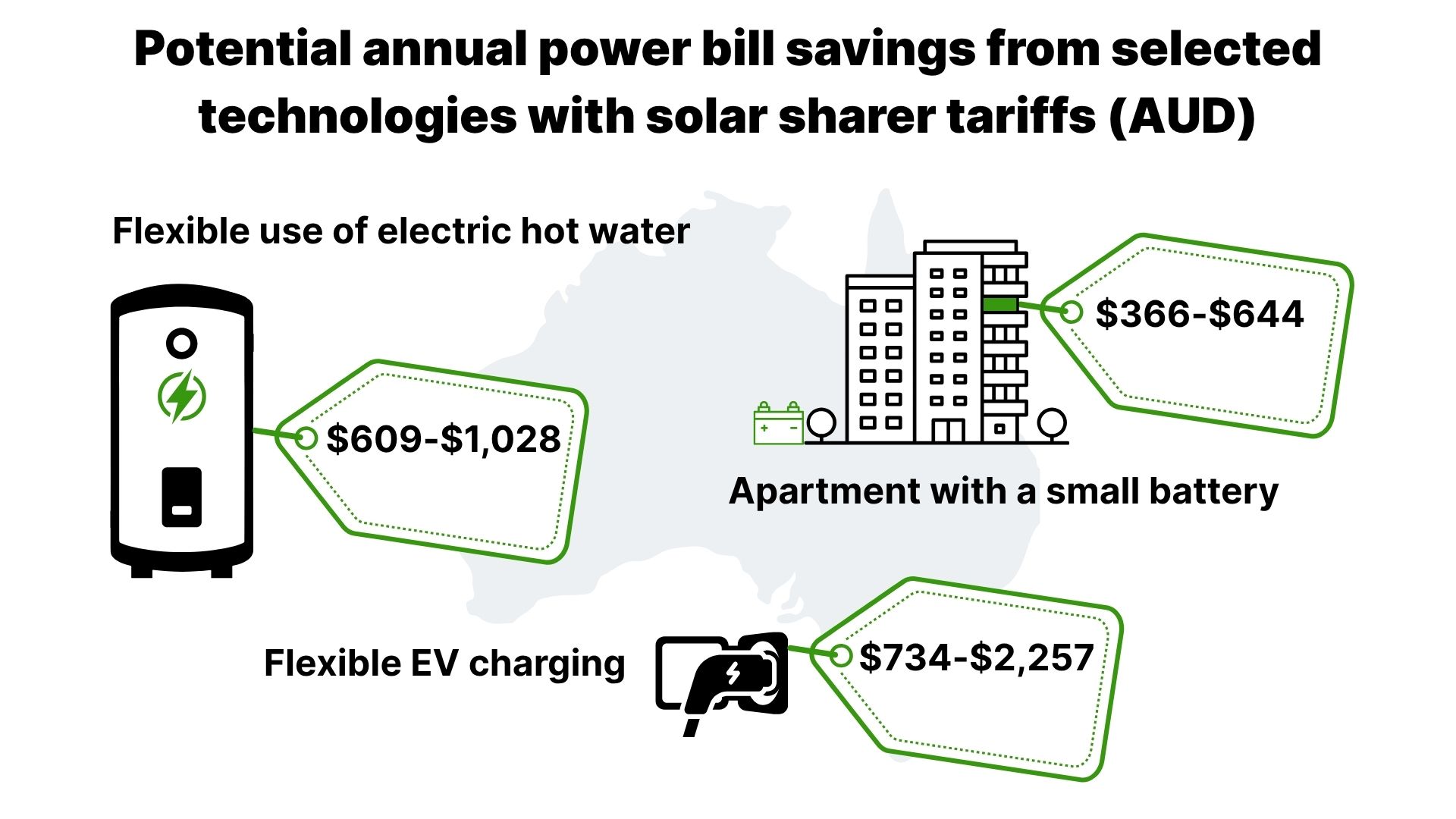
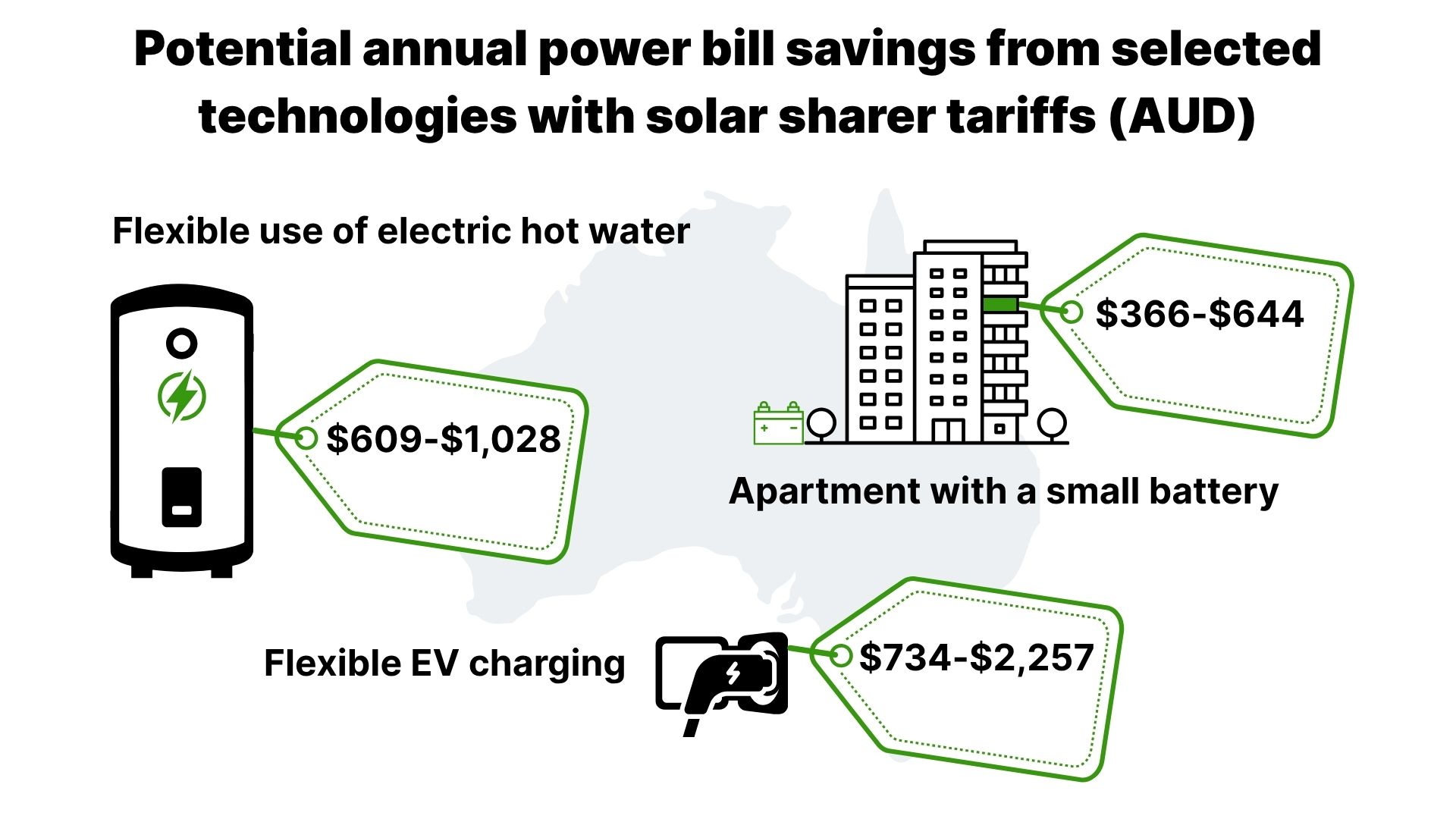
Solar sharer tariffs could offer annual savings of AUD734–2,257 for households with electric vehicles, if they can charge their car/s in the middle of the day.
Solar sharer tariffs unlock new opportunities for batteries in contexts where rooftop solar is challenging, which could include plug-in batteries for apartments if regulatory barriers were removed.
Future versions of the Solar Sharer Offer and Victorian Midday Power Saver could be improved by learning from innovations in competitive market offers, and by considering premium evening feed-in tariffs.
9 September 2026 (IEEFA Australia): Solar sharer tariffs that provide free electricity in the middle of the day could save consumers hundreds or thousands of dollars a year, if combined with actions to shift electricity use, according to a briefing note released today.
Australia’s rooftop solar boom has cut wholesale power prices to very low levels in the middle of the day. As a result, electricity retailers in NSW, South Australia, South-east Queensland and Victoria (from next month) will be required to offer plans with three hours of free daytime power.
The note Growing the benefits of solar sharer tariffs explores a number of ways households could take advantage of these offers, and identifies areas where additional policy support would unlock greater benefits.
IEEFA’s household energy modelling identified cost-saving opportunities using solar sharer tariffs in Sydney, Melbourne, Adelaide and Brisbane, such as:
- Hot water — for electric systems, shifting controlled loads from the middle of the night to the middle of the day via a timer can unlock annual savings of $577–$1,028. For the other half of homes with gas systems, switching to an electric system with timer controls can save $323–$623 a year using solar sharer tariffs.
- Electric vehicles — a household with one EV can save $734–$893 a year by charging their car in the middle of the day; this rises to $1,341–$2,257 for homes with two EVs.
- Batteries — solar sharer tariffs unlock new opportunities to households to benefit from a battery, even if they don’t have access to rooftop solar. A typical apartment with a 5kWh battery could save $366–$644 a year, which presents a case for unblocking barriers to plug-in battery systems in Australia.
In July, the federal government launched the Solar Sharer Offer, requiring retailers subject to the Default Market Offer to offer plans including three free hours of electricity each day, while the Victorian Midday Power Saver takes effect next month. Several electricity retailers already voluntarily offer plans with free periods of electricity, which are often more competitive than the minimum regulated offer.
“Typical retail time-of-use plans, regulated solar sharer tariffs and competitive solar sharer offers on the market can vary significantly,” Mr Gordon says. “Regulated solar sharer tariffs provide a free three-hour window, balanced by higher rates at other times.”
Some solar sharer tariffs offer longer periods of free electricity or a higher cap on the amount of electricity that can be consumed in the free period, which could benefit households able to shift large electricity loads to the middle of the day.
“IEEFA consistently found solar sharer plans were available on the market that offered greater savings than the regulated offer,” Mr Gordon says. “Some even offer a high feed-in tariff in the evening, rewarding households that export energy from a battery, which we know has significant benefits for the wider energy system.”
However, barriers prevent more households from taking advantage of the opportunities identified in the note. For example, renters cannot choose to switch from gas to electric appliances; flexibility standards for Australian appliances are lacking; optimal EV charging times are not well understood and; plug-in batteries face regulatory hurdles.
“Households that can’t flex their demand are unlikely to benefit from solar sharer tariffs,” Mr Gordon says. “To ensure more households benefit from solar sharer tariffs, governments should prioritise policies that support greater uptake of flexible electric appliances, flexible EV charging as well as solar and storage solutions for apartments and renters.”
In addition, IEEFA recommends the federal and Victorian governments continue improving regulated solar sharer tariffs to enhance their benefits.
“This could include expanding the window of free electricity, introducing a regulated minimum evening feed-in tariff, or considering alternatives to the 24kWh daily cap,” Mr Gordon says.
“Solar sharer tariffs can help unlock additional capacity for existing battery systems by encouraging imports of grid energy when it is most needed. Electricity plans that offer high evening feed-in tariffs provide even greater benefits — and could unlock the significant latent export potential in Australia’s stock of large home batteries.”
Read the note: Growing the benefits of solar sharer tariffs
Media contact: Will Poole, ph +61 408 030 524, [email protected]
Author contacts: Jay Gordon, [email protected]