Residential rooftop solar grows under PM Surya Ghar Yojana but gaps persist
Key Findings
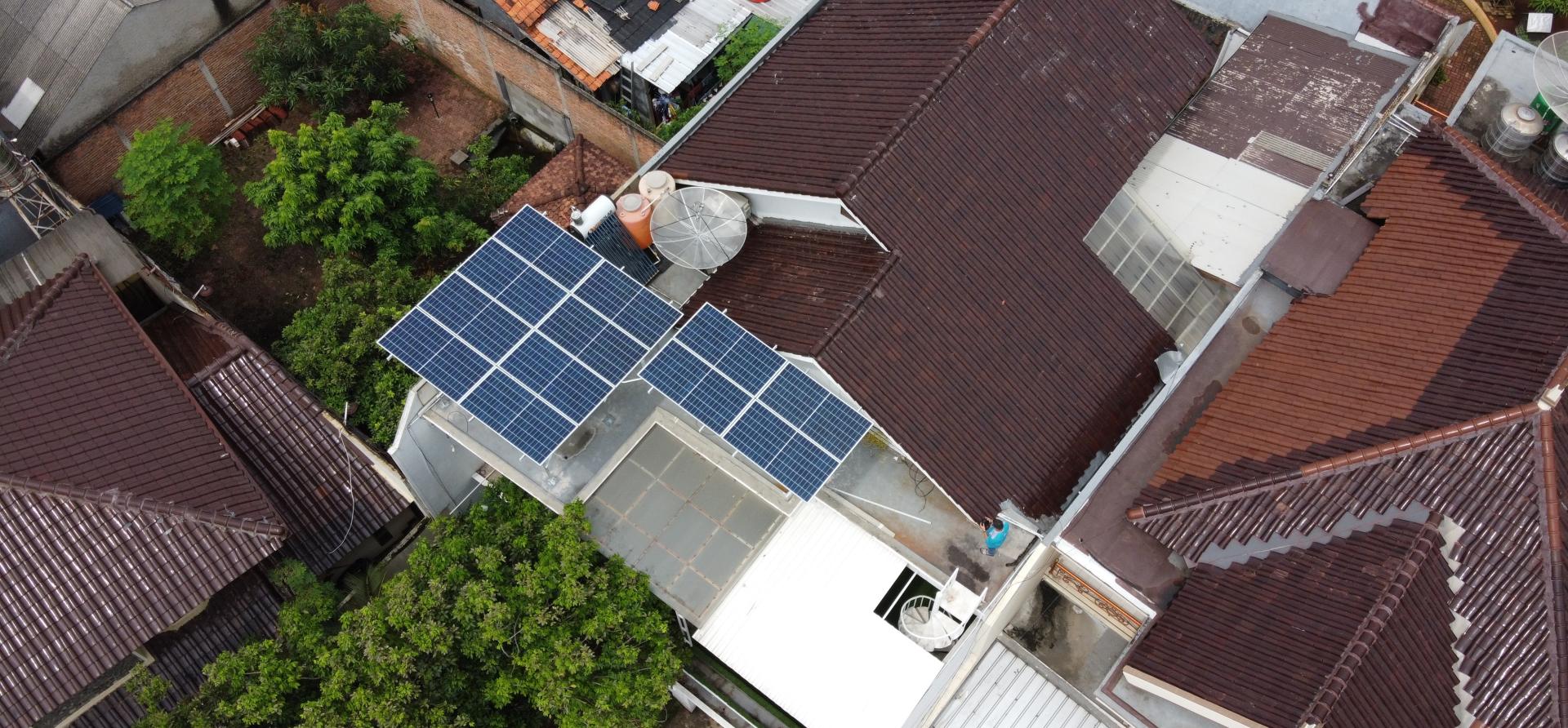
In just over a year since its launch, the Pradhan Mantri Surya Ghar Muft Bijli Yojana (PMSGY) has triggered strong early uptake, with the country adding 4.9 GW of residential rooftop solar capacity, accounting for nearly 45% of India’s total, and reached 1.6 million households, as of July 2025.
While early results are encouraging, PMSGY’s implementation on the ground faces several hurdles. Just 22.7% of applications have translated into completed installations, reflecting bottlenecks in financing, vendor capacity, and approvals.
For the scheme to deliver on its promise, several course corrections are needed, not through new subsidies but by strengthening existing systems, awareness, and accountability. This would include state-level action plans, strengthening grievance redressal and, crucially, simplifying financing, among other things.
India’s rooftops are increasingly dotted with solar panels, marking a new chapter in the country’s clean energy story. The Pradhan Mantri Surya Ghar Muft Bijli Yojana (PMSGY), launched in February 2024, has pushed residential rooftop solar into mainstream attention after years of slow uptake. For a country that depends heavily on imported fossil fuels, the idea of turning every roof into a small power plant carries both economic and environmental value.
The initiative aims to make rooftop solar more affordable and accessible for households across India. And in its first year itself, it is clear the scheme has sparked widespread interest. However, while early results are encouraging, the programme’s implementation on the ground faces several hurdles, from financing bottlenecks and supply chain gaps to limited awareness and procedural delays.
Early successes but uneven progress
Before PMSGY, rooftop solar uptake in India was largely limited to commercial and industrial consumers. For households, factors such as high upfront costs, complex processes, and low awareness acted as barriers. The government sought to change that with a simple approach: Standardise capital incentives, simplify procedures, and bring solar energy within the reach of regular families.
Numbers reflect how transformative the plan has been. With a financial outlay of INR75,021 crore (USD8.53 billion), the scheme targets 30 gigawatts (GW) of residential rooftop solar capacity, and coverage of 10 million households by FY2027. In just over a year since its launch, the country has added 4.9 GW under PMSGY, accounting for nearly 45% of India’s total residential rooftop capacity and reached 1.6 million households as of July 2025. Additionally, nearly 5.8 million applications had been filed under the scheme, showing that interest in rooftop solar was no longer confined to early adopters.
It is a strong start for a sector that long struggled to find its footing. Still, the conversion rate tells another story. Just 22.7% of applications have translated into completed installations, reflecting bottlenecks in financing, vendor capacity, and approvals. Also, with only about 13% of the target installations completed so far, the road to one crore solar homes remains long.
Moreover, despite a strong national push, scaling-up across states remains uneven. Gujarat leads the way with an installed capacity of 1,491 megawatt (MW), followed by Maharashtra, Uttar Pradesh, Kerala, and Rajasthan. Together, these five states account for more than three-fourths of the total capacity installed under PMSGY, reflecting stronger policy frameworks, a larger installer network, and greater consumer awareness. The pattern is clear: States with more mature solar ecosystems and proactive distribution companies are racing ahead, while others lag because of limited facilitation and vendor availability.
Barriers that slow down transition
The barriers to mass adoption and the reliability needed to sustain it span multiple fronts, from consumer understanding and financing to supply logistics and procedural clarity.
a) Consumer awareness remains low
Many households still perceive rooftop solar as costly or complicated, unaware that subsidies cover a large portion of the expense and that installation has become much simpler. Limited outreach in regional languages, few demonstration projects, and dependence on vendors for information have kept awareness low. This overreliance often leads to inconsistent experiences and misinformation.
b) Financing gaps and loan accessibility
Affordable financing remains a major barrier. Public sector banks offer loans at 7-8% interest, but the process is slow. Non-banking financial companies (NBFCs) provide quicker loans but at higher rates of 10-14 percent. For lower- and middle-income households, this trade-off between cost and speed often discourages adoption, especially where state subsidies are absent.
c) Delayed approvals and subsidy disbursals
Although PMSGY mandates a 30-day approval and commissioning window, real-world timelines often extend to 45-120 days. Delays stem from meter shortages, poor coordination between vendors and distribution companies (DISCOMs), and technical bottlenecks. The long wait between application and power generation weakens household confidence.
d) Supply constraints under the DCR policy
The domestic content requirement (DCR) policy aims to boost local manufacturing, but domestic cell capacity of 25 GW lags far behind the 100+ GW module capacity. DCR-compliant modules cost INR23-26 per watt, nearly double non-DCR imports, prompting many consumers to forgo subsidies for cheaper and faster installations.
e) Portal glitches and vendor issues
Frequent errors on the National Portal for Rooftop Solar and weak complaint tracking delay subsidies and strain trust. There’s also the issue of vendors being concentrated in a few states, causing delivery delays elsewhere. Moreover, inconsistent installation quality persists despite the Ministry of New and Renewable Energy’s certification drive.
Making the next phase work
For PMSGY to deliver on its promise, several course corrections are needed, not through new subsidies but by strengthening systems, awareness, and accountability.
a) State-level action plans
States should define their own rooftop solar targets, backed by annual milestones and clear implementation timelines. Some, like Uttar Pradesh and Haryana, have already set such roadmaps, but others need to follow. Regular progress reviews and public reporting could improve transparency and encourage competition among states.
b) Prioritising domestic supply for residential projects
To avoid recurring supply shortages, at least 20% of DCR module output could be reserved specifically for PMSGY-related installations. A predictable domestic supply would stabilise prices, ensure timely deliveries, and sustain the pace of installations.
c) Strengthening grievance redressal
A well-structured redressal system can make a big difference. Setting up district-level grievance escalation points, along with a 24x7 helpline and real-time complaint tracking, would give consumers and vendors clear channels to resolve issues without long delays.
d) Building local facilitation cells
State- and district-level facilitation teams could act as bridges between households, vendors, and DISCOMs, assisting with applications, verification, and subsidy claims. In partnership with local NGOs or panchayats, such cells could be particularly effective in semi urban and rural areas where technical guidance is scarce.
e) Focused consumer awareness drives
For millions of first-time solar users, structured awareness programmes would be a key enabler. Short community workshops, social media campaigns in regional languages, and school-level solar literacy programmes will all help normalise the idea of rooftop solar. The goal should be to make households see it not as a complex subsidy-driven project but as a practical long-term investment.
f) Simplifying financing
A dedicated task force could coordinate between banks and NBFCs to streamline loan procedures and promote affordable products. Greater outreach about financing options, simplified documentation, and digital pre-approvals could boost adoption across income groups.
g) Standardising plug and play solar kits
The rooftop solar market remains fragmented, with wide variations in component quality. Encouraging standardised pre-assembled solar kits would simplify installation, minimise errors, and reduce costs. These plug and play systems could particularly benefit rural areas where technical expertise is limited.
Looking ahead: From subsidy to sustainability
Subsidies alone cannot sustain the momentum of PMSGY. The next phase of growth will depend on simpler digital processes, faster approvals, transparent payments, and robust vendor accountability. Emerging financing models, such as pay-as-you-save (PAYS), community solar, and peer-to-peer (P2P) trading, can make adoption easier for lower income groups and diversify participation.
Ultimately, the scheme’s success will depend on how quickly it transitions from being subsidy-driven to system-driven. If financing, supply, and procedural challenges are addressed, PMSGY can evolve into a sustainable, market-led programme that reshapes India’s residential energy landscape.
India’s rooftop solar boom is underway, but to stay the course, the focus now must shift from expansion to execution.
This article was first published in Mongabay.


Related Content