India’s oil and gas crisis is a wake-up call for transport electrification
Key Findings
The West Asia conflict has exposed India's structural vulnerability to external energy shocks, with around 85% crude oil import dependence and heavy reliance on chokepoints like the Strait of Hormuz.
This highlights the need for diversification of transport fuels and shift to electric mobility. As a model, electric mobility directly moves away from fuel imports and runs on domestically produced electricity.
However, over 96% of India's 378 million vehicles still run on petrol or diesel, and barely 1.3% are electric.
Accelerated adoption of electric mobility requires sustained policy support at various levels of the government, investment in manufacturing and charging infrastructure, and most importantly, indigenisation of supply chains from components and manufacturing, to production, recycling, and securing access to critical minerals. Without the last, India will risk another form of import dependence for another.
The conflict in West Asia has once again exposed India’s vulnerability in securing oil and gas supplies. As the world’s third-largest crude oil consumer, India imports nearly 85% of its crude, and prior to the US-Iran war, 45% of those imports transited the Strait of Hormuz. When that chokepoint closed, the consequences were immediate.
A swift, multi-pronged government response helped cushion the worst immediate effects, but it also exposed how much further India needs to go. The West Asia crisis made clear that energy transition in transport is not just an environmental goal but a national security imperative.
Plugging the gap
India rapidly diversified its crude import sources from roughly 20 countries to 40 by the end of March 2026. Through this diversification, India can now source 70% of its crude oil imports from outside the Strait of Hormuz.
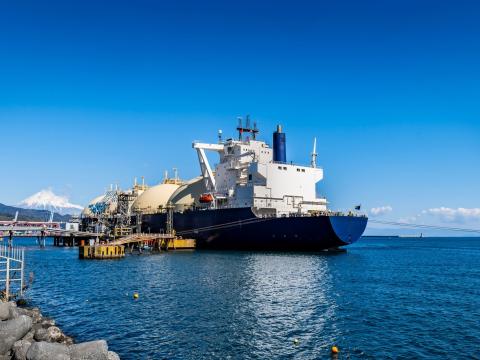
India is also attempting to diversify its LNG imports, as nearly 52% of its import volume was affected by force majeure due to the war. While traditional suppliers such as the UAE, Saudi Arabia, and Iraq remain important, the United States is also emerging as a key LNG supplier.
In early March, the government directed refineries to maximise LPG output, increasing domestic LPG production by 25%. LPG supplies were prioritised for households, while supplies for all non-domestic uses are being rationed. By cutting natural gas supplies to industrial and commercial consumers to 80% of their average consumption in March 2026, demand from these sectors was artificially reduced.
But despite government assurances, panic buying led to long queues at fuel stations across several cities — a reminder that supply-side fixes alone cannot insulate India from external shocks.
India’s evolving transportation fuel strategy
India has begun diversifying transportation fuels since the early 2000s — moving from diesel to CNG, blending ethanol, piloting biodiesel, and expanding electric mobility. Yet of India's 378 million registered vehicles, over 96% still run on petrol or diesel, and barely 1.3% are electric.
Supported by government mandates, ethanol blending with petrol rose from 5% in 2019–20 to nearly 20% in 2024–25, five years ahead of schedule. This now replaces about 45 million barrels of imported oil annually — around 2.5% of total imports. However, ethanol production is diverting agricultural land from food crops like oilseeds and pulses toward water-intensive sugarcane and cereals and is far less land-efficient than solar power: to match the annual travel distance of EVs recharged from one hectare of solar, 187 hectares of maize-derived ethanol are required. Higher blends also risk damaging engines in vehicles manufactured before 2021. Ethanol is a useful supplement, not a solution.
CNG has helped shift fleets off diesel, but it is not a long-term answer. While CNG is cleaner-burning than diesel, it still emits air pollutants and keeps India dependent on natural gas imports. Continued investment in CNG-powered vehicles and infrastructure will strand India’s cities in air pollution for decades to come.
Green hydrogen shows promise for long-haul, heavy-duty trucking. Like electricity for Battery EVs (BEV), green hydrogen can be produced from domestic renewables, cutting emissions and reducing dependence on imported oil. However, hydrogen applications in transport are still in a pilot stage and have a long way to go to commercialisation.
Battery electric vehicles emerge as a clear choice
BEVs are the one transport technology that is both commercially ready and strategically sound. The technology is rapidly improving and becoming increasingly economical across urban, commercial, and private use cases, suitable for vehicles ranging from two- and three-wheelers to passenger cars, light commercial vehicles, and buses. More critically, BEVs directly displace fuel imports and run on domestically produced electricity, exactly the insulation India lacked when the Strait of Hormuz closed.
The union and state governments already support BEV adoption through incentives, tax waivers, and mandates, with states like Uttar Pradesh, Maharashtra, and Karnataka leading sales. However, the share of BEVs in all new vehicle sales across most segments remains below 10%, except in the three-wheeler segment, largely due to high upfront costs and inadequate charging infrastructure. Accelerating adoption will require three things:
First, sustained policy support from both union and state governments, including fiscal incentives, supply-side mandates, and fleet decarbonisation targets. Such policies exhibited a strong positive correlation with BEV sales and adoption in the past.
Second, investment in BEV manufacturing and charging infrastructure must accelerate sharply. Current investment trails the level needed for India’s 2030 electric mobility goals by 82%.
Third, and perhaps most important, India must indigenise its BEV supply chains from auto and auto-component manufacturing, battery and cell production to recycling while securing access to critical minerals. Without this, India risks trading one form of import dependence for another.
India’s heavy reliance on imported oil and gas—much of it from the volatile West Asian region—makes transport electrification not a distant aspiration but an urgent economic and strategic priority.
This article was first published in ET Energy World

Related Content