Australia should heed the IEA’s warning on oil demand
The International Energy Agency’s (IEA) latest World Energy Outlook highlights the inherent risks of relying on imported fossil fuels, noting developments in the Middle East will remain a source of potential risk. The IEA report similarly points to the actions countries are already taking to reduce their exposure, including policies intended to prioritise domestic energy resources and speed up electrification, and the likelihood of further measures the longer the crisis persists. Unsurprisingly, oil demand forecasts are lower in scenarios that account for additional policy measures.
Under its Stated Policies Scenario (STEPS), the IEA forecast global oil demand to level off around 103 million barrels per day (mb/d) around 2030 before gradually declining. Under the Additional Response Case (ARC), in which governments implement further measures to strengthen energy security, oil demand falls earlier and faster, to about 97mb/d in 2035 and 85mb/d in 2050. Put simply, responses to the crisis could materially lower oil demand next decade and help to ameliorate risks in countries that act. Electric vehicles (EVs) are central to this shift, and are expected to displace more than 11mb/d of oil demand by 2035 under the ARC scenario.
Australia’s response to the oil crisis has so far focused on securing refined fuel products, but the government has largely been silent on longer-term policy responses to reduce oil exposure, meaning Australia might fall behind global trends to accelerate electrification and reduce oil exposure.
This is concerning. Australia is the world’s largest diesel importer, and relies on imports for more than 95% of fuel supply. Many of the Asian refineries supplying most of Australia’s imports depend on Middle Eastern crude, meaning Australia remains highly exposed to disruptions in the Strait of Hormuz (and oil markets more broadly).
Rising sales of EVs in Australia are already, in part, affecting petrol demand, which fell by 4.5%, or an average of 12,000b/d, in the first nine months of 2026 compared with average daily consumption in 2025. In the first 10 months of 2026, EV Central reported battery electric vehicle sales were up 145% to 205,436; plug-in hybrid sales increased 126.7% to about 97,000. In contrast, petrol and diesel vehicle sales fell 27.6% and 16.3%, respectively.
Yet the federal government is considering reducing or removing the Electric Car Discount, a policy that supports this transition. Any change to the policy should be considered carefully to ensure it doesn’t materially slow the deployment of EVs, as occurred in other countries when support was removed.
The government’s response to the crisis so far has focused on oil supply rather than oil demand. It has included commitments to expand diesel and jet fuel storage, and fund a study into a new West Australian refinery. Queensland is also investigating a refinery.
Storage can provide an important buffer against short-term disruption, but neither storage nor refining reduces the amount of oil Australia needs. A new refinery would not remove exposure to imported crude, while investment in electrification and efficiency can reduce exposure to oil prices directly.
There are broader economic arguments for reducing Australia’s oil demand, not least because key economic sectors use diesel as their primary energy source. Lower imports of fuel products would improve Australia’s terms of trade. Australia’s crude oil and petroleum product import bill reached AU$55 billion in the first nine months of this year, already exceeding the AU$50 billion spent last year. Higher fuel costs also add to inflationary pressure, and IEEFA analysis found that oil price spikes contributed to a number of inflationary spikes over the past quarter century.
Reducing consumption would therefore strengthen both energy security and economic resilience.
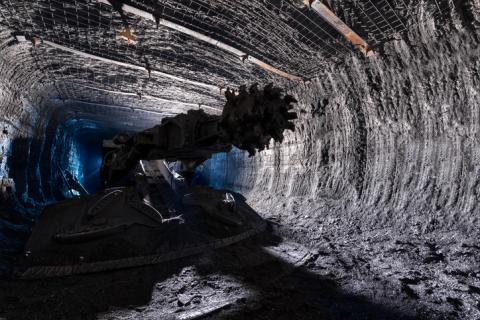
While passenger cars are an obvious area of focus, IEEFA research identifies potential mining fuel savings of 1.15 billion to 2.3 billion litres a year (26,000–34,500b/d) through improved efficiency. The incentives created by fuel tax credits deserve scrutiny as they reduce incentives to electrify mining fleets (in addition to costing taxpayers about AU$4.5 billion in FY2023–24 for mining). Mining credits are uncapped, and unlike eligibility for on-road heavy vehicle credits, they are not tied to vehicle emissions standards. Reforming these arrangements would encourage efficiency and adoption of electric alternatives.
Road freight is another priority given it accounts for three-quarters of road transport diesel use. Existing technologies and practices offer efficiency gains of 10–20% in the short term. These include eco-driving, correct tyre pressure, better maintenance and improved payload management. Digital matching platforms can help reduce underused capacity and empty trips, allowing freight to move with less fuel. The growing adoption of electric trucks in China provides an early indicator of the longer-term potential of electrification.
In Australia, we should not allow the need to ensure fuel is available today to distract us from preparing for a different transport system tomorrow. We clearly need to focus on both. But a response dominated by storage, refinery studies and continued diesel support risks overlooking the most durable form of energy security: needing less imported fuel.
Australia risks falling behind if government continues to treat demand reduction as an afterthought.
*This article first appeared in the Energy News Bulletin.

Related Content