Optimising Australia’s transmission grid with big, flexible batteries
Key Findings
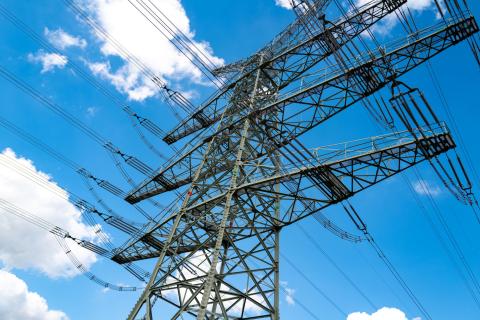
Transmission lines are operated below design capacity so the network can cope if a fault occurs. This limits renewable energy export from Renewable Energy Zones (REZs).
Battery Energy Storage Systems (BESS) already help transmission lines carry more power under System Integrity Protection Schemes (SIPS).
A Flexible BESS–SIPS Portfolio could extend this service by enabling multiple batteries to allow transmission lines to run at higher levels, unlocking more renewable energy from REZs and increasing network utilisation.
Not many members of the general public realise that our power transmission lines routinely operate below 50 per cent capacity even when all assets are in service. They are designed to run this way to maintain uninterrupted power supply following the loss of a line, ensuring the remaining lines are not overloaded. Across Australia’s vast power transmission networks, that amounts to a lot of unused capacity. Meanwhile, the capacity of Australia’s fleet of batteries is growing, and at times of high renewable output these batteries are often charging or on standby.
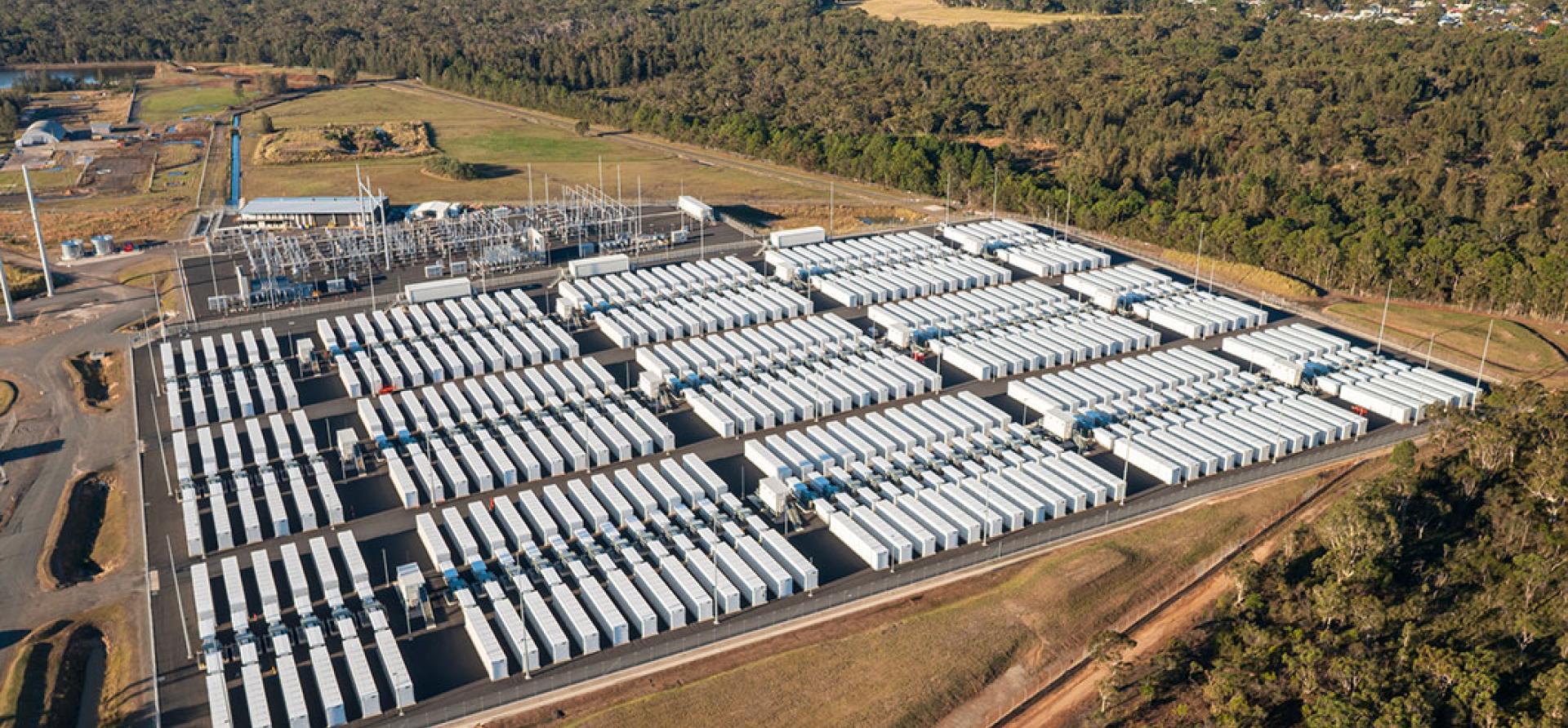
To maximise the utilisation of these lines, a new report from think-tank IEEFA and consultancy GEN2NEM proposes a portfolio of co-ordinated flexible battery energy storage systems (BESS) activated by a system integrity protection scheme (SIPS) as a means to increase power transfer on multiple transmission corridors. SIPS are already in use with the Waratah Super Battery in NSW and the Victorian Big Battery, allowing specific high-capacity transmission lines to carry more power by triggering rapid dispatch following an event, preventing system overloads. When the Victorian SIPS was developed, very few BESS were connected to the network, therefore the SIPS service was contracted from a single battery. In NSW, a SIPS was contracted with the state’s single largest battery, the Waratah Super Battery, after a competitive tender in 2023.
Since that time, the number of battery connections have significantly increased, creating an opportunity for multiple batteries to participate in co-ordinated SIPS, rather than single batteries only. The benefit of drawing from a greater pool of batteries is that there is redundancy provided by multiple batteries, and the SIPS service could be provided more competitively and comprehensively across relevant transmission network areas.
While dispatching energy from batteries to supply load can provide local firming capacity, a flexible BESS-SIPS portfolio could provide network benefits by enabling increased renewable energy zone export without depleting levels of stored energy.
The growing fleet of batteries adds a significant asset to Australia’s energy mix, one that could be tapped to increase generator dispatch capacity and the efficiency of the power network. The proposed flexible BESS-SIPS portfolio can help bridge network capacity gaps as Australia transitions to a fleet of renewable generation, and increase the potential transfer capacity of new transmission developments.
I suggest that energy market institutions and the energy industry collaborate to extend and optimise the provision of BESS–SIPS services to achieve higher levels of renewable generation dispatch and increased utilisation of network assets, contributing to downward pressure on wholesale energy prices.
Another possible area for extension of existing BESS–SIPS services is enabling optimised quantities of battery reserve to respond to faults on multiple transmission corridors. Different subsets of BESS could optimise power flow on different transmission corridors and help manage the loss of large loads and generators.
For instance, a scheme with a 600MW Flexible BESS–SIPS Portfolio has the potential to:
- Optimise power transfer on multiple corridors, noting that the likelihood of a single event affecting export from multiple REZs is unlikely.
- Maximise power transfer by allowing transfers above levels set by available resecuring reserve.
- Maximise power transfer during planned outages by allowing transfers above levels set by maximum contingency risks.
- Allow battery charging at times of high demand and high renewable export.
The Australian Energy Market Commission (AEMC) should consider the benefits of a portfolio BESS delivering a flexible BESS–SIPS response to increase network utilisation as part of its Electricity Network Regulation Review.
The BESS-SIPS reserves should be procured in a flexible, dynamic manner, such that they are available when required, rather than all the time. In the short term, flexible BESS-SIPS reserves could be procured through existing non-market routes, such as government tenders, a transmission network support agreement, a Network Support and Control Ancillary Services contract, or a Type 1 or Type 2 Transitional Services contract. In the longer term, a dedicated rule change request could explore the benefits of establishing a new mechanism.
We recommend that a system trial is undertaken to capture the number and duration of periods when a Flexible BESS–SIPS Portfolio would be required, the available battery capacity and the potential uplift in capacity to quantify network benefits.
First published in The Energy.
To read the report on which this article is based, click here.

Related Content