Dynamic battery reserves can deliver network benefits
Download Full Report
Key Findings
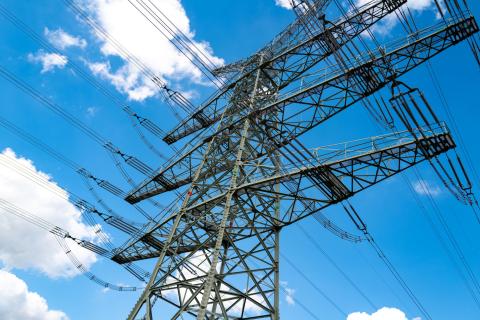
Transmission lines are often run well below capacity so the network can cope if a fault occurs. This increasingly limits renewable energy flows.
Single batteries already help transmission lines carry more power. The Victorian Big Battery and Waratah Super Battery do this under SIPS contracts, with the Waratah contract now more flexible to improve utilisation.
A Flexible BESS–SIPS Portfolio could extend this service so that multiple batteries could be enabled to support transmission lines to run at higher levels, unlocking more renewable energy from REZs.
The concept should be tested through modelling and a trial, and optimal procurement routes identified. A new System Operator function should be established to co-ordinate the Flexible BESS–SIPS Portfolio.
Executive summary
As Australia’s National Electricity Market (NEM) transitions to low-carbon energy resources, previous forecasts of low demand growth are being replaced by an increase in demand due to an uptake in consumer electrification and data centre connections. While new generation and load connections typically have delivery timeframes of two to three years, transmission projects have much longer delivery timeframes. The sequencing gap between connections and transmission development increases the risk of energy supply limitations and high electricity prices arising from insufficient transmission capacity.
The low-cost renewable power that can flow from Renewable Energy Zones (REZs) can be limited not only by what the lines can physically carry (based on thermal ratings), but also by the level of power flow that can be safely managed if something goes wrong (i.e. a contingency event occurs). To manage contingencies after they happen, post-contingency reserves are often required. In this report, “reserve” means capacity held on standby so it can rapidly inject or absorb power after a network fault, and to help return the network to a secure state (rather than system-wide reliability reserves such as the Reliability and Emergency Reserve Trader or RERT).
At present, a network or system operator may have a contract in place with a single battery energy storage system (BESS) to provide a rapid response to an event as part of a System Integrity Protection Scheme (SIPS). Such an arrangement enables increased pre-event power transfer on a single transmission corridor (or in some cases, such as the Waratah Super Battery, multiple corridors). These arrangements have been evolving, with more flexibility added to the Waratah Super Battery SIPS contract so the service is only activated when needed (with at least 24 hours’ notice), leaving the battery free to trade at other times.
This report builds on that evolution, introducing the high-level concept of extending the SIPS to procure additional reserves, in a flexible manner, from multiple BESS facilities (rather than just one), to increase power transfer on multiple transmission corridors. We call this a “Flexible BESS–SIPS Portfolio”.
A new System Operator function could be established to identify when additional reserves are required, particularly during periods of high REZ generation, high demand or planned outages, and optimise the quantity and type of reserve response from any participating BESS. This function would support greater utilisation of existing transmission infrastructure and facilitate higher levels of renewable energy transfer.
Unlike traditional SIPS arrangements, which reserve battery capacity to respond on an ongoing basis, BESS capacity would only be enabled when needed, allowing any participating BESS to continue operating in energy markets at other times.
Depending on the transmission corridor, battery capacity enabled for rapid response, slower resecuring response, or a combination of both may be required to increase power transfer and network utilisation. The System Operator would optimise the mix of rapid response (within 200 milliseconds) and slower resecuring response (within 30 minutes) to manage system security and operational risks while making efficient use of both transmission and battery capacity.
A Flexible BESS–SIPS Portfolio could theoretically deliver the following benefits:
- Increase REZ generator export and reduce curtailment of renewable energy, thus placing downward pressure on wholesale energy prices.
- Improve network utilisation, reliability and the co-ordination of generator response.
- Support the connection of large loads, and avoid load tripping.
Recommendations
This report recommends further technical assessment to confirm technical feasibility, economic viability, locational requirements for participating BESS, the potential uplift in transfer capacity, and the need for any network reconfiguration to support higher power transfer.
The Australian Energy Market Commission (AEMC) should consider the benefits of standalone BESS and hybrid systems delivering a Flexible BESS–SIPS Portfolio response to increase network capacity as part of its Electricity Network Regulation Review.
Market analysis is required to determine the appropriate mechanism to facilitate procurement of an optimised Flexible BESS–SIPS Portfolio. In the short term, it could be procured through existing non-market routes, such as government tenders, a Transmission Network Service Provider (TNSP) network support agreement, a Network Support and Control Ancillary Services (NSCAS) contract, or a Type 1 or Type 2 Transitional Services contract. In the longer term, a dedicated rule change request could explore the benefits of establishing a new mechanism.
A system trial should be undertaken to capture the number and duration of periods when a Flexible BESS–SIPS Portfolio (providing rapid response and/or slower resecuring response) would be required, the available battery capacity and the potential uplift in capacity to confirm indicative cost per megawatt ($/MW) benefit.

Related Content