Narrabri gas not the answer for eastern Australia

There are better ways to address looming shortages
Key Takeaways:
Diverting gas from Queensland is a better option to address domestic supply concerns in eastern Australia than developing the Narrabri Gas Project in New South Wales (NSW).
Additional Queensland supplies could cut NSW gas prices by 17% if the federal government ties Queensland LNG exports to domestic supplies and prevents exporters from siphoning domestic gas for export.
Narrabri gas is estimated to cost more than Queensland gas and is therefore unlikely to lower NSW gas prices. It will also take longer to reach market.
Narrabri faces legal, regulatory and financial barriers, including sustained opposition from landowners along the proposed route for a crucial pipeline, which could lead to further delays.
16 February 2026 (IEEFA Australia): With gas shortages looming across eastern Australia, new research shows that there are better, quicker and less costly solutions than Santos’s proposed Narrabri Gas Project.
Located in the Gunnedah Basin in New South Wales (NSW), the Narrabri gas field is estimated to have gas resources of 599-1,316 pet.ajoules (PJ), enough to meet gas demand in southern markets for about three years. Amid forecasts of structural gas shortages across Australia’s eastern states by the end of the decade, Narrabri has been widely flagged as the key to increasing much-needed domestic supply
However, Santos’s AU$3.6 billion project continues to face delays amid community opposition and legal, regulatory and financial issues. In its new briefing note Narrabri is a costly way to increase gas supply, IEEFA highlights a better option that would address the eastern states’ supply issues more quickly and cost-effectively.
“Santos has sought to develop Narrabri gas since 2011, yet it still hasn’t reached final investment decision (FID) on the project,” says Kevin Morrison, Energy Finance Analyst, Australian Gas at IEEFA, and author of the report. “There are a range of obstacles holding up its development, and they are unlikely to be resolved quickly.
“Meanwhile, the eastern gas market has experienced soaring prices in recent years, with shortages on the horizon. Our research shows that diverting existing gas production from Queensland would address these shortages more quickly than waiting for Narrabri to come online – while lowering prices at the same time.”
Australia’s southern states are projected to face peak day gas shortages from as early 2028, with structural shortages emerging across eastern Australia from 2029. The shortages are largely caused by dwindling gas production from legacy gas fields offshore Victoria. The problem is compounded by liquified natural gas (LNG) producers in Queensland siphoning gas from the domestic market to meet export contracts. Gas prices in eastern Australia have tripled since LNG exports began in January 2015.
If developed, the Narrabri project could increase domestic supply. However, diverting more Queensland gas would be a better option because it would be less costly to develop and transport to end-users. It could also be supplied more quickly, since many of Queensland’s gas reserves are already developed with infrastructure in place to deliver gas to customers. Morrison’s briefing note draws on studies that show increasing supply from Queensland would cut gas prices significantly.
“In contrast, Narrabri is unlikely to reduce prices as the cost of delivery is estimated to be above prevailing prices,” says Morrison. “In addition, it faces several barriers that mean it may not even be developed in time to address supply concerns – if at all.”
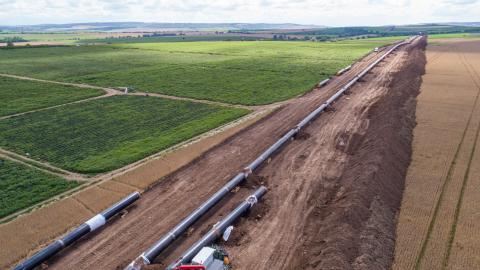
The Narrabri project is currently awaiting a federal court ruling on an appeal to the Native Title Tribunal’s approval that has been delayed until March 2026. Industry body NSW Farmers has also sought legal counsel over concerns about the project’s groundwater impacts. Santos has also not secured sufficient landowner agreements for a proposed gas pipeline connecting Narrabri to eastern Australia’s gas network.
There are also potentially financial issues. Santos faces a potential increase in capital expenditure for other projects in the coming years, and has pledged a greater return to shareholders that could impede spending on new gas projects. Narrabri gas has relatively elevated levels of carbon dioxide, which could add technical challenges and therefore increase costs. Finally, fears of supply gluts emerging in the global LNG and oil markets are putting pressure on gas and oil prices, which could impact on Santos’s ability to fund new projects
The economics of Narrabri could also be challenged by the federal government’s plans to implement a domestic gas reservation scheme. In the likely event that the scheme leads to additional supply from Queensland, it would push down gas prices. This would be a further test for Narrabri, which is likely to rely on higher prices to make it profitable.
“The likelihood is that Narrabri will be more costly than the alternatives available, while the many problems it faces mean its timelines remain uncertain,” says Morrison. “Eastern Australia can’t afford to wait for Narrabri to meet their future supply needs.
“In IEEFA’s view, the government should focus on designing a domestic gas reservation scheme that encourages the cheapest new gas supply, which would involve diverting more gas from Queensland. This would lower gas prices in NSW, Victoria and South Australia and help to address cost-of-living concerns.”
Read the report: Narrabri is a costly way to increase gas supply
Media contact: Amy Leiper, ph +61 414 643 446, [email protected]
Author contacts: Kevin Morrison, [email protected]
About IEEFA: The Institute for Energy Economics and Financial Analysis (IEEFA) examines issues related to energy markets, trends, and policies. The Institute's mission is to accelerate the transition to a diverse, sustainable and profitable energy economy. (ieefa.org)