Declining outlook for Australian gas and LNG

IEEFA’s updated data tool shows weakening demand here and abroad
Key Takeaways:
IEEFA has released an update of its Australian Gas and LNG Tracker, its interactive, visual tool providing data on Australia’s liquefied natural gas industry and trade.
The latest Tracker data reveals falls in both Australia’s exports and Asia’s imports of LNG during 2025.
LNG exports continue to soak up the majority of Australia’s gas output, accounting for 83% of gas produced in the first half of 2025.
Domestic gas demand continues to fall in both Western Australia and the eastern states. Gas faces an uncertain future in Asia’s electricity mix, amid fierce competition from coal and renewable energy.
12 December 2025 (IEEFA Australia): The Institute for Energy Economics and Financial Analysis (IEEFA) has released an update of its Australian Gas and LNG Tracker, its interactive data visualisation tool on Australia’s liquefied natural gas (LNG) industry and trade.
The Australian Gas and LNG Tracker allows users to visualise Australia’s gas production and LNG export demand and flows. It uses data compiled from a range of authoritative sources, including Kpler and the Australian Energy Market Operator (AEMO), along with IEEFA’s own analysis. The latest version of the Tracker updates and expands upon the previous version, released in June.
Key findings revealed in the updated Australian Gas and LNG Tracker include:
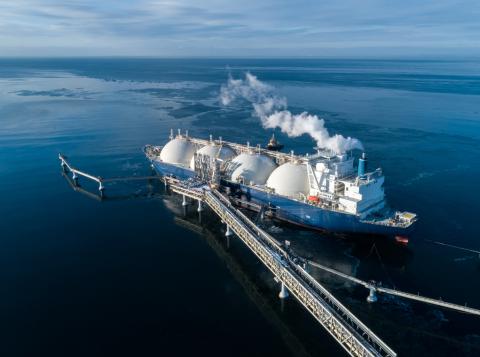
- Australia’s LNG exports fell in the first half of 2025 to their lowest level in four years, driven almost entirely by falling exports from Western Australia. This was caused, in part, by Woodside mothballing a train at its North West Shelf LNG plant.
Asian LNG imports saw the largest half-year fall (in the first half of 2025) in the period since 2010, with imports down by 9%. China was a key driver, with its imports down 21% year on year.
LNG exports continue to account for most of Australia’s gas production, with 83% of gas produced in the first half of 2025 used for exports. Declining export volumes coincided with falling domestic gas production and domestic supply.
Domestic gas demand continues to fall. In eastern Australia, all major segments saw a fall in consumption between FY2022-23 and FY2024-25, with the exception of the LNG export sector. In Western Australia, falling demand for gas for electricity generation drove a fall in total domestic gas consumption, which coincided with falling domestic spot gas prices.
Victoria continues to supply the majority of gas to the southern states, exporting almost 1,030 petajoules (PJ) to other states from 2017 to mid-2025. In contrast, Queensland supplied about 17PJ on a net basis to the southern states over that same period.
The role of gas in Asia’s electricity systems is mixed. Growing renewables appear to be displacing gas in some countries, and declining domestic gas production is seeing other countries rely more heavily on coal generation. The few countries that rely on LNG and have a large or growing share of gas generation have high incomes and relatively small landmasses.
“The latest Tracker data presents an outlook of weakening demand for Australian gas both here and abroad,” said Joshua Runciman, Lead Analyst, Australian Gas at IEEFA. “It reveals a decline in LNG exports over the last year, with growing competition from coal and renewable energy complicating the energy mix among key markets in Asia. Domestic gas consumption is also falling, with LNG production continuing to account for the vast majority of Australia’s gas production.”
To visit IEEFA’s Australia Gas and LNG Tracker, click here.
Media contact: Amy Leiper, ph 0414 643 446, [email protected]
Author contact: Amandine Denis-Ryan, [email protected]
About IEEFA: The Institute for Energy Economics and Financial Analysis (IEEFA) examines issues related to energy markets, trends and policies. The Institute’s mission is to accelerate the transition to a diverse, sustainable and profitable energy economy. (ieefa.org)