Bangladesh's distributed energy resource sector taking shape, driven by industrial rooftop solar
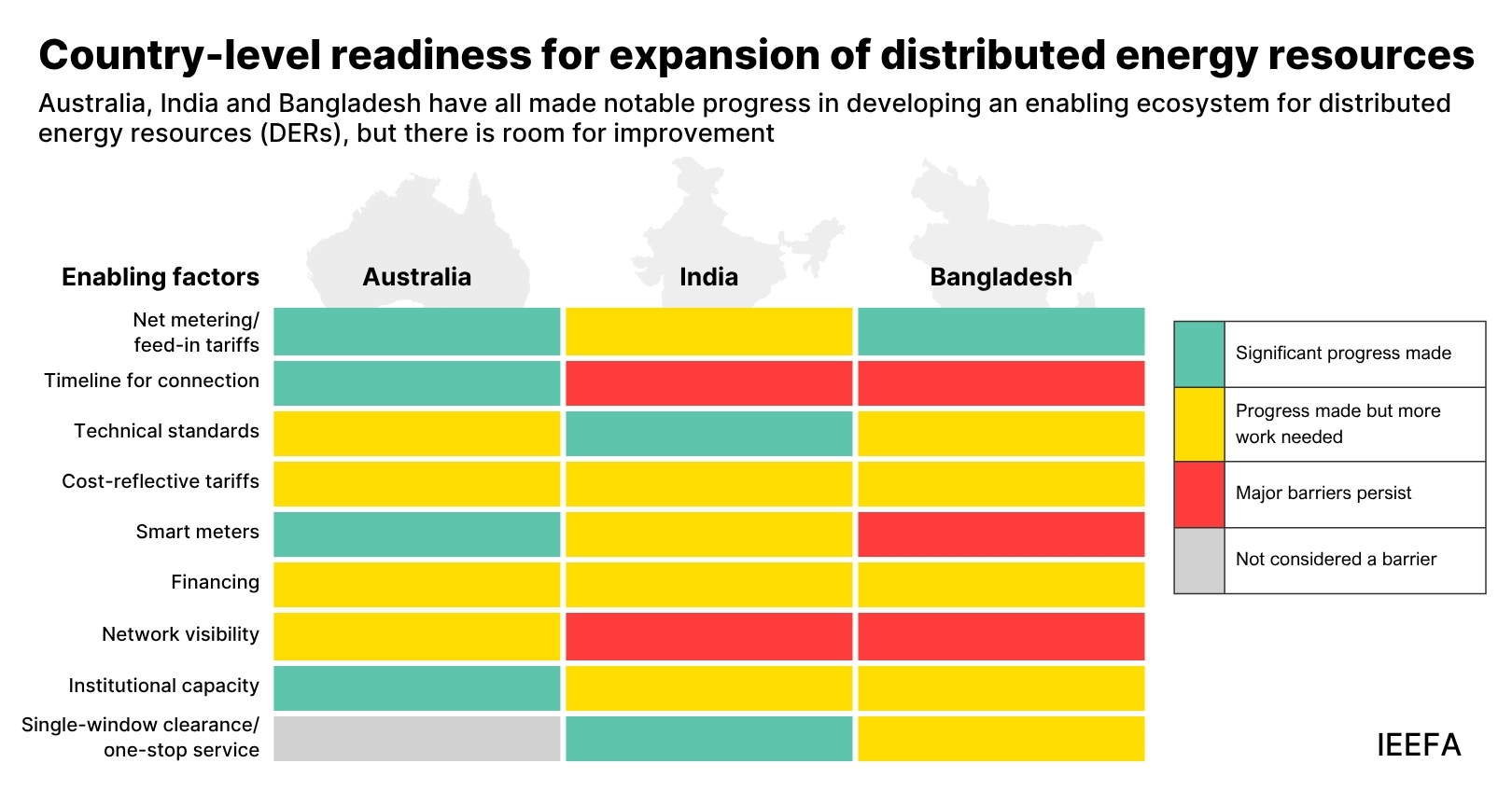
The sector is expected to grow further with engineering, procurement, and construction (EPC) companies holding a 500 megawatts (MW) rooftop solar project pipeline and the government’s strategy stipulating 5,500MW new capacity from rooftop solar by 2030.
Key Takeaways:
Despite the continued dominance of centralised electricity systems built around large power plants and transmission networks, distributed energy resources (DERs), such as rooftop solar, solar irrigation and vehicle-to-grid (V2G) technologies, are demonstrating their ability to deliver clean, affordable energy. Case studies of Bangladesh, Australia, and India highlight the growing role of DERs, with rooftop solar emerging as the dominant source.
In Bangladesh, rooftop solar has grown faster than other DERs. While government data reports 418.1 megawatts (MW) of rooftop solar capacity till June 2026, IEEFA estimates it has reached 667MW in 239 establishments, including groups of companies. If the assessment were to include units below 0.15MW, Bangladesh’s rooftop solar capacity might already be around 1,000MW. This growth has contributed to a slight decline in daytime power demand, based on comparisons between 16 April–11 June 2024 and the same period in 2026.
Bangladesh's irrigation sector, which remains reliant on diesel, creating substantial potential for the uptake of solar-powered irrigation systems. Converting one-third of diesel-powered irrigation to solar could lower the country's annual diesel import bill by around USD244 million (BDT30 billion).
Despite the presence of net metering guidelines and low-cost financing, rising power tariff has emerged as one of the key factors for adoption of rooftop solar in Bangladesh. Acknowledging that high import duties raise project costs and are an impediment, the government has revised the duty structure. However, this change does not fully resolve the long-standing concerns related to import duties.
4 August 2026 (IEEFA): A new briefing note from the Institute for Energy Economics and Financial Analysis (IEEFA) examines how distributed energy resources (DERs) are increasingly demonstrating their ability to deliver affordable and clean energy. DERs are small-scale power generation and storage technologies, such as rooftop solar, solar irrigation pumps, biogas and batteries, located close to where electricity is used.
Drawing on a comparative analysis of Bangladesh, Australia, and India, the briefing note, titled “Role of distributed resources in energy transition: A multi-country perspective”, finds that rooftop solar has emerged as the single biggest driver of DER growth. The note shows that the rapid expansion of DERs in Australia and India has reduced demand for fossil fuel-based power, offering Bangladesh valuable lessons for charting its own DER pathway.
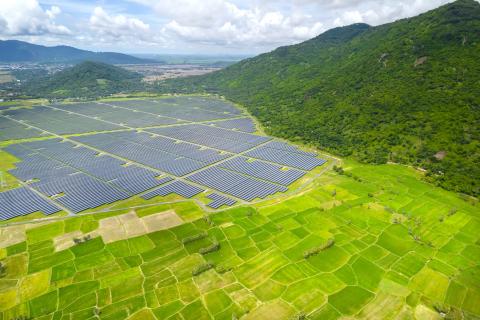
In Bangladesh, after a slow start, the DER sector is beginning to take shape, driven largely by industrial interest in rooftop solar. While government data puts installed rooftop solar capacity at 418.1 megawatts (MW) till June 2026, the briefing note finds that combined capacity across just 239 establishments, including groups of companies, has already reached 667MW, and could be as high as 1,000MW if smaller units (of less than 0.15MW) are included. This growth appears to have contributed to a slight reduction in daytime power demand.
“Compared to the grid-scale variable renewable energy capacity of 859MW as of June 2026, the country’s growing rooftop solar capacity provides an encouraging signal for Bangladesh’s power sector. The rooftop solar sector is expected to grow further, with engineering, procurement, and construction (EPC) companies holding a project pipeline of more than 500MW. However, Bangladesh needs to scale up efforts to tap into the potential of several thousand MW of rooftop solar capacity that the industry sector alone offers,” says Shafiqul Alam, Lead Analyst, Bangladesh Energy, IEEFA - South Asia, and a co-author of the briefing note.
Bangladesh's diesel-dominated irrigation sector also offers vast opportunities for solar-powered generation, with a one-third transformation of the sector potentially cutting the country's annual diesel import bill by around USD244 million (BDT30 billion).
The note finds that despite the presence of net metering guidelines and low-cost financing, rising power tariff emerged as one of the key factors for adoption of rooftop solar in the country. Likewise, the high cost of diesel motivates agricultural entrepreneurs to invest in solar irrigation systems. However, high import duties raise project costs and discourage the large-scale adoption of rooftop solar and solar irrigation in Bangladesh.
While the government has reduced import duties for rooftop solar systems, small projects in rural areas are unlikely to receive the duty benefits due to stringent conditions. Additionally, the new structure increases duty of rooftop solar projects in industries to 17% from 1% under the previous provision of capital machinery. The briefing note, however, demonstrates how incentives in the form of capital subsidies helped accelerate the deployment of DERs at scale in both Australia and India. Bangladesh could take a similar first step by offering duty exemptions to make DERs more affordable.
“With the government stipulating a target to install a renewable energy capacity of 10,450MW between 2026 and 2030 in its strategy document, relying on rooftop solar for more than 50% new capacity, a full duty waiver to all rooftop solar projects will likely help achieve the goal,” says Shafiqul Alam.
The briefing note highlights that despite the fixed timeline of 10–15 days for approving the application for net metering connections, both rooftop solar and solar irrigation projects encounter delays in obtaining net metering connections, affecting the growth of DER in Bangladesh. The note, therefore, recommends that the Sustainable and Renewable Energy Development Authority (SREDA) and the Ministry of Power, Energy and Mineral Resources should monitor the status of online applications for net metering connections and undertake measures to avoid delays in approval.
Drawing on the experiences of Australia and India, Bangladesh could promote the deployment of battery storage alongside DERs, particularly rooftop solar.
“For predictability and better management on the part of utilities, Bangladesh should gradually adopt smart meters with DERs, like rooftop solar,” added Alam.
Read the report: Role of distributed resources in energy transition: A multi-country perspective
Media contact: Prionka Jha ([email protected]); +91 9818884854
Author contact: Shafiqul Alam ([email protected])
About IEEFA: The Institute for Energy Economics and Financial Analysis (IEEFA) examines issues related to energy markets, trends, and policies. The Institute's mission is to accelerate the transition to a diverse, sustainable and profitable energy economy. (ieefa.org)