Amidst push to expand domestic coking coal production, new IEEFA study suggests ways to embed methane emissions abatement into Mission Coking Coal
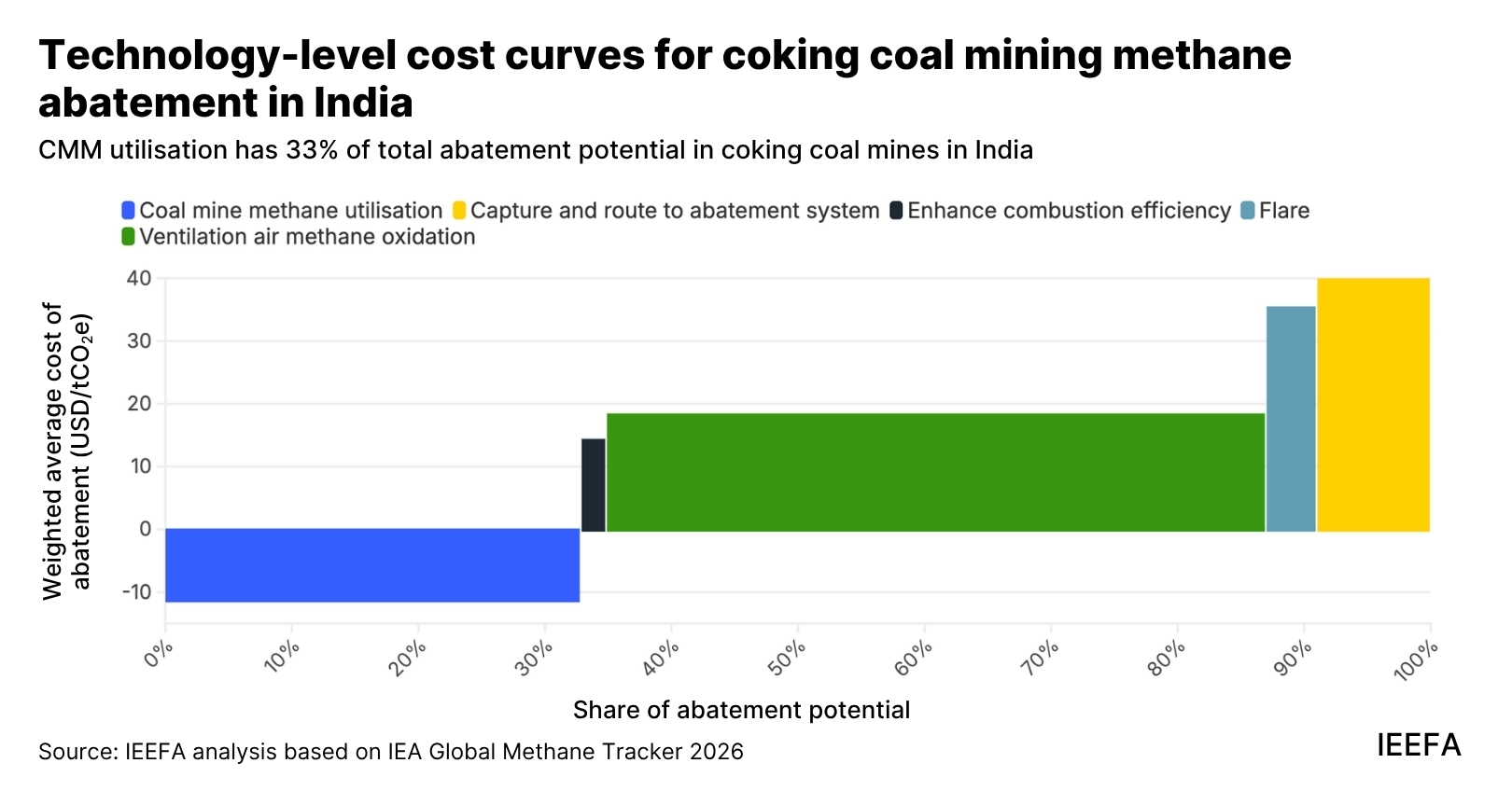
Around 87% of India’s abatable coking coal mine methane emissions can be mitigated for less than USD20/tonne of carbon dioxide equivalent (tCO₂e), in line with global estimates.
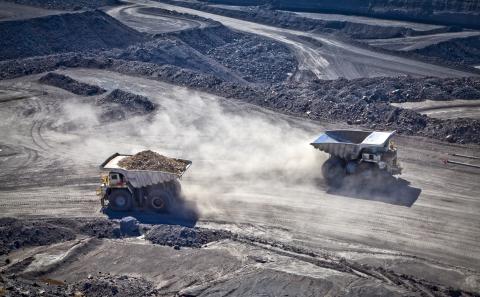
30 July 2026: A new study by the Institute for Energy Economics and Financial Analysis (IEEFA) tracked 30 coking coal mines in India and found that among them, seven mines alone account for 81% of India’s total methane emissions of 138.3kilo tonnes (kt) per year. Of these, potentially 105kt methane emissions per year can be reduced with existing methane abatement technologies, according to the study titled ‘Methane abatement in India’s coking coal push: Opportunities and costs’.
Methane is emerging as a critical but under-addressed component of India’s climate challenge. While policy attention has majorly focused on carbon dioxide (CO2) emissions, methane is also a significant contributor to the challenge and requires targeted mitigation measures. It is especially important for near-term climate action because it is a short-lived, but highly potent greenhouse gas with a high global warming potential.
According to the IEA’s Global Methane Tracker 2026, India’s coking coal mining resulted in around 234.7kt of methane in 2025 with a methane intensity of 5.1kg CH₄ per tonne of coal equivalent (tCH₄/t coal), 50% higher than for steam coal, at 3.4 kg.
“Most of these high-emitting mines are located in Jharkhand, making both the methane risk and the mitigation opportunity geographically concentrated. This situation supports a phased mitigation roadmap that prioritises the highest-emitting mines in the region rather than applying uniform solutions across all coking coal operations in the country,” says Purva Jain, co-author of the study.
The study also notes that India launched Mission Coking Coal in 2021, which aims to more than double domestic coking coal production by financial year (FY) 2030. This further underscores the need to integrate methane mitigation into mine development and expansion plans to reduce emissions over their operational lifetimes.
The study identifies policy support, mine planning, regulatory frameworks, and implementation pathways as the key levers to scaling methane mitigation across India’s coking coal sector, instead of commonly expected constraints such as technology availability and cost. “In fact, around 87% of India’s abatable coking coal mine methane emissions can be mitigated for less than USD20/tonne of carbon dioxide equivalent (tCO₂e). This is in line with global estimates from the International Energy Agency (IEA), demonstrating that costs should not be a barrier to methane mitigation,” says Saumya Nautiyal, co-author of the study.
The report also recommends expanding the productive uses of methane recovered from coal bed methane (CBM) utilisation projects. India has significant potential in this area with 15 active CBM blocks connected to the national gas grid, offering opportunities for methane utilisation in various applications. In 2022, Tata Steel became the world’s first steel producer to undertake a pilot of continuous injection of CBM into a blast furnace at its Jamshedpur plant in Jharkhand.
In order to reduce long-term dependence on coking coal, especially in the steel sector, the study recommends alternative steelmaking technologies such as electric arc furnace (EAF), scrap steel-based production, and domestically produced green hydrogen in Direct Reduced Iron (DRI).
Notably, the scrap-based EAF method requires only 12 kg of coking coal versus 770 kg coking coal in the conventional blast furnace method. The Indian government also aims that by 2047, 50% of steel production would be fed by scrap metal, up from 23% at present.
“This will not only help in steel sector decarbonisation, but also reduce the need for coking coal mining, thus lowering CMMs from coking coal to a large extent,” says Jain.
Read the complete report: Methane abatement in India’s coking coal push: Opportunities and costs
Media contact: Prionka Jha ([email protected]); +91 9818884854
Author contacts: Purva Jain ([email protected]), Saumya Nautiyal ([email protected])
About IEEFA: The Institute for Energy Economics and Financial Analysis (IEEFA) examines issues related to energy markets, trends, and policies. IEEFA’s mission is to accelerate the transition to a diverse, sustainable and profitable energy economy. (ieefa.org)