Out of sight, out of mind: Pushing CO2 storage offshore
Download Briefing Note
Key Findings
The oil and gas industry plans to invest billions of dollars to build carbon dioxide (CO2) storage projects in the Gulf of Mexico.
Risks related to the proposed projects include the lack of regulations for CCS activities in federal waters and the weak regulatory history of key agencies.
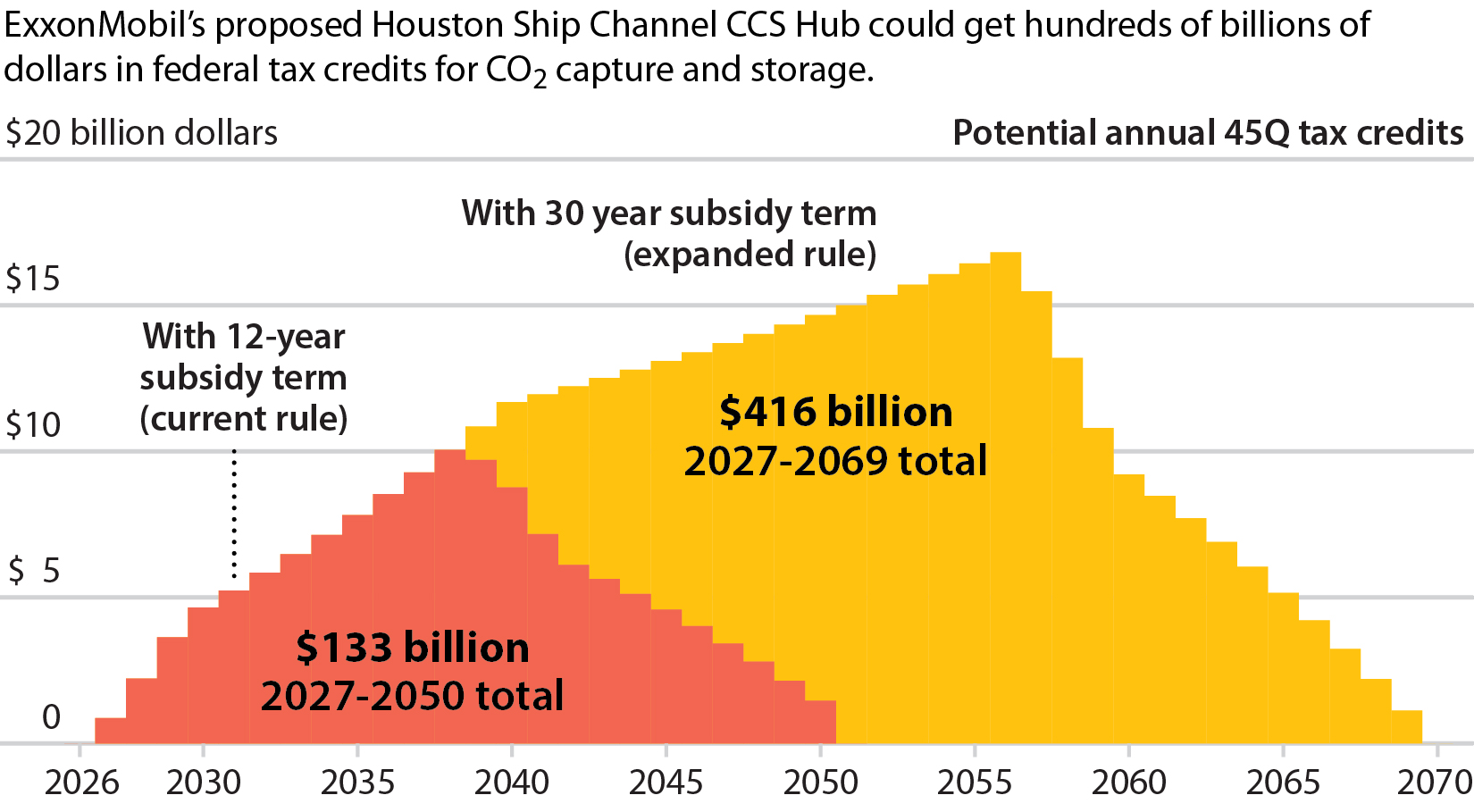
The industry’s dependence on the 45Q federal subsidy poses a significant financial risk to industry and taxpayers, who could be on the hook for hundreds of billions of dollars.
The rush to leap from onshore projects averaging a million metric tons of CO2 per well to “hubs” storing more than 100 million metric tons per year is an untested, unproven idea.
Executive Summary
The oil and gas industry is moving forward with a massive experiment in the Gulf of Mexico, planning to invest billions of dollars to build carbon dioxide (CO2) storage projects in state and federal waters. The industry believes a simplified permitting pathway, high concentrations of industrial and gas processing CO2 emitters, and the long-term security of federal tax credits via the 45Q program will make this infrastructure development profitable. IEEFA believes the industry and its advocates are ignoring or vastly understating a series of risks that could cost investors and taxpayers billions of dollars.
Substantial areas of subsea land in Texas waters have either been leased by the oil and gas industry for CO2 storage or are currently on offer for storage leases to support plans for large CO2 storage hubs. Additional acreage has been leased in the outer continental shelf (OCS) territory managed by the Department of Interior’s Bureau of Ocean Energy Management (BOEM). Taken together, leased holdings currently total about 2,400 square miles, almost the area of Delaware.
Industry announcements include claims for up to 140 million metric tons per year of CO2 in three large offshore hubs: ExxonMobil’s Houston Ship Channel CCS; Repsol’s Aves Carbon Capture and Storage project near Corpus Christi; and Chevron’s Bayou Bend project near the Beaumont/Port Arthur area. CO2 storage projects of this size have not been tested or commercialized anywhere in the world, either on land or at sea. In 2024, permanent CO2 storage was limited to modest amounts of CO2, amounting to about 10 million metric tons per annum (Mtpa) globally, with just 3.6 Mtpa injected in offshore operations. The scale of the proposed CCS transport and storage hubs in the subsea area of Gulf of Mexico is almost 40 times larger.
Permanent geological storage of CO2 is a process that is still in the early stages of development, commercialization and expansion. While industry claims extensive experience with CO2 management and injection for storage, most projects are located onshore and involve enhanced oil recovery (EOR), which uses CO2 to force more oil out of the ground. Additional risks related to the massive proposed projects include the lack of regulations for CCS activities in federal waters and the weak regulatory history of key federal agencies. Finally, the industry’s dependence on the 45Q federal subsidy to make such projects feasible represents a huge financial risk to industry and to taxpayers, who could be on the hook for hundreds of billions of dollars.
Massive offshore CO2 storage hubs, such as one proposed by ExxonMobil, stand to get hundreds of billions of dollars in federal tax credits, as illustrated below:

Related Content