Germany’s gas dependence: An energy security risk
Download Full Report
View Press Release
View Press Release
Table of contents
Key findings
Key findings
Germany’s residential heat pump installations from 2022 to 2025 saved the country €1.3 billion on liquefied natural gas imports in the three years between 2023 and 2025.
Germany should continue replacing gas demand with renewables, heat pumps and energy efficiency programmes. This would lower the country’s exposure to volatile gas prices and strengthen its energy security.
Germany is betting on hydrogen power to support renewables. But high costs, infrastructure gaps and project execution risks suggest hydrogen power will play a smaller role than government forecasts.
High costs and technical risks mean carbon capture is not a near-term solution for Germany’s planned 10 gigawatts of new gas power plants. Utilities relying on carbon capture face uncertainty over emissions cuts.
Executive summary
Germany can lower its exposure to volatile gas prices and geopolitical conflicts by scaling up renewable energy and clean heating systems. These, alongside cross-border grid connections and energy efficiency programmes, would displace gas generation and reduce the need for expensive hydrogen infrastructure. IEEFA estimates that this strategy would allow Germany to source just 5% of its electricity from natural gas and hydrogen combined by 2045.
The country has already made significant progress. Its gas consumption peaked in 2021. Electrification and the installation of heat pumps contributed to a 23% decline in household gas use between 2021 and 2024. IEEFA estimates that the almost 1.1 million residential heat pumps that Germany installed from 2022 to 2025 saved the country €1.3 billion on liquefied natural gas (LNG) imports between 2023 and 2025.
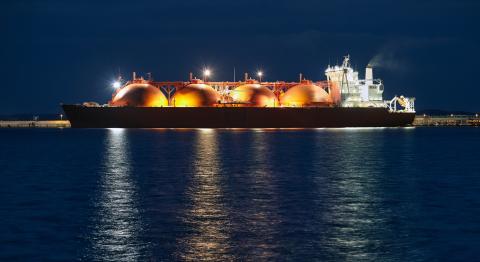
Germany’s LNG terminal utilisation rate in 2025 was 36.3%, far below the EU average. This indicates that decisions to build LNG terminals failed to fully consider future gas demand. Nonetheless, the country still plans to almost triple its LNG import capacity by the end of 2028.
In the power sector, Germany’s government prioritises natural gas and hydrogen to support a system dominated by solar and wind. The country plans to build 10 gigawatts of hydrogen-ready gas power stations. But hydrogen power plants will likely play a smaller role than government plans because of their high expense and low efficiency.
Germany may aim to decarbonise some of its gas power stations with carbon capture and storage (CCS). But CCS has never been used at scale on existing gas plants because of technical and economic challenges. CCS projects globally have underperformed, costs are prohibitively high, and Germany does not have a carbon dioxide pipeline network.
CCS is therefore not a near-term solution for Germany’s planned 10-gigawatt gas buildout, in IEEFA’s view. If the country does attempt to decarbonise these assets with CCS, subsidies could cost hundreds of billions of euros. The gamble is that reliance on the technology could delay more viable alternatives and expose Germany to project failures. These same issues apply if Germany uses blue hydrogen (produced from natural gas with carbon capture) as a fuel in power plants.
German utilities planning to rely on CCS may also face uncertainty in reducing emissions. Despite aiming to decarbonise gas power plants, some utilities have recently signed contracts to import LNG for up to 20 years. These contractual obligations expose the companies to the risk of long-term underutilised gas power plants, potentially locking them into uneconomic supply commitments.
German utilities should carefully weigh the transition risks before signing any more long-term gas import contracts. This would help them avoid additional financial impacts related to the underutilisation of gas plants and align them more closely with the country’s climate and energy security goals.
Given these findings, IEEFA recommends that Germany do the following:
- Continue replacing gas demand with renewables, electrification of heating and energy efficiency programmes
- Significantly scale up cross-border grid connections and demand-side management, which would help minimise gas and hydrogen generation
- Cancel plans to build new LNG import terminals, given that it has already passed peak gas consumption
- Carefully monitor gas infrastructure investments to prevent unnecessary increases in consumer gas prices
- Not rely on CCS to decarbonise gas power plants
These measures would provide Germany with a more sustainable and cost-effective path to energy security.
This report is the first in a two-part series on Germany’s energy transition. The second report details the costs to Germany of relying on unrealistic hydrogen demand forecasts.




Related Content