After years at an energy crossroads, can Indonesia pivot in 2026?
Key Findings
Coal supplies around 68% of Indonesia’s electricity, supporting economic growth but resulting in fiscal pressures and exposure to volatile global markets. Fluctuating fuel prices, unstable coal markets, and subsidy costs underscore the vulnerabilities of relying on fossil fuels.
Despite an ambitious goal of 23% by 2025, Indonesia’s renewable energy share reached only 16% by the first half of the year, highlighting structural challenges in planning, procurement, and system integration that are unlikely to be resolved without targeted reform.
Global investment trends and rising electricity demand from data centers are reinforcing the need for scalable, cost-predictable generation, steering investor expectations toward renewable infrastructure.
Indonesia’s ability to compete with regional neighbors depends on improving the bankability and pace of renewable procurement, advancing grid access reform through joint transmission network utilization, and aligning power system planning with industrial demand for clean energy.
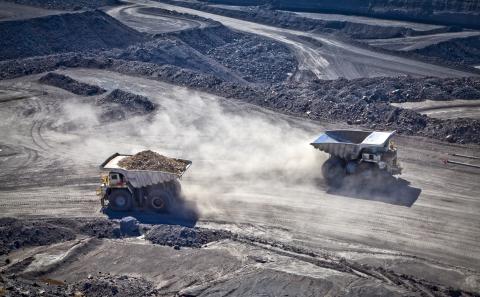
Indonesia has been at a critical crossroads in its energy transition for several years. Coal has long underpinned the country’s energy system, supplying around 68% of electricity and supporting economic growth. However, this reliance has also created growing challenges, including exposure to volatile global commodity markets, increasing fiscal pressures from energy subsidies, and structural risks associated with long-term investment in carbon-intensive assets. The question now is whether Indonesia can pivot toward an energy future that is economically resilient and globally competitive.
Indonesia had an ambitious target to achieve a 23% share of renewable energy in its power mix by 2025. However, by the first half of the year, renewables accounted for just 16%. Recently, the government revised its National Energy Policy, pushing the 23% target to 2030. This shortfall signals structural challenges in planning, procurement, and system integration.
The recent decision to cancel the early retirement of the Cirebon-1 coal-fired power plant (CFPP) highlights the misalignment between short-term energy security concerns and long-term climate commitments. While other nations are phasing out coal and accelerating the deployment of renewable energy, Indonesia’s continued dependence on coal risks locking the country into an increasingly costly and outdated energy model.
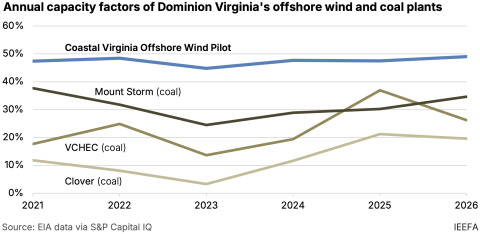
This reliance on fossil fuels creates growing system-wide economic risks. The Java-Bali grid is currently oversupplied, leaving coal plants operating at declining capacity factors. At the same time, fixed payments under long-term power purchase agreements (PPAs) continue to strain the finances of PT Perusahaan Listrik Negara (PLN), the state electricity utility. As demand growth slows, existing take-or-pay obligations risk inflating system costs, potentially leading to higher tariffs or greater subsidy pressure on the state. While delaying coal retirements may preserve short-term capacity, it undermines long-term affordability and financial sustainability.
Global signals and shifting investment dynamics
Volatile fuel prices, unstable coal markets, and the economic burden of subsidies have exposed the vulnerabilities of fossil fuel dependence. In contrast, renewables offer long-term price stability, reduced reliance on imports, and stronger energy security. As a result, policymakers and investors worldwide are increasingly recognising clean energy as a viable financial strategy that also supports long-term economic resilience and energy security.
Market signals reinforce this shift. In 2025, clean energy stocks experienced a surge. In the United States, Bloom Energy Corp rose more than 300%, China’s Sungrow Power Supply Co gained over 130%, and Europe’s Siemens Energy more than doubled. These gains reflect structural shifts in demand rather than speculative bubbles.
Longer-term demand signals are also strengthening the investment case for new generation capacity. Global data center electricity demand — driven increasingly by Artificial Intelligence workloads — is projected to grow rapidly through 2026 and beyond. S&P Global Energy Horizons estimates that demand could rise by approximately 17% by 2026 and continue increasing at a rate of 14% annually through 2030, potentially exceeding 2,200 terawatt-hours (TWh) by the end of the decade. While this demand growth is still emerging, it is already shaping investor expectations for scalable, reliable, and cost-competitive generation options, particularly renewables supported by grid and storage investments.
These global trends directly impact Indonesia’s growth trajectory and its ability to attract new industrial and digital investment. Domestic data center installed capacity is expected to grow from about 1.44 gigawatts (GW) in 2025 to 3.56GW by 2030, significantly increasing demand for clean electricity with predictable costs and scalable procurement options. For multinational companies, access to renewable energy is increasingly critical for managing climate-related regulatory risks, securing financing, and meeting decarbonization commitments. Without scalable and bankable clean energy procurement pathways, Indonesia risks losing high-value industrial investment to regional competitors.
Investor confidence and Indonesia’s position
Indonesia has abundant renewable resources with solar potential across its archipelago, vast geothermal reserves, and untapped wind corridors. A rapid expansion of renewables is essential to meet the new Electricity Supply Business Plan (RUPTL) targets and achieve the country’s 2060 net-zero goal, in accordance with President Prabowo Subianto’s vision of “Together Indonesia Advances Towards a Golden Indonesia 2045”.
Solar and wind energy are increasingly cheaper than new fossil fuel generation, helping to lower electricity costs. Renewable deployment can also stimulate green manufacturing, diversify the economy, and create jobs across construction, operations, and technology development. According to the World Resources Institute (WRI), every USD1 billion invested in renewables could generate USD1.41 billion in total economic output through direct, indirect, and induced impacts.
Investor confidence is central to unlocking this potential. Renewable projects offer predictable cash flows, lower exposure to commodity price swings, and strengthen alignment with environmental, social, and governance (ESG) standards. In contrast, coal investments face growing reputational risks and the prospect of stranded assets, while renewables are viewed as future-proof investments.
Key barriers to Indonesia’s renewable energy investment
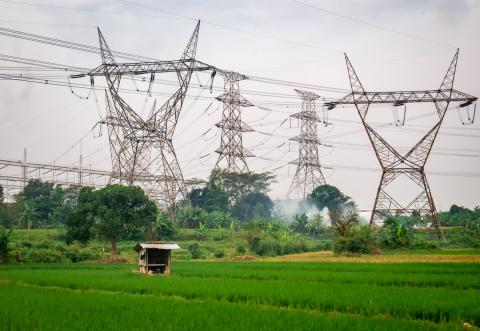
Despite this momentum, several structural barriers continue to constrain renewable investment in Indonesia. These include slow progress in renewable procurement for the private sector, a geographic mismatch between large-scale renewable resources and major industrial demand centers, and persistent grid infrastructure constraints.
Addressing these challenges requires decisive policy action. Policymakers should improve regulatory certainty, accelerate grid modernization, and support financing mechanisms that attract private capital. Without these reforms, Indonesia risks missing a significant opportunity to realize its renewable potential.
The joint transmission network utilization proposal, globally known as power wheeling, is a promising solution. This mechanism allows multiple stakeholders to use PLN’s transmission infrastructure to deliver electricity from generation sources to load centers. It enables companies to directly access renewable power, making it particularly beneficial for those with clean energy commitments, such as RE100 members.
Neighbouring countries are already advancing their power wheeling systems. Vietnam and Malaysia have introduced direct power purchase agreements (DPPAs) and a Corporate Renewable Energy Supply Scheme (CRESS), which has attracted multinational investment. Malaysia recently secured a MYR20 billion (approximately USD4.3 billion) NVIDIA AI data center in Johor and became one of only five NVIDIA Cloud Partners worldwide. Thailand is progressing toward open access electricity transmission through its Third-Party Access framework, which allows independent producers to transmit power through existing utility networks. Contrastingly, while Indonesia mentioned power wheeling in its Ministry of Energy and Mineral Resources (MEMR) Regulation No. 1 of 2015, there has been no progress on implementation. Without clear regulatory frameworks, Indonesia risks missing out on the global wave of green investment.
Looking ahead to 2026
Indonesia’s energy transition has been at a pivotal stage for several years. While policy ambition increasingly recognizes the economic and strategic value of renewable energy, gaps remain between targets and implementation. Addressing regulatory, infrastructure, and financing barriers could position the country as a regional leader in clean energy.
In 2026, progress will depend on improving the bankability and pace of renewable procurement, advancing grid access reform through joint transmission network utilization, and aligning power system planning with industrial demand for clean electricity. Decisions made over the next year will determine whether Indonesia can scale quickly to reduce system costs, attract private capital, and enhance regional competitiveness.


Related Content