Less is more in unlocking Australian green iron
Focus on electrolysers needed as efficiency overtakes cost
Key Takeaways:
Energy from solar or wind is now similar in cost to gas and metallurgical coal – meaning that improving the efficiency of using electricity in steelmaking (via electrolysers) is increasingly important for cost-competitiveness.
Utility-scale battery prices have dropped by two thirds since 2020, lowering the cost of firming, and shifting the emphasis towards electrolysers that offer higher efficiency rather than lowest cost.
Steelmakers, iron ore producers and governments are well placed to support the development of higher-efficiency electrolysers through research and development, venture investments and industrial demonstrations.
4 June 2026 (IEEFA Australia): As prices for renewable energy and batteries continue to fall, efficiency is overtaking cost as the key benchmark for electrolysers, a technology that will be vital to Australia’s green iron ambitions.
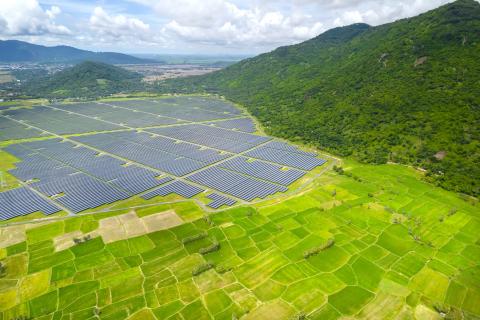
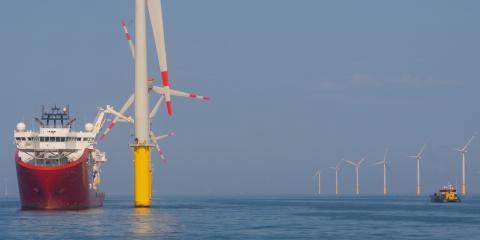
With its vast iron ore reserves, Australia has long sought to develop a green iron export industry, capitalising on its abundant renewable energy, particularly solar and wind. However, while renewables are now the cheapest source of electricity generation, they have yet to become cost-competitive when it comes to ironmaking.
The gap is nonetheless closing, due to recent declines in solar and wind costs, along with increased coal and gas prices due to the Iran conflict. Now, new research from the Institute for Energy Economics and Financial Analysis (IEEFA) has shown that by focusing on increasing the efficiency of electrolysers – the key to producing green hydrogen, and therefore green iron – that gap could be eliminated completely.
“Iron and steelmakers have consistently cited a lack of affordable clean hydrogen as a barrier to decarbonising production,” says Lachlan Wright, Energy Finance Analyst – Global Steel at IEEFA Australia. “Improving efficiency would reduce hydrogen costs even while electrolyser prices remain high.”
In his new briefing note, Less is more – Efficient electrolysers vital for competitive Australian green iron, Wright highlights the opportunity this presents for Australian green iron developers. Access to high-efficiency electrolysers could cut the cost to produce green iron by 15%–20%, to a level approaching the historical trading range for iron.
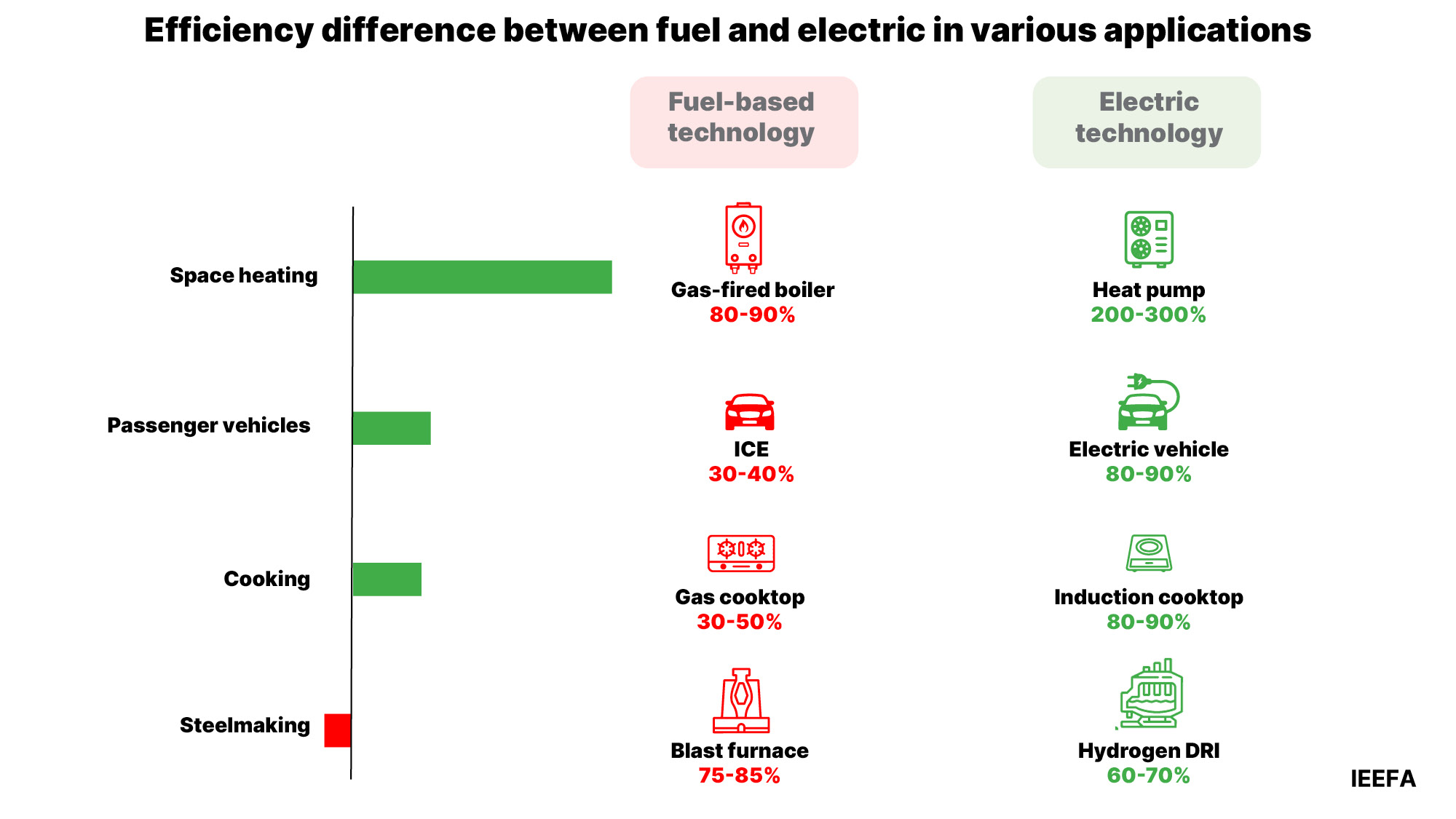
Renewables have displaced fossil fuels as the cheapest energy source in many applications because the conversion of fossil fuels into electricity is inefficient (typically 30%–40%). In ironmaking, renewables’ efficiency advantage does not apply because around three quarters of the total energy input required is chemical energy consumed in the iron reduction reaction. Fuels like metallurgical coal and gas therefore remain the lowest-cost energy source.
The early 2020s saw widespread projections of a steep drop in electrolyser prices that would unlock green iron development. However, these forecasts have not materialised – indeed, electrolyser prices actually rose, and are not expected to fall in the near future. Not only has this meant capital costs remain stubbornly high, but it has undermined the anticipated cost benefits of renewable energy.
Wright explains: “The expectation was that cheaper electrolysers would allow lower utilisation rates meaning the electrolyser would follow the variable output from renewable sources, reducing electricity costs. But as electrolyser prices have not fallen, this approach may no longer be feasible. This has contributed to a wave of project cancellations, including for steel projects that had planned to use hydrogen.”
However, in recent years two major changes have begun to alter the economics of electrolysers. Firstly, improvements in the technology mean new high-efficiency electrolysers are able to compete because their higher capital costs are offset by reduced electricity costs. These improvements are likely to continue, with incumbent manufacturers and numerous start-ups developing innovative new electrolyser designs.
Second, prices for grid battery storage have plummeted since 2020, with deployment in Australia more than quadrupling in the last three years. Cheaper batteries lower the cost of firmed power, in turn allowing higher utilisation rates for electrolysers. A high-efficiency electrolyser coupled with a battery therefore becomes cost-competitive with a cheaper machine depending on variable renewable energy.
In this context, Australia’s ambitions to build a competitive green iron industry would benefit from refocusing on electrolyser efficiency. Research and development (R&D) is required to develop approaches that can significantly improve efficiency. Then electrolyser performance must be proven in an industrial environment. Finally, scaled, repeatable manufacturing processes needs to be implemented.
Fortunately, Australian steelmakers have strengths that are well suited to meeting these challenges. Directing more investment into this area and fostering collaboration could provide significant value for these companies. Government action can also help to accelerate the development of new innovations.
“Getting a highly efficient electrolyser to the market is no mean feat,” says Wright. “But steelmakers, iron ore producers and government agencies have the technical expertise and resources that can speed up the necessary improvements. Doing so increasingly looks critical for unlocking Australian green iron projects.”
Read the briefing note: Less is more – Efficient electrolysers vital for competitive Australian green iron
Media contact: Amy Leiper, ph +61 414 643 446, [email protected]
Author contacts: Lachlan Wright, [email protected]
About IEEFA: The Institute for Energy Economics and Financial Analysis (IEEFA) examines issues related to energy markets, trends, and policies. The Institute's mission is to accelerate the transition to a diverse, sustainable and profitable energy economy. (ieefa.org)