Delhi's power sector is transition-ready, but needs rooftop solar, storage, and market enablers to meet rising demand peaks, finds IEEFA-Ember study
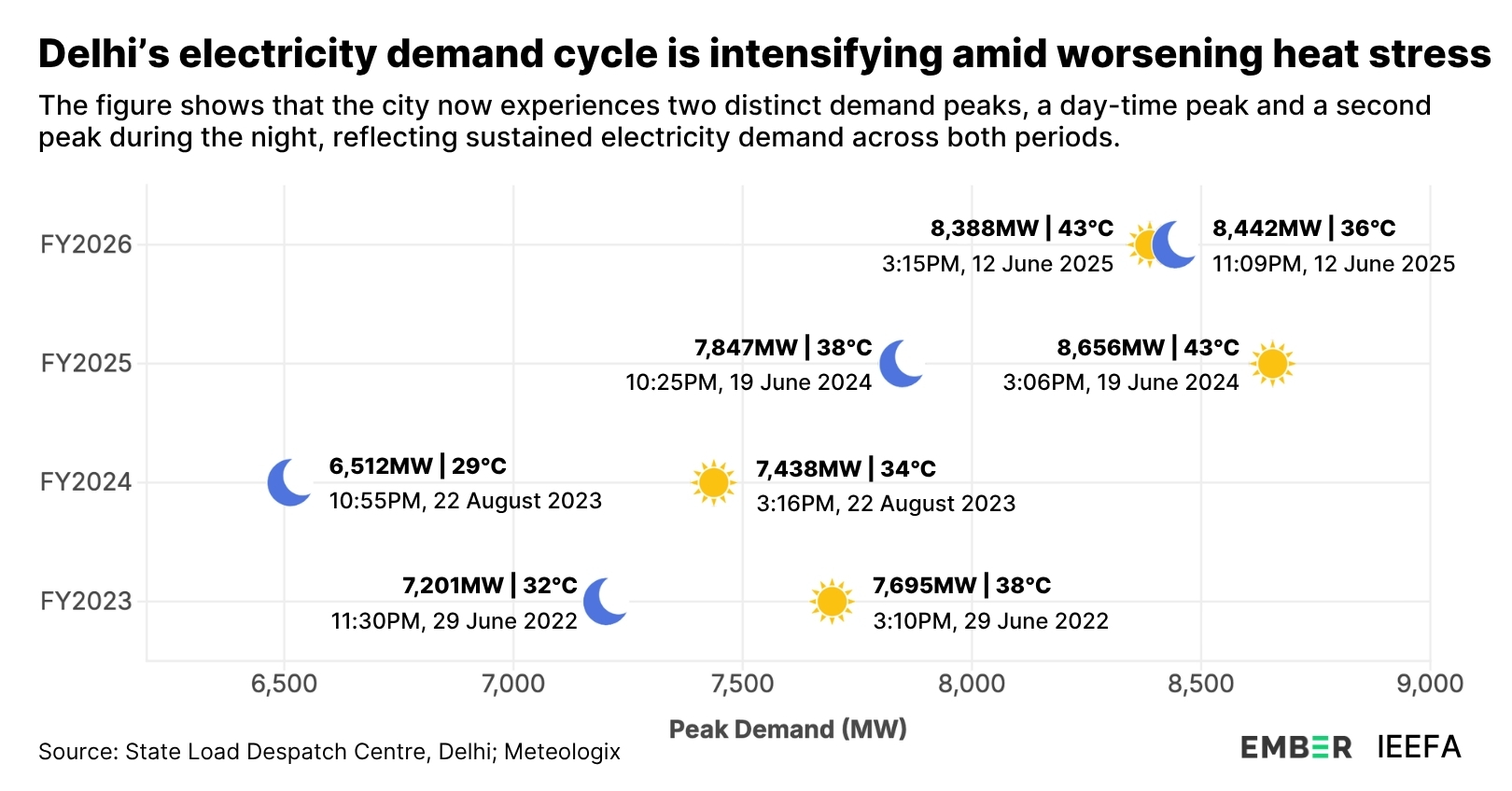
The city’s reliable power distribution, strong policy support, and growing distributed renewable energy resources provide a solid foundation for an energy transition pathway.
06 August 2026, IEEFA: Delhi’s power sector has established a strong foundation for the clean energy transition through reliable electricity supply, efficient power distribution companies (DISCOMs), and supportive clean energy policies. However, meeting the capital’s rapidly growing electricity demand while reducing emissions will increasingly depend on expanding distributed renewable energy, energy storage, and demand-side flexibility, finds a new study by the Institute for Energy Economics and Financial Analysis (IEEFA) and Ember.
According to the study, titled ‘Delhi’s electricity transition challenges and opportunities: A SCOPE study’, the city has certain unique characteristics such as limited land availability, negligible scope for expanding large-scale power generation, and growing electricity demand driven by cooling, commercial activity, and transport electrification. The study looks at Delhi’s electricity transition through the lens of SCOPE — (S)trength, (C)omplexities and (O)pportunities, (P)olicies, and (E)nablers.
While the city has successfully met record peak electricity demand in recent years, growing night-time demand peaks will require investment in battery energy storage, smarter electricity pricing, and demand-side flexibility to maintain grid reliability and reduce dependence on fossil fuel-based electricity generation.
Unlike other states, Delhi generates only a small proportion of the electricity it consumes and relies heavily on power allocated from central generating stations and electricity purchases from neighbouring states. As of June 2026, Delhi had around 7,544 megawatts (MW) of allocated generation capacity. The study notes that this dependence on external procurement reflects structural constraints such as limited land availability.
“Delhi requires a different transition pathway from that of most Indian states. Rather than relying on utility-scale renewable energy buildout within its geographical boundaries, Delhi’s transition will depend on optimising clean power procurement, scaling rooftop solar and storage, improving energy efficiency, enabling demand-side flexibility, and leveraging power markets.” said Tanya Rana, Energy Analyst, South Asia, IEEFA, and lead author of the report.
Delhi’s energy requirement reached 38,482 million units (MU) in financial year (FY) 2026, accounting for around 2.2% of India’s total energy requirement. Domestic consumers accounted for more than half of total electricity consumption, highlighting the importance of residential demand in shaping the city’s electricity system.
“The study shows that Delhi has built strengths in distribution sector performance, power procurement planning, and distributed renewable energy. As electricity demand continues to grow, particularly during night-time hours, these strengths provide a strong foundation for the next phase of the energy transition. That next phase will increasingly depend on scaling rooftop solar along with building energy storage, enhancing energy efficiency, and long-term futuristic planning to procure clean electricity that can meet electrification-led rising demand.” said Ruchita Shah, Energy Analyst, Asia, Ember, and co-author of the study.
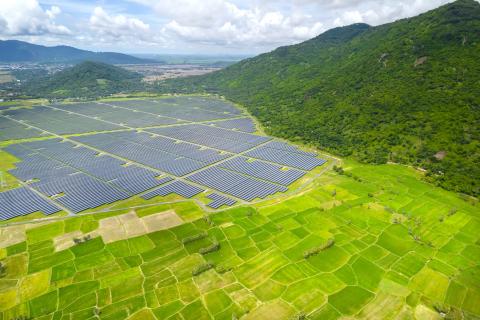
The study identifies distributed renewable energy as one of Delhi’s largest opportunities for decarbonisation. Installed distributed solar capacity reached 446MW by June 2026 following sustained policy support, consumer awareness initiatives, and financial incentives. The city can achieve further growth by streamlining approval processes, expanding net-metering provisions, and continuing support for rooftop solar deployment through consumer incentives under initiatives such as the Delhi Solar Energy Policy and Pradhan Mantri Surya Ghar: Muft Bijli Yojana.
Delhi has also introduced several initiatives including Green Energy Open Access regulations, approval of a pilot for peer-to-peer rooftop solar electricity trading, and a new electric vehicle (EV) policy that proposes stronger electrification targets, expanded charging infrastructure, and measures to strengthen the EV ecosystem.
“The study has identified several opportunities to further strengthen Delhi’s transition readiness. These include accelerating deployment of battery energy storage systems, improving energy efficiency in buildings, expanding smart meter installation, solar-hour-aligned time-of-day (ToD) tariffs, increasing participation in green electricity market segments, and further developing peer to peer trading projects,” said Saloni Sachdeva Michael, Lead Energy Specialist, South Asia, IEEFA.
Read the full report: Delhi’s electricity transition challenges and opportunities: A SCOPE study
Media contact: Prionka Jha ([email protected]); +91 9818884854
Author contacts: Tanya Rana ([email protected]), Ruchita Shah ([email protected]); Saloni Sachdeva Michael ([email protected])
About IEEFA: The Institute for Energy Economics and Financial Analysis (IEEFA) examines issues related to energy markets, trends, and policies. IEEFA’s mission is to accelerate the transition to a diverse, sustainable and profitable energy economy. (ieefa.org)
About Ember: Ember is an independent energy think tank that aims to accelerate the clean energy transition with data and policy. It creates targeted data insights to advance policies that urgently shift the world to a clean, electrified energy future. (Ember-energy.org)