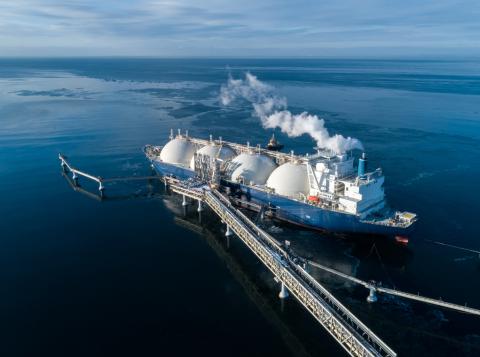
Shell's Monaca plant exposes Pennsylvania's failed trickle-down petrochemical renaissance
Download Full Report
View Press Release
Key Findings
The petrochemical renaissance in Pennsylvania has not delivered on its promises— the scale of public attention, subsidies, and economic development efforts directed toward petrochemicals is not commensurate with the sector’s actual contribution to the state’s economy.
Pennsylvania’s subsidies of the Shell Polymers Monaca plant have not spurred private investment in substantial industry expansion—nearly all other plants in the state pre-date the Shell plant and are not part of a wave of integrated development.
Despite promises from state authorities and fossil fuel companies, the refining and petrochemical-related industrial sector in Pennsylvania has shed jobs, not generated them.
Pollution problems at the Shell plant—including 62 notices of violations since 2017—highlight the need to assess risks and the compliance records of sponsors who seek public incentives for petrochemical projects.
Executive Summary
Pennsylvania invested substantial government funding and tax credits in a Dutch-based international corporation’s petrochemical project—the Shell Polymers Monaca plant—in an attempt to help launch a “petrochemical renaissance” in the state.
It didn’t work.
The failure of Pennsylvania’s economic development initiatives to spur more private investment in major petrochemical developments—despite the ready access to natural gas liquids as feedstock—is a red flag.
The Institute for Energy Economics and Financial Analysis (IEEFA) examined the limited role of the petrochemical industry in Pennsylvania’s economic growth and jobs generation profile. The results make it hard to justify any more public incentives for the industry. IEEFA’s report finds:
- Pennsylvania’s large subsidies of the Shell Polymers Monaca petrochemical plant have not spurred private investment in substantial expansion of the industry in the state. Other facilities in the state are modest in scale, mostly pre-date the Shell plant, and do not represent a wave of new, integrated development.
- The petrochemical, plastic materials, and resin industrial sector in Pennsylvania has shed jobs over the past two decades, declining from 7,449 jobs in 2000 to 3,762 in 2024—a 49.5% decrease.
Figure 1: Number of Jobs in Petrochemical, Plastic Materials, and Resin Manufacturing, Pennsylvania, in 2000 Compared With 2024
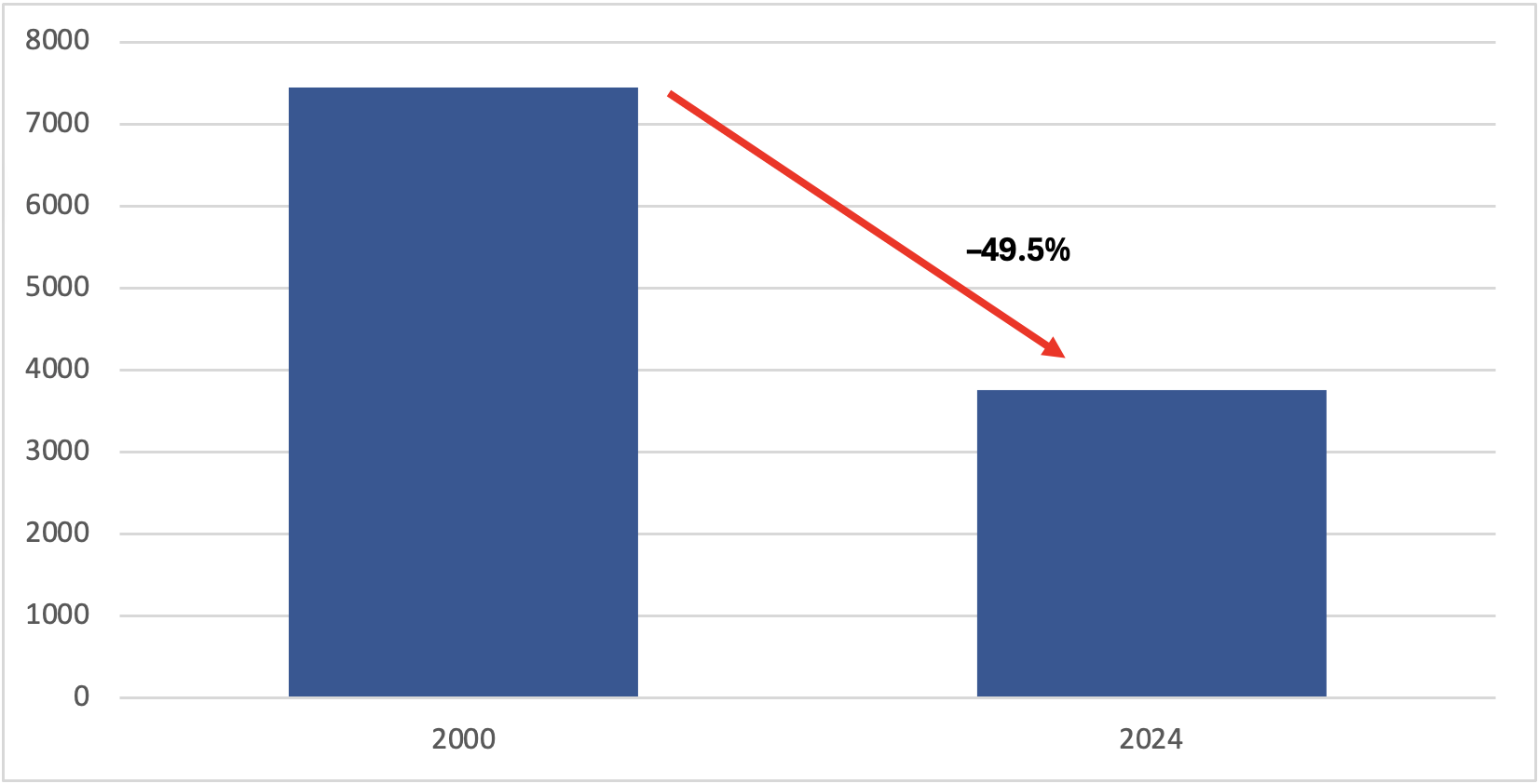
Source: U.S. Bureau of Labor Statistics – QCEW NAICS-Based data files.
The entire refining and petrochemical-related sector’s share of total employment in Pennsylvania has eroded over the same period, from roughly 0.2% to 0.09% today.
- The chemical manufacturing sector’s proportionate contribution to Pennsylvania’s GDP has declined by 55%, dropping from a peak of 5.7% in 2001 to hover at 3.1 to 3.2% in recent years.
- Pollution incidents at the Shell Polymers Monaca plant—including 62 notices of environmental violations since 2017, during construction and operation—highlight the need to assess the risks of proposed projects and the compliance track records of project sponsors who seek public financial incentives.
The state should reform its approach to economic development incentives. In particular, it should adopt a much more rigorous review of development plans before committing public funds or tax incentives to private projects. That review should include robust independent market analysis, objective analysis of potential community impacts, vigorous public outreach, and meaningful opportunities for public comments.




Related Content