Key Findings
India’s reliance on metallurgical (met) coal imports is increasing due to its long pipeline of blast furnace projects. Australia is by far the world’s largest exporter.
However, Australia’s export forecasts have been consistently revised downward. Actual exports have been in decline throughout this decade.
India has an opportunity to address this energy security risk by manufacturing steel without coal.
Scrap steel-based production will become an increasingly important steelmaking route for India. It can also target the use of domestically produced green hydrogen in direct reduced iron (DRI) production to reduce reliance on met coal and enhance energy security.
The governments of India and Australia recently released a joint statement on energy security, during Indian Prime Minister Narendra Modi’s visit to Melbourne.
The statement noted that, “Australia and India reaffirm our commitment to working together to strengthen energy security, including maintaining a stable, secure and reliable supply of energy products, such as coal, diesel, other liquid fuels and natural gas.”
India has a large project pipeline of new blast furnaces under development and much of the Australian coal imported by India is metallurgical (met) coal used for steelmaking.
However, just one week before the joint statement, the Australian government had released its latest medium-term met coal export forecast which showed that export volume expectations had been reduced yet again. This continues the pattern of the Australian government continually revising down its met coal export forecasts throughout this decade.
Export capacity in doubt
The Australian government now forecasts that exports will grow for only two more years before dropping back down to 157 million tonnes (Mt) by 2031. However, S&P Global forecasts that Australia’s met coal exports will have dropped to 143Mt by 2031, and will stay there until at least 2035.
Australia’s met coal exports have been falling throughout this decade. Mining operators are facing higher operating costs that have led to financial difficulties for companies such as Pembroke Resources and Coronado. This is driven by factors including higher labour costs and rising strip ratios.
In June, Yancoal announced that its Ashton met coal mine in New South Wales will close in 2028 due to significant technical challenges and operational risks. The New South Wales government also made it clear in March 2026 that no new greenfield coal mines will be approved in the state.
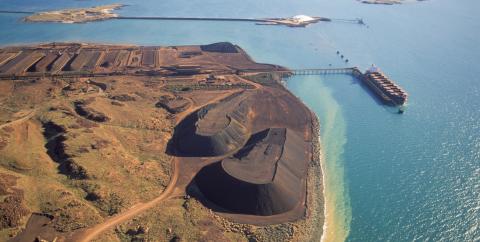
Falling exports from Australia, which is by far the world’s largest met coal exporter, raises a key question as to where India is going to source more met coal imports from if it continues to build new blast furnaces. Until the mid-2030s, the answer likely lies in reduced imports into China.
With steel demand in structural decline and more scrap steel available for recycling, China’s met coal imports are expected to fall going forward. This could allow India to import met coal that was previously destined for China. The latter’s biggest source of met coal imports is Mongolia, whose exports appear landlocked and unavailable to India. As a result, India will more likely pick up imports from China’s next biggest sources — Russia and, to a lesser extent, Canada. Australia exports relatively little met coal to China.
But what happens beyond 2035 is less clear. By then, Russian and Canadian volumes look likely to have been fully redirected to other markets. With S&P Global forecasting that volumes of all major met coal exporters to be flat or declining out to 2035, it isn’t clear where India could import additional volumes from.
India’s options
India is aware of this risk and responding by diversifying met coal import sources and targeting increased domestic supply.
However, India also has an opportunity to manufacture steel without coal. Ashok Kumar Panda, Chairman and Managing Director of Steel Authority of India (SAIL), recently noted that manufacturing new steel from scrap has “a huge growth waiting for it”, adding “Going forward, scrap will become a raw material. It is not just waste; it is wealth”.
Tata Steel inaugurated its first Indian scrap steel-based electric arc furnace steel plant in March 2026. Scrap steel recycling will also be involved at JSW Steel’s under-development Rayalaseema Steel Project in Andhra Pradesh. The plant will also use direct reduced iron (DRI) technology as an alternative to a met coal-consuming blast furnace.
DRI can run on green hydrogen, which gives India an opportunity to improve the energy security of its steel sector by using green hydrogen domestically instead of exporting it.
China is already re-prioritising green hydrogen as a key energy security lever. With the conflict in West Asia increasing again, this latest global fossil fuel crisis should prompt India to increase the resilience of its steel sector so it can fulfil the demands of India’s growing economy.
This article was first published in The Economic Times.

Related Content