Key Findings
New ironmaking technologies enabling the use of lower-grade ores are expected to commence operation before 2030, which is encouraging for the next phase of iron and steel decarbonisation.
With only one commercial-scale project under construction, significant work is still required to prove these solutions at scale.
Australian projects – alongside pilot and demonstration initiatives led by technology providers – are focused on derisking solutions to future-proof Pilbara ores.
Developing these technology solutions for Pilbara iron ores is a priority, but it should not delay Australia’s transition to green iron by using available high-grade iron ore and mature direct reduction technologies.
Several pathways utilising new and existing technologies have emerged in the global race to produce green iron and steel. However, each faces its own set of challenges and limitations, and not all will succeed.
IEEFA has reviewed the emerging pathways based on smelter technology with the potential to utilise lower-grade iron ores in green iron and steel production. The pressure on steelmakers to decarbonise and reduce emissions is intensifying. This imperative cannot be achieved through existing production methods.
Of the alternative technological solutions in development, green hydrogen-based direct reduced iron (DRI) – electric arc furnace (EAF) is emerging as one of the most promising but it too faces challenges. While direct reduction technologies can effectively remove oxygen from a wide range of iron ores, they cannot eliminate impurities. EAFs were initially developed to melt scrap, and while they are highly efficient, their oxidising atmosphere limits their ability to reduce iron ore to metallic iron and remove impurities.
As a result, the DRI-EAF pathway requires high-grade iron ore with minimal impurities, commonly referred to as DR-grade ore (>66% iron, <3.5% silica+alumina). However, as supply of this type of ore is limited and relatively costly, attention is focused on how to utilise the more abundant, low- to mid-grade ores in the direct reduction process.
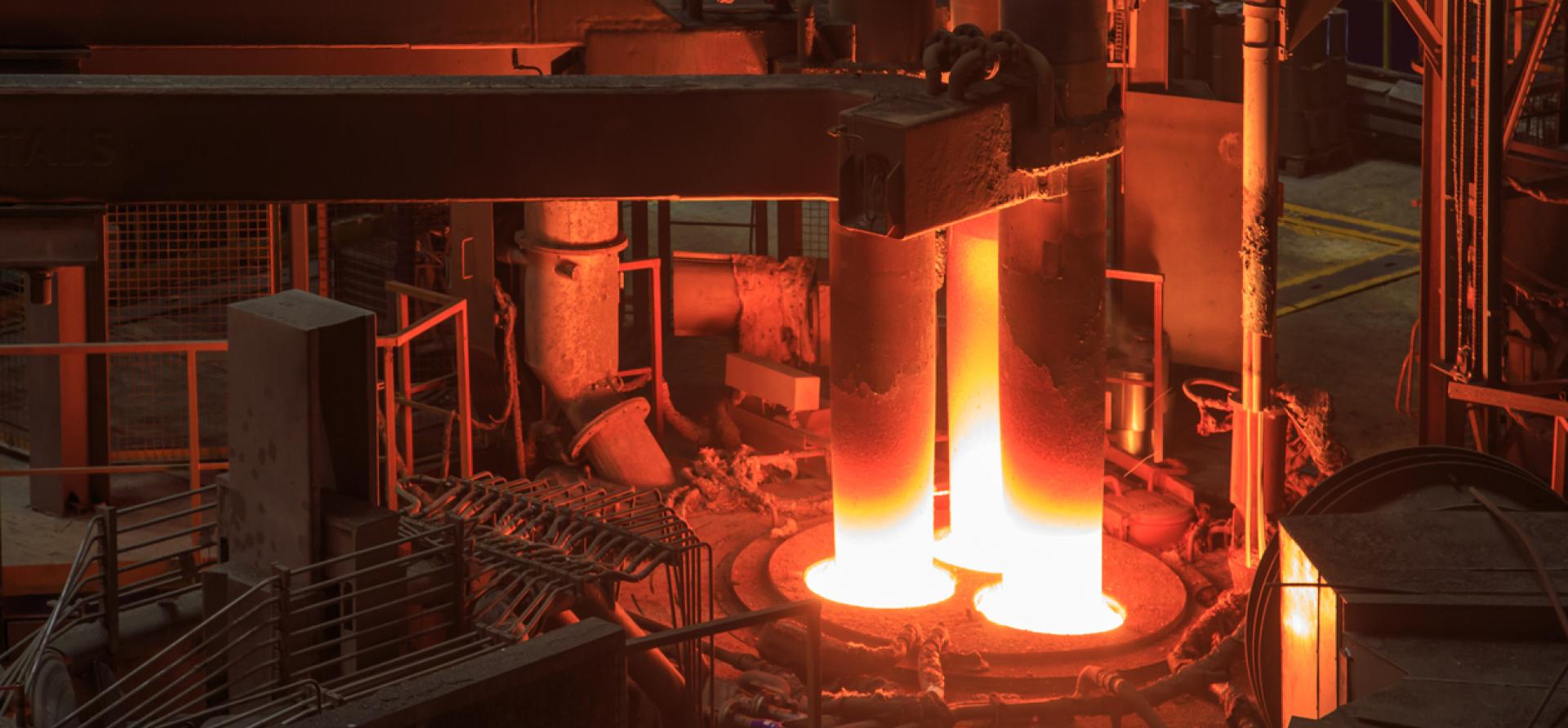
One solution gaining momentum is to add a step between iron and steelmaking to manage impurities. Electric smelting furnaces are emerging as a promising solution to this challenge. Unlike the EAF, they can handle high-gangue feedstocks, and produce iron comparable to the pig iron from blast furnaces.
DRI smelter projects under development worldwide
Australia is the world’s largest iron ore producer with output of about 900 million tonnes a year, accounting for half of global seaborne supply, and developing this pathway is of particular strategic importance. The country’s dominant hematite/goethite ores, concentrated in the Pilbara, are generally not suitable for DR, and developing pathways to enable their use in low-emissions steelmaking represents a significant challenge for the industry.
Attempts by BHP and Rio Tinto to develop new ironmaking pathways in the early 2000s in Western Australia were unsuccessful. However, as the global shift to decarbonise iron and steelmaking gathers pace, Australia can seize the opportunity if it acts quickly. These technologies are still evolving, and further development is required before they can reach a mature, highly reliable stage.
While Australia, together with other technology developers, is working to make these technologies commercially available at scale, the transition through conventional direct reduction pathways has already gained momentum. Several DRI projects are under construction or close to FID in Europe, the US, Middle East and North Africa.
In IEEFA’s view, Australia should carefully consider a broader range of available solutions while pursuing pathways to process low-grade iron ores. Given Australia’s extensive magnetite resources capable of delivering DR-grade material, a large-scale transition could begin today, by deploying mature DR technologies.
Global growth in low-emissions iron and steel projects leaves no room for delay in initiating Australia’s green iron transition. Without the development of commercially scaled projects in line with global trends, Australia risks falling behind.

Related Content