Sovereign wealth fund Danantara holds the key to Indonesia’s profitable and green future
Accelerating renewable investments, carbon market and climate financing platforms, and tailored transition planning can maximize the economic benefits from Danantara’s USD900 billion assets.
May 8, 2026 (IEEFA Asia): A new report by the Institute for Energy Economics and Financial Analysis (IEEFA) finds that Indonesia’s sovereign wealth fund (SWF), Badan Pengelola Investasi Daya Anagara Nusantara (Danantara), could play a transformative role in accelerating the country’s transition – but only if it addresses structural weaknesses in its current revenue model and reorients investment toward long-term sustainability.
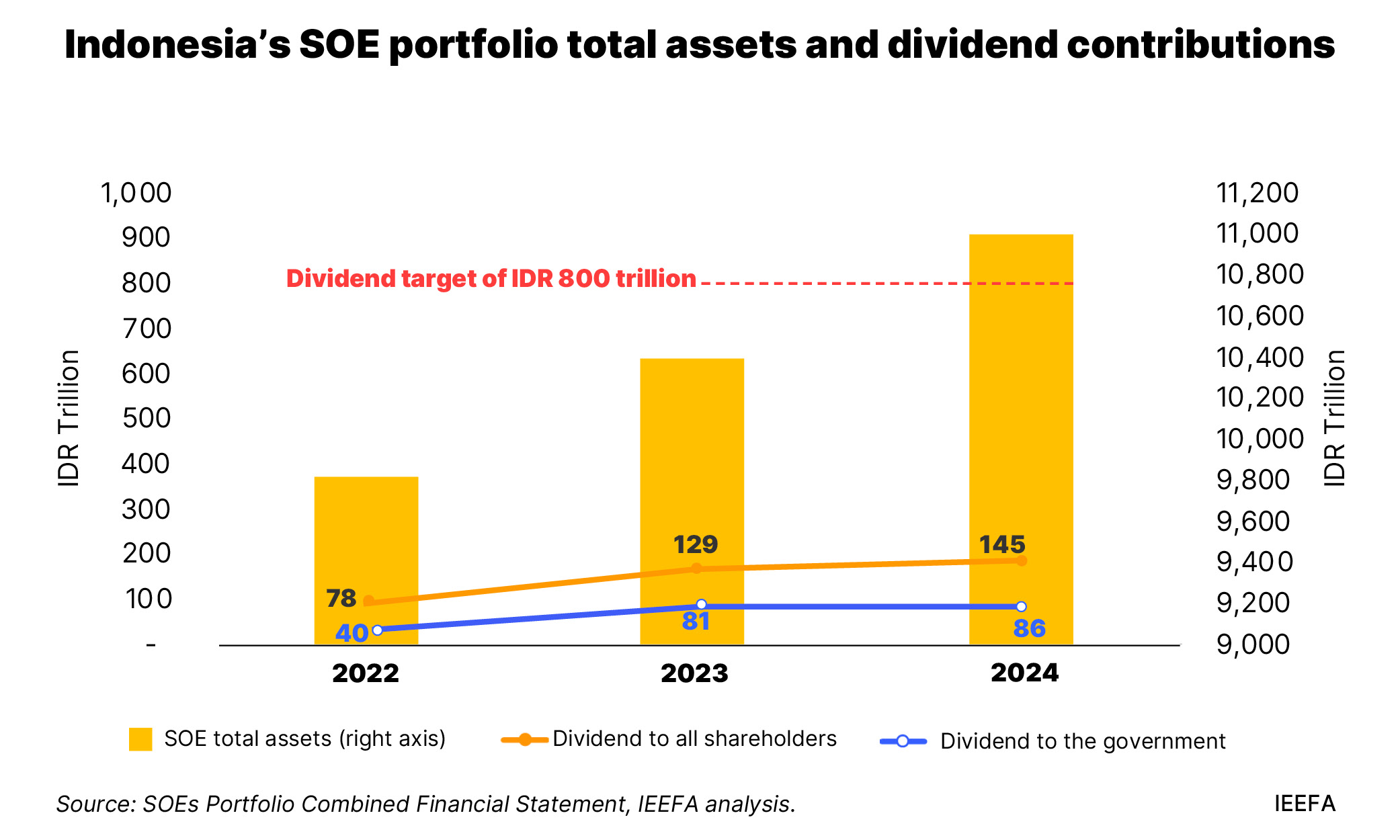
Unlike most SWFs, which are typically funded through resource rents, fiscal surpluses, and foreign exchange reserves, Danantara’s funding model is built on consolidated dividends from state-owned enterprises (SOEs) previously absorbed by the State Treasury and supported by market-based instruments. Seven SOEs, including oil and natural gas corporation Pertamina and national electricity utility PT Perusahaan Listrik Negara (PLN), provide the largest dividend contributions to Danantara.
The report finds that the financial performance of these energy SOEs is heavily dependent on government support. Government subsidies and compensation for Pertamina and PLN reached IDR374 trillion (USD23.6 billion) — more than double the dividend contributions generated by the seven leading SOEs. Without this financial assistance, both companies would record negative net income, reducing their capacity to contribute dividends to Danantara.
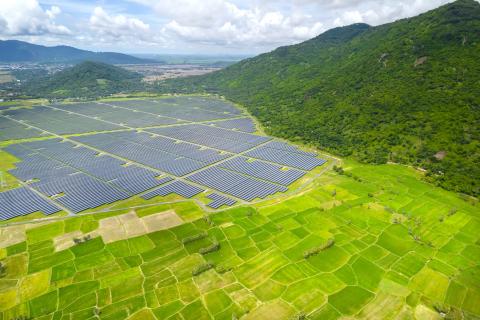
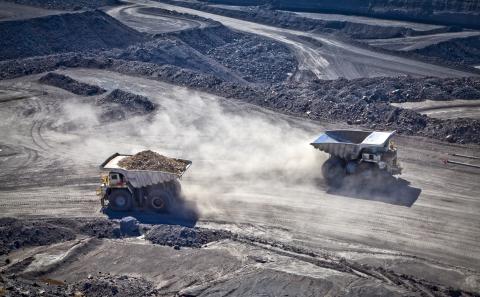
Pertamina and PLN are predominantly reliant on coal and imported oil and gas, exposing them to global price volatility and exchange rate fluctuations. Renewable energy, as a domestically available resource with no fuel costs and lower currency risk exposure, offers a more stable pathway.
Addressing structural constraints to meet the IDR800 trillion dividend target
A year after Danantara’s establishment, President Prabowo set an annual dividend target of IDR800 trillion (USD46.7 billion) for the state budget. SOE contributions have consistently fallen short of that target, underscoring the need to optimize SOEs’ performance to deliver stronger dividends and reinvest available capital into projects that provide higher returns.
IEEFA finds that structural reforms are essential, as Indonesia’s fiscal resilience cannot be built on a foundation of subsidy-dependent dividends. These reforms should focus on reducing subsidy dependence, improving operational efficiency, and transitioning toward renewable energy.
Through its two holding entities, Danantara Asset Management (DAM) and Danantara Investment Management (DIM), Indonesia’s SWF can optimize SOE performance and mobilize capital for strategic projects, particularly in renewable energy, to generate returns above the government’s 5% minimum threshold.
Reorienting investment toward sustainable, high-return assets
Global SWFs have increasingly reduced exposure to conventional oil-linked industries and redirected capital toward green technologies. Companies generating green revenues tend to grow faster, incur lower capital costs, and achieve higher valuations.
IEEFA finds that Danantara could benefit from this approach by adopting portfolio diversification, operational efficiency, and sustainability principles to reduce financial risks associated with its dependence on coal, oil, and gas.
“International SWF experience demonstrates that embedding sustainability in portfolio strategy ensures resilience, long-term value creation, and alignment with global decarbonization trends,” says report co-author Mutya Yustika, IEEFA’s Research & Engagement Lead, Indonesia Energy Transition.
Temasek, Singapore’s SWF, illustrates how embedding an energy transition strategy can deliver strong financial returns. Its energy-focused portfolio company, Sembcorp Industries, previously relied heavily on natural gas. Since adopting a focused energy transition strategy in 2020, its stock price has risen by approximately 217% from 2021 levels, reflecting improved investor confidence in its clean energy expansion and regional growth prospects.
“Among Temasek’s 12 major investments, Sembcorp Industries has been a clear outperformer. Based on IEEFA analysis, it has achieved a 26% compound annual growth rate (CAGR) in market capitalization, significantly outpacing its peers,” says report co-author Yusuf Kresna, IEEFA’s Energy Finance Analyst, Indonesia.
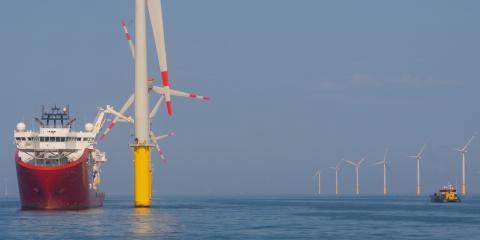
Investments in renewables, the transmission network, and the electric vehicle (EV) supply chain present further opportunities to enhance Danantara’s current dividend model. These include battery manufacturing and recycling, charging infrastructure expansion, and public transport electrification — particularly buses and logistics fleets — to reduce fuel subsidies while mitigating urban emissions.
IEEFA recommends that Danantara take a catalytic role in developing credible carbon markets. The report also recommends that Danantara leverage existing blended finance mechanisms, such as the Just Energy Transition Partnership (JETP), and expand its use of green bonds.
“Drawing on Temasek’s example, Danantara could drive internal change by applying an internal carbon price across its portfolio and collaborating with Temasek to accelerate coal retirement by leveraging transition credits,” adds Yustika. “In addition, Danantara could adopt Temasek’s Climate Transition Readiness Framework to assess each portfolio company’s preparedness for decarbonization.”
“If Indonesia can reorient its SOE ecosystem toward profitability and resilience, Danantara could become a cornerstone of fiscal stability and a catalyst for the clean energy transition,” says Kresna.
The report concludes that Danantara’s institutional design provides mechanisms to reduce subsidy dependence, improve operational efficiency, and accelerate the transition to renewable energy. These initiatives align with Indonesia’s Golden Vision 2045 and strengthen the country’s efforts to achieve energy security and an 8% economic growth target.
Read the report: Redirecting sovereign capital to accelerate Indonesia's energy transition
Read this press release in Bahasa
Author contacts:
Mutya Yustika ([email protected])
Yusuf Kresna ([email protected])
Media contact: Josielyn Manuel ([email protected])