Germany’s hydrogen bet risks wasting tens of billions of taxpayer euros
Key Takeaways:
Germany’s hydrogen demand is likely to fall short of official projections, risking costly overbuilding of infrastructure.
The financing model behind Germany’s hydrogen network shifts costs to taxpayers when demand disappoints.
Failure to meet optimistic hydrogen demand projections could require around €45 billion in additional public funding — roughly €1,000 per German taxpayer.
Policy is expanding to prop up faltering demand. A shift away from renewable-based hydrogen towards natural gas-based hydrogen with carbon capture could prolong Germany’s exposure to volatile gas markets, threatening energy security and long-term industrial competitiveness.
7 May 2026 (IEEFA) | Germany risks overbuilding its hydrogen network and wasting tens of billions of euros by relying on overoptimistic hydrogen demand projections, according to new research from the Institute for Energy Economics and Financial Analysis (IEEFA).
With Europe’s most ambitious hydrogen strategy, Germany still plans an economy-wide role for the fuel. Yet government outlooks fail to fully consider how electrification and cheaper alternatives will limit hydrogen use across heating, power generation, industry and transport.
IEEFA expects Germany’s 2045 hydrogen demand to be at or below the lower end of official scenario ranges.
“This matters because Germany is financing its hydrogen network on the assumption that demand will grow quickly enough for users to repay the costs over time. If that demand fails to materialise, taxpayers will be on the hook,” said Alasdair Docherty, an IEEFA sustainable finance analyst and co-author of the report.
IEEFA estimates that a limited-demand scenario could leave German taxpayers liable for at least €34.7 billion in pipeline costs by 2055.
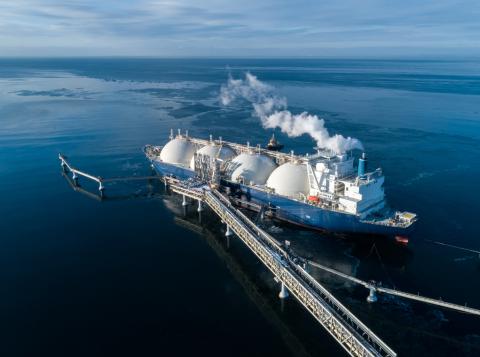
While pipeline costs make up most of the fiscal exposure, weak hydrogen demand would also increase spending on hydrogen-ready power plants and prolong reliance on liquefied natural gas terminals.
The difference between a rapid and limited hydrogen rollout amounts to €45 billion in additional public funding, or €1,000 per German taxpayer.
Blue hydrogen deepens gas dependence
With public finances tied to pipeline use, German policy has focused on sustaining hydrogen demand rather than treating weak uptake as a signal to scale back the network.
Germany’s Hydrogen Acceleration Act, passed by parliament in February 2026, designates blue hydrogen — produced from natural gas with carbon capture and storage — as being in the “overriding public interest”. This marks a significant shift from Germany's original strategy, which focused exclusively on green hydrogen produced from renewable energy.
“A pivot to blue hydrogen would add a network of costly carbon dioxide pipelines and re-entrench Germany’s dependence on volatile global gas markets, threatening long-term energy security and industrial competitiveness,” said Docherty.
“Blue hydrogen is an expensive way to sacrifice energy independence.”
Limiting taxpayer spending
IEEFA recommends that Germany align hydrogen infrastructure development with confirmed demand and supply commitments.
Importing hydrogen derivatives for targeted industrial applications could greatly reduce the need for a large-scale domestic pipeline buildout, lowering system costs and limiting public spending.
Coordinating hydrogen investment with the phaseout of support for liquefied natural gas terminals would reduce the risk of underwriting two overlapping systems against the same demand uncertainty.
“It is better to recognise infrastructure risk early than to justify an oversized network by artificially propping up demand at indefinite taxpayer expense,” said Docherty.
Press contact
Jules Scully | [email protected] | +447594 920255
About IEEFA
The Institute for Energy Economics and Financial Analysis (IEEFA) examines issues related to energy markets, trends and policies. The Institute’s mission is to accelerate the transition to a diverse, sustainable and profitable energy economy. www.ieefa.org