Coal sector demand skews carbon credits market
Safeguard Mechanism review must address over-reliance on offsets
Key Takeaways:
Australia’s federal government is undertaking a review of the Safeguard Mechanism, its main instrument for reducing industrial greenhouse gas emissions – including methane from coal mining.
While the coal industry’s net covered emissions are falling, there are questions over how this is being achieved. Gross or on-site emissions should be falling, but they are not.
Coal is the biggest user of carbon credits under the Safeguard Mechanism, and the industry is rapidly approaching the point where it consumes all available sources of methane-related carbon credits.
27 August 2026 (IEEFA AUSTRALIA): As the federal government begins its review of the Safeguard Mechanism, a key focus must be on the coal mining sector’s growing reliance on carbon credits to offset its emissions.
The Safeguard Mechanism is the government’s main instrument for delivering Australia’s emissions reduction ambitions. For the policymakers who must implement policy changes in response to the latest review, it will be a challenge balancing the need for effective reforms with the risk of making the scheme too complicated to achieve its purpose.
Moreover, as a market-based system relying on tradeable carbon credits, any discussion of the Safeguard Mechanism must consider the largest user of those credits: coal mining. The impact of the sector’s reliance on the carbon credits market is examined in a new briefing note – The coal-fired carbon credit market – from the Institute for Energy Economics and Financial Analysis (IEEFA).
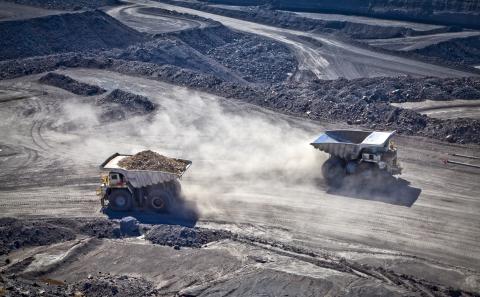
“Of Australia’s most emissive industrial facilities, 68 coal mines are represented in the Safeguard Mechanism,” says Andrew Gorringe, Energy Finance Analyst, Australian Coal at IEEFA and the note’s author. “The industry that exports about 80% of its products is also responsible for the highest emissions during production. Moreover, coal mining emits methane – a highly potent greenhouse gas – on a scale that dwarfs other sectors.”
Coal mines’ efforts at on-site emissions reduction have largely stalled. Methane abatement activities are limited to a handful of advanced projects, while diesel consumption is rising due to a shift towards more fuel-intensive open-cut mines. The inaction on emissions has been compounded by mixed incentive signals and industry under-investment into research and development.
“Collectively mines are not yet ready to embrace the challenges of bringing on sufficient levels of on-site methane abatement or implementing diesel decarbonisation,” says Gorringe. “And to further exacerbate the emissions issue, coal production volumes are rising. While a global transition away from coal is underway, and some mines are nearing the end of their life spans, there is a large pipeline of new mines awaiting – and receiving – approvals.”
Consequently, coal mining has an emissions profile that is on track to persist at least into the 2030s. And given that Safeguard baseline rules require net emissions decline over time, mines are relying heavily on buying offsets through the carbon credit market. The problem is that carbon credits do little to address one of coal mining’s key problems: its methane emissions.
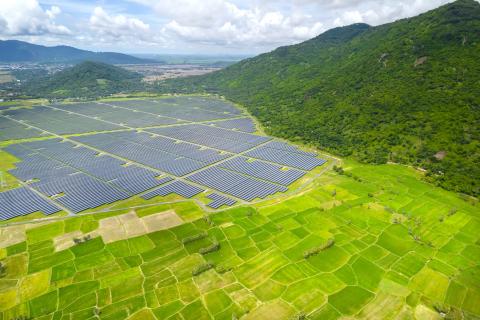
Australia’s carbon market is dominated by land-based projects that aim to sequester carbon dioxide, but offers little to offset methane emissions. The available supply of carbon credits backed by methane-reducing projects is actually dwindling as coal mining’s reliance on them increases.
Starved of methane credits, and lacking incentives to actively address on-site decarbonisation, coal mines must instead rely on a staple diet of carbon sequestration projects that do not adequately address methane emissions. This distorts the broader carbon credit market for other users, and poses a risk to national and state emissions reduction targets.
“Australia ranks among the world’s largest exporters of coal, so we must ensure that the Safeguard Mechanism is fit for purpose in managing its emissions,” says Gorringe. “If not, the coal industry’s emissions reduction agenda will increasingly depend on land-based carbon projects, crowding out other sectors that will be forced to carry the load on real emissions reduction.”
Read the report: The coal-fired carbon credit market – Ambition on offsets needed in Safeguard Mechanism review
Media contact: William Poole, ph +61 408 030 524, [email protected]
Author contact: Andrew Gorringe, [email protected]