Strengthening Indonesia’s energy security by reducing coal dependence
Key Findings
Indonesia’s diverse energy mix makes it resilient to oil and gas shocks, but coal remains a significant component at 41.3%, creating energy security risks. From 2020 to 2025, coal expenses accounted for 14–15% of the operating costs of PT Perusahaan Listrik Negara (PLN), the national electricity utility.
Indonesia’s Domestic Price Obligation (DPO) and Domestic Market Obligation (DMO) policies help maintain affordable electricity prices but also create significant implicit costs for stakeholders. These include an estimated USD1.5 billion in forgone royalty revenue for the government in 2025 and a potential USD8.6 billion loss for the coal mining industry.
Government subsidies and compensation in PLN's total revenue increased from 19% to 34% between 2020 and 2025 to offset rising fuel costs, while DPO and DMO policies provide hidden subsidies for coal-fired power plants (CFPPs). Without these policies, CFPPs’ levelized cost of electricity (LCOE) could surpass that of renewable energy technologies.
The 100-gigawatt (GW) energy transition program presents a significant opportunity for Indonesia to capitalize on the low and declining costs of renewable energy. By leveraging its abundant renewable energy resources, Indonesia can reduce its reliance on coal and strengthen its long-term energy security.
The recent Iran conflict has created uncertainty in the global oil and gas market, and its impacts are being felt across Southeast Asia. Energy tariffs have spiked, and fiscal pressure has increased to maintain energy affordability across the region, including in Indonesia.
Despite these challenges, JP Morgan Asset Management ranks Indonesia as the second-most resilient country to oil and gas shocks, citing its diverse energy mix, which comprised coal (41.3%), oil (28.1%), natural gas (14.5%), and new and renewable energy (16.0%) in 2025. The country also maintains substantial domestic energy resources, particularly in coal. In 2024, Indonesia’s coal supply reached 803.9 million barrels of oil equivalent (boe), exceeding domestic consumption of 342.7 million boe.
However, these assessments often overlook the true cost of coal-based electricity. Although coal is widely viewed as an abundant and reliable energy source, its full economic cost is often underestimated, raising questions about the extent to which it strengthens Indonesia’s energy security.
The real cost of coal-based electricity
Several critical aspects must be considered when assessing the full cost of coal-based electricity:
1. Exposure to coal price volatility
Reliance on fossil fuels, including coal, leaves Indonesia vulnerable to fluctuations in global commodity prices. Between 2021 and 2026, coal prices experienced significant volatility, creating uncertainty in electricity generation costs.


Despite this volatility, coal-related expenses remained relatively stable, accounting for approximately 14–15% of the operating costs of PT Perusahaan Listrik Negara (PLN), Indonesia's national electricity utility, between 2020 and 2025. This stability was largely supported by government intervention through the Domestic Price Obligation (DPO) and Domestic Market Obligation (DMO) policies, which cap domestic coal prices at USD70/tonne. However, prices under the DPO were significantly below international levels, reducing coal producers’ profitability and weakening incentives to supply the domestic market. Consequently, producers have tended to prioritize exports during periods of elevated global coal prices. This dynamic has periodically strained domestic coal availability, despite Indonesia’s abundant coal reserves. In 2026, PLN faced a coal supply shortfall of approximately 20 million tonnes, highlighting ongoing challenges and market distortions associated with the current pricing framework.
Reliance on coal also exposes Indonesia to exchange-rate risks, as transactions are denominated in US dollars (USD). In 2025, this currency depreciation increased coal costs by 12%, raising PLN and private power producers’ operating expenses. The Indonesian Rupiah (IDR) continues to depreciate against the USD, reaching record lows. This pressure is expected to persist as long as the global market remains volatile and policy uncertainty continues.
The depreciation of the IDR against the USD, combined with coal price volatility, has increased PLN's fuel costs. However, electricity tariffs have remained largely stagnant. As fuel costs increased, PLN’s fuel expenses relative to the tariffs charged rose from 1.2 times in 2020 to 1.5 times in 2025. As a result, electricity tariff revenue became increasingly insufficient to cover fuel expenses. To address this shortfall, government subsidies and compensation grew substantially, raising PLN’s total revenue from 19% to 34% over the same period.
2. Opportunity cost of DPO and DMO
Indonesia’s DPO and DMO policies aim to keep electricity affordable but impose significant implicit costs for stakeholders. In 2025, 254 million tonnes of coal were allocated for the domestic market. The coal price under the DPO and DMO policies was USD70/tonne, lower than the average market price of USD104/tonne at the time.
The Institute for Energy Economics and Financial Analysis (IEEFA) estimates that these policies resulted in approximately USD1.5 billion in forgone royalty revenue for the government in 2025. IEEFA also estimates a potential USD8.6 billion loss for the coal mining industry through lost revenue opportunities, reducing industry profitability.
3. Extensive value chain costs
Unlike renewable energy, coal-fired power plants (CFPPs) have extensive value chains that span from upstream coal extraction to electricity generation. CFPPs require continuous investment in mining operations, fuel processing, transportation infrastructure, storage facilities, shipping, and fuel-handling systems before coal reaches the power plant. These upstream and downstream infrastructures require significant long-term capital investment and operational expenditures. However, such costs are often overlooked in plant-level capital expenditure comparisons, resulting in an incomplete assessment of the true cost of coal-based electricity.
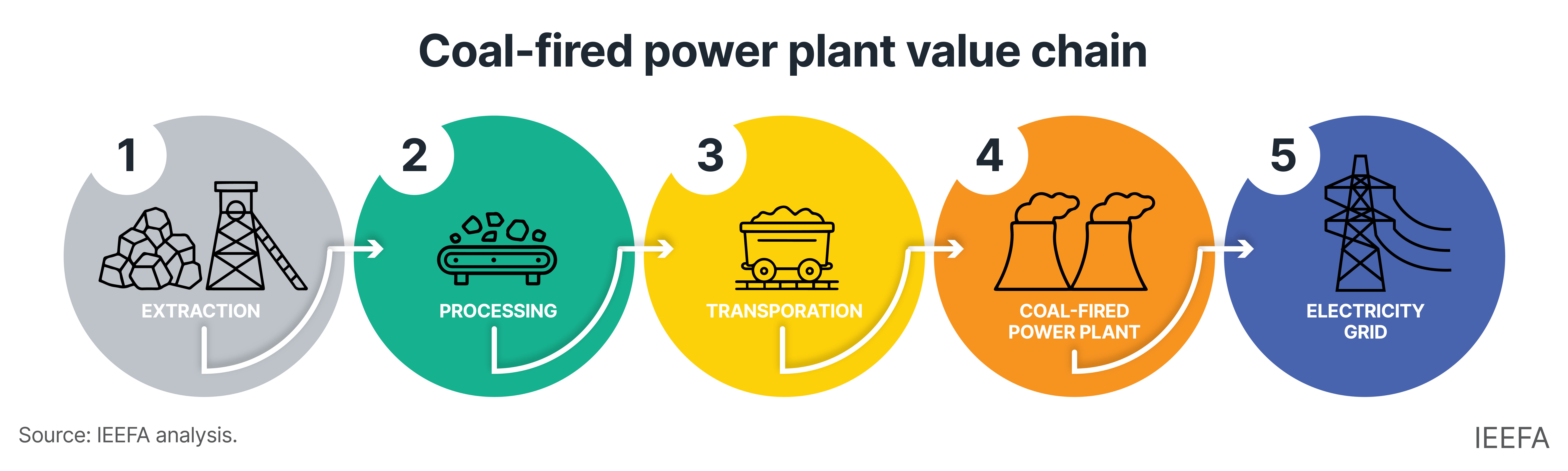
The coal mining sector’s heavy reliance on diesel for operational activities offsets much of the benefit of higher coal prices, as rising oil costs erode profit margins. This dependence weakens Indonesia’s energy security by increasing exposure to imported diesel and global oil price fluctuations. Additionally, many CFPPs operate with aging infrastructure, leading to higher maintenance costs, more frequent repairs, and costly refurbishments over time.
4. DPO and DMO policies reduce investment appeal
Coal-fired electricity is losing its appeal to energy-intensive industries, such as data centers, which are increasingly prioritizing corporate sustainability commitments and access to clean energy. As global companies seek to decarbonize their operations, continued reliance on coal could diminish Indonesia’s attractiveness as a destination for future digital infrastructure and data center investments.
The impact of coal dependence
The economic implications of coal dependence extend beyond direct subsidies and compensation schemes. Indonesia’s DPO and DMO policies effectively serve as hidden subsidies for CFPPs by shielding them from market-based fuel costs. Without these policies, CFPPs’ levelized cost of electricity (LCOE) could range from USD10.7–11.9 cents per kilowatt-hour (¢/kWh), surpassing the cost of many renewable energy technologies, particularly utility-scale solar photovoltaic (PV), which ranges from USD4–6¢/kWh.

Based on PLN's financial statements, IEEFA found that the DPO and DMO policies reduced the utility's operating costs by an estimated 6–9% in 2025. Under the same cost structure, every USD1 per tonne increase in coal prices would have added approximately USD69 million to PLN’s operating costs. However, the economic burden of coal-based electricity extends well beyond utility operational costs. Wider impacts across the coal value chain, as well as effects on national competitiveness, are often overlooked.
Building on the energy transition momentum
The global transition continues to accelerate. By the end of 2025, renewable energy generation surpassed fossil fuel power generation for the first time. Solar generation increased by 636 terawatt-hours (TWh), wind generation by 205TWh, and other low-carbon technologies by 46TWh, while fossil fuel generation declined by 38TWh.
At the same time, renewable energy technologies have become increasingly cost-competitive. On a per-kilowatt (kW) basis, installed capital costs for many renewable energy technologies are now lower than those of new coal and natural gas facilities. Their operating costs are also generally lower, reflecting the absence of fuel costs and reduced exposure to commodity price volatility.
Recognizing these advantages, the Government of Indonesia has identified its 100-gigawatt (GW) energy transition program as an opportunity to capitalize on the low and declining costs of renewable energy. With renewables accounting for only 16% of the current national energy mix in 2025, there remains significant scope for investment and growth beyond the 17–19% target set under the 2025 National Energy Policy (KEN).
IEEFA’s recommendations
To address the challenges in accelerating renewable energy deployment in Indonesia, IEEFA recommends:
1. Accelerate CFPP retirements to reduce coal use in power generation.
In 2025, PLN generated 354,928 gigawatt-hours (GWh) of electricity, compared with 317,690GWh sold, with approximately 32% of generation coming from CFPPs. PLN can initiate CFPP retirement by prioritizing the least cost-efficient plants. Accelerating CFPP retirements would reduce coal demand for power generation and ease pressure on the DPO and DMO schemes. This could increase the amount of coal available for export and raise government non-tax revenue from coal royalties. Additional revenue could help fund the 100GW program, supporting renewable energy development and industrial capacity building to strengthen the domestic renewable energy supply chain.
2. Boost solar PV demand to strengthen the domestic manufacturing ecosystem.
Indonesia’s renewable energy industries, particularly solar PV manufacturing, continue to face challenges stemming from an incomplete local supply chain. Although the government has relaxed its Domestic Component Level (TKDN) for foreign investors, weak domestic demand continues to limit local manufacturing growth. As a result, domestic producers struggle to achieve economies of scale and compete with imported solar modules. To address this issue, the government should stimulate demand for solar PV deployment to strengthen the domestic manufacturing ecosystem. Increased demand for solar can incentivize supply chain participants to scale up investment in Indonesia’s domestic manufacturing. Advancing CFPP retirements could further support this objective by reducing coal demand under the DMO scheme, increasing coal exports, and thereby raising the country’s royalty revenue that could be reinvested in renewable energy development.
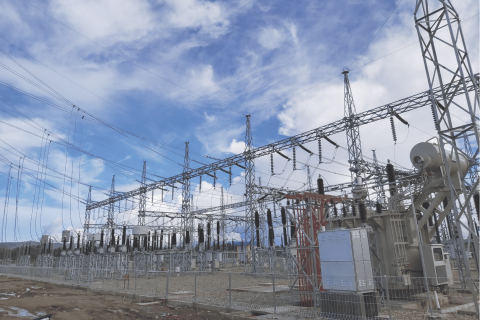
3. Modernize the transmission network to increase capacity, strengthen grid reliability, and support future growth.
Modernizing and expanding Indonesia’s transmission network is essential to increasing grid capacity, strengthening system reliability, and supporting future growth in electricity demand. A stronger transmission system would help reduce network bottlenecks, facilitate the integration of distributed energy resources, and enable more effective management of variable energy generation. These improvements would accelerate renewable energy development and encourage substantial private investment to achieve the 100GW target. Indonesia requires an estimated USD24.4 billion in investment to expand its transmission network. To secure financing beyond PLN’s internal resources and public funds, PLN should consider separating its transmission assets into a distinct entity, which could reduce financing costs and attract private investment.
The hidden costs of coal outweigh its perceived contribution to energy resilience. While coal has helped shield Indonesia from some external energy shocks, continued dependence on coal exposes the country to fuel price volatility, exchange rate fluctuations, fiscal burdens, and supply chain risks. These pressures undermine both fiscal stability and long-term economic competitiveness.
Indonesia is well-positioned to capitalize on its abundant and diverse renewable energy resources, which are less vulnerable to external disruptions. By expediting the deployment of these domestic resources, the country can strengthen energy security, improve economic resilience, and support sustainable growth.
Read the commentary in Bahasa Indonesia: Kebijakan DMO melemahkan ketahanan energi dan hilangkan potensi PNBP US$ 1,5 miliar

Related Content