Key Findings
With direct reduction (DR) emerging as the leading pathway for steel sector decarbonisation, a forecast supply deficit for DR-grade iron ore signals an opportunity for new suppliers. Moves to grasp this opportunity are being led by producers in Canada, Brazil, and the Nordic region, and prospective developments across Africa.
A strategic shift to DR-grade ore marks a key opportunity to diversify the demand base for Australia’s largest export. At present, Australia’s iron ore exports are dominated by blast furnace-grade material, which faces a challenging long-term outlook as global oversupply and declining Chinese demand put downward pressure on prices.
With most forecasts indicating supply deficits for high-grade ore emerging after 2030, Australia still has a window of opportunity over the coming decades to benefit from the green iron and steel transition, despite the long lead times required to develop new mines, provided that timely action is taken.
Australia may not hold a strong advantage in producing high-grade iron ore, given factors such as in-situ ore quality, amenability to beneficiation, and processing costs. However, the future market offers sufficient room for new entrants, presenting an opportunity that should not be missed.
The global steel sector is undergoing a technological shift to lower its significant carbon footprint. At the core of the transition for ore-based steelmaking is direct reduction (DR) of iron ore. When combined with green hydrogen and renewable energy, DR can significantly reduce carbon emissions compared with the coal-based blast furnace (BF) route. Although DR technology is already mature and widely adopted in some regions, it requires high-grade iron ore with very low impurities. DR-grade material represents only a small share of global iron ore supply, which is largely dominated by BF-grade ores.
While emerging technologies aim to broaden the range of iron ore grades suitable for low-emissions steelmaking, they will need time to scale and compete with established processes. In the meantime, the industry will continue to rely on mature DR technologies, which in turn will require greater availability of high-quality DR-grade iron ore.
Whether DR-grade iron ore becomes a constraint on low-emissions steel production will depend on future demand growth, driven primarily by the global expansion of direct reduction plants, and on how quickly iron ore producers can develop new capacity at scale.
Not all direct reduced iron (DRI) producers have access to DR-grade feedstock domestically, and an increasing number of new plants are coming online that do not have a dedicated local pellet supply source. This trend will place additional pressure on the global seaborne market for DR-grade iron ore. Most forecasts point to rising demand for DR-grade material, and many studies suggest that a supply deficit is likely to widen beyond 2030.
BloombergNEF expects a deficit of 15 million tonnes per annum (MTPA) by 2030, widening to 133MTPA by 2040. Midrex has also flagged a potential supply shortfall, of up to 16.4MTPA by 2034. This outlook presents significant challenges for DRI producers, while creating potential opportunities for emerging suppliers, including Australia.
Iron ore is Australia’s largest export. However, with the long-term outlook for BF-grade iron ore declining, the global shift toward DR-grade material presents a significant opportunity for Australia to reposition and strengthen its role in the evolving low-emissions steel value chain.
Countries such as Canada, Brazil, and Sweden, along with emerging suppliers across Africa, are positioning themselves to support the growth in high-grade iron ore supply, with numerous projects in the pipeline.
Some companies are focusing on upgrading the quality of their existing products, primarily BF-grade material, in an approach that is also relevant to Australia’s concentrate producers. A second strategy involves expanding capacity at existing operations wherever feasible, as demonstrated by Brazilian miners such as Vale and Samarco.
The third pathway involves greenfield development, which is the primary focus in Australia. The industry in Australia must remain competitive not only against existing producers that are expanding capacity, but also against those investing to improve product quality.
Although Australia’s DR-grade feed production sits at the higher end of the global cost curve, the market appears to have sufficient capacity to absorb additional Australian supply. This is particularly the case if domestic production exceeds future local demand, as Australia positions itself to become a major producer of green iron.
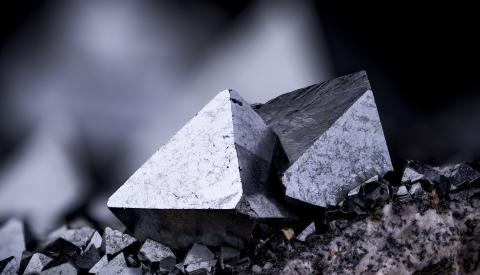
While Australia may not currently have the highest-quality iron ore readily available for this transition, it holds significant potential in magnetite mining, which is key to producing high-grade ore.
Unlike Australia, countries such as Brazil, Canada and African nations are navigating this transition through established producers and major corporations, including Vale, ArcelorMittal, Anglo American, Rio Tinto, and China Baowu. In contrast, the transition in Australia is largely being driven by new entrants. With flagship projects such as Razorback by Magnetite Mines, Hawsons Iron, and CEIP, along with others in development, Australia is well positioned to remain competitive.
In terms of time to market, decisive, timely action will be critical for Australia to keep pace with global developments in low-emissions ironmaking. While production from new deposits may remain a decade away, this timing could align well with the expected global wave of new DRI projects.
Based on the maturity of various technologies in the pipeline, and considering the urgency of moving to a green economy, Australia is unlikely to become a green iron superpower without producing high-grade ore for DRI production. Even if Australia chooses not to export high-grade iron ore at scale, supplying suitable material for low-emissions ironmaking domestically will still require the production of high-grade ores in the short-to-medium term.

Related Content