India’s critical mineral imports show high concentration of trade linkages, reinforcing need for diversification
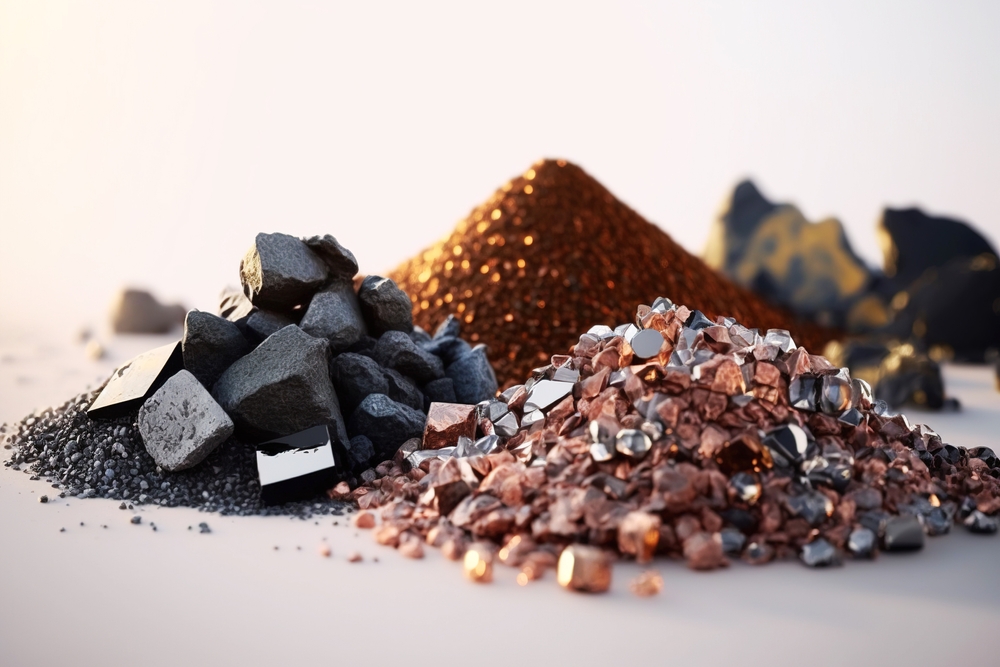
Assessing the trade dynamics shaping India’s critical mineral supply chain across cobalt, copper, graphite, lithium, and nickel.
Key Takeaways:
Chile is India’s largest critical minerals supplier, primarily for copper ore, accounting for 2,800,000 tonnes of imports between financial year (FY) 2019 and FY2025. China, alongside countries like Belgium, Germany and Japan, supplies a wider range of mineral compounds across cobalt, copper, graphite, lithium and nickel value chains.
Protectionist and industrial policies adopted by major producing and processing countries, such as China, Indonesia, the US, the European Union and Japan are increasingly impacting India’s imports. Export controls, domestic value-addition requirements, and strategic supply management are reshaping trade flows and revealing India’s vulnerability to concentration risks and supply disruptions.
India’s import data reflects a clear intent to diversify supply sources and build more resilient supply chains through international cooperation. At the same time, there is also a need to strengthen collaboration in skills development, joint exploration and mining, technology transfer and scaled research and development.
30 April 2026 (IEEFA): Access to critical minerals is not just a supply chain concern for India. It sits at the heart of the country's energy security, industrial competitiveness, and the pace of energy transition. Of the 30 minerals deemed critical by the central government due to their economic importance and supply risk, five stand out for their direct role in renewable energy technologies.
A new briefing note by the Institute for Energy Economics and Financial Analysis (IEEFA), titled ‘India's Critical Mineral Imports: A 2025 Overview’, examines the import data for these five minerals — cobalt, copper, graphite, lithium, and nickel and their compounds assessing key developments and shifts over the past year. It also offers a perspective on the trade dynamics, price fluctuations, and market conditions shaping India's critical mineral supply chain. India is currently 100% import-dependent for lithium, cobalt, and nickel.
“Reserves and processing capacity for these minerals remain highly concentrated, while recent trends of export restrictions, resource nationalism, and onshoring or friend-shoring policies are fragmenting global markets that India relied upon. The consequences are price volatility, supply disruptions, and reduced availability, affecting import-dependent economies like India the most,” says Saloni Sachdeva Michael, Lead Energy Specialist, India Clean Energy Transition, South Asia, at IEEFA, and a co-author of the briefing note.
Chile is India’s largest supplier of critical minerals by a wide margin, accounting for 2,800,000 tonnes of imports between financial year (FY) 2019 and FY2025, driven primarily by copper ore. China is also a systemically important supplier, alongside countries like Belgium, Germany and Japan, providing a broader range of mineral compounds across the cobalt, copper, graphite, lithium, and nickel value chains.
For cobalt, used in lithium-ion battery cathodes for electric vehicles (EVs) and renewable energy storage systems, Finland is India's dominant supplier, accounting for nearly 60% of cobalt oxide and hydroxide imports in FY2025. On lithium itself, the picture is more mixed: Lithium carbonate imports have declined, with Ireland holding the largest share at nearly 40%, while lithium oxide and hydroxide imports have rebounded after a period of contraction, with Chile accounting for over 41%.
In copper, critical for power generation, transmission, and electrification, Tanzania provides over 50% of India’s copper ore and concentrate imports, signalling its emergence as a key trade partner. Meanwhile, Japan and Norway are the primary sources for copper cathodes and copper oxide and hydroxide, respectively.
When it comes to graphite, used as anode materials in lithium-ion batteries, prices for natural graphite have fallen more sharply than for synthetic graphite, reflecting oversupply, export frictions, and weaker demand. Mozambique has overtaken China as the leading natural graphite supplier, while China remains dominant in synthetic graphite at over 91% in FY2025.
Australia is a new entrant for Nickel, used in rechargeable battery cathodes, making up 65% of nickel oxides and hydroxides imports. Belgium dominates in imports for nickel sulphate at over 65%.
Taken together, these trends show that single-supplier concentration remains high. “The countries India trades with are resource holders, refiners, and technology leaders. Building resilient supply chains, therefore, will require long-term, structured partnerships that move beyond government-to-government agreements and into deep industry collaboration, joint exploration, scaled research and development, technology transfer, and recycling,” says Kaira Rakheja, Energy Analyst, South Asia, at IEEFA, and a co-author of the briefing note.
India is already making efforts to achieve diversification through diplomacy, trade and international cooperation to reduce supply risks. Australia and Japan are relatively mature partners for India in this space, with joint ventures, secured supply, and investment linkages in place. India also has evolving relationships with the US, UK, European Union (EU), South Africa, Zambia, and Argentina, and exploratory partnerships with Chile, the Democratic Republic of Congo, Mongolia, Morocco, Mozambique, and Saudi Arabia.
Read the report: India’s critical mineral imports in 2025 and a shift towards supply diversification
Media contact: Prionka Jha ([email protected]); +91 9818884854
Author contacts: Kaira Rakheja ([email protected]); Saloni Sachdeva Michael ([email protected])
About IEEFA: The Institute for Energy Economics and Financial Analysis (IEEFA) examines issues related to energy markets, trends, and policies. The Institute’s mission is to accelerate the transition to a diverse, sustainable and profitable energy economy. (ieefa.org)