Key Takeaways:
As South Australia lacks a competitive advantage in gas, locking in long-term gas use at Whyalla is a risk that is magnified by the Iran conflict.
A gas-based Whyalla steelworks looks unlikely to remain viable in a sector undergoing a global transition away from fossil fuels.
With day one green hydrogen use the global benchmark for low-carbon iron and steel, the Iran conflict further highlights the energy security benefit of domestically produced green hydrogen.
For Whyalla, government support should target reduced cost of green hydrogen and offtake of truly green steel at a premium price, with a schedule for a progressive increase in green hydrogen use through the 2030s.
21 April 2026 (IEEFA Australia): Barely a week after the South Australian government publicly backed gas to power the Whyalla Steelworks renaissance, the Iran crisis starkly illustrated why this could be a major misstep, according to a briefing note released today.
With billions at stake on revamping the troubled steelworks, locking in long-term gas use threatens to make the venture and Australia’s nascent green iron industry uncompetitive from the outset, finds the note Why gas is the wrong choice for Whyalla steel.
Leaders in the global green iron transition are already targeting early green hydrogen use in steelmaking, and the latest energy crisis sparked by the war on Iran will only accelerated that shift, says the author Simon Nicholas, lead analyst – global steel, at IEEFA.
“As the world’s biggest steel industry prepares to make more of the energy security benefit of green hydrogen, South Australia continues to shift away from it in favour of gas,” Mr Nicholas says. “With early green hydrogen use in low-carbon iron and steel becoming the global benchmark, the state risks turning from a global green iron and steel leader to a laggard.”
In late February, the SA government agreed terms with Santos to supply Australian gas to Whyalla for 10 years from 2030, only for the Iran conflict to send global oil and gas prices soaring. The 20 petajoule a year deal would double the state’s industrial gas demand.
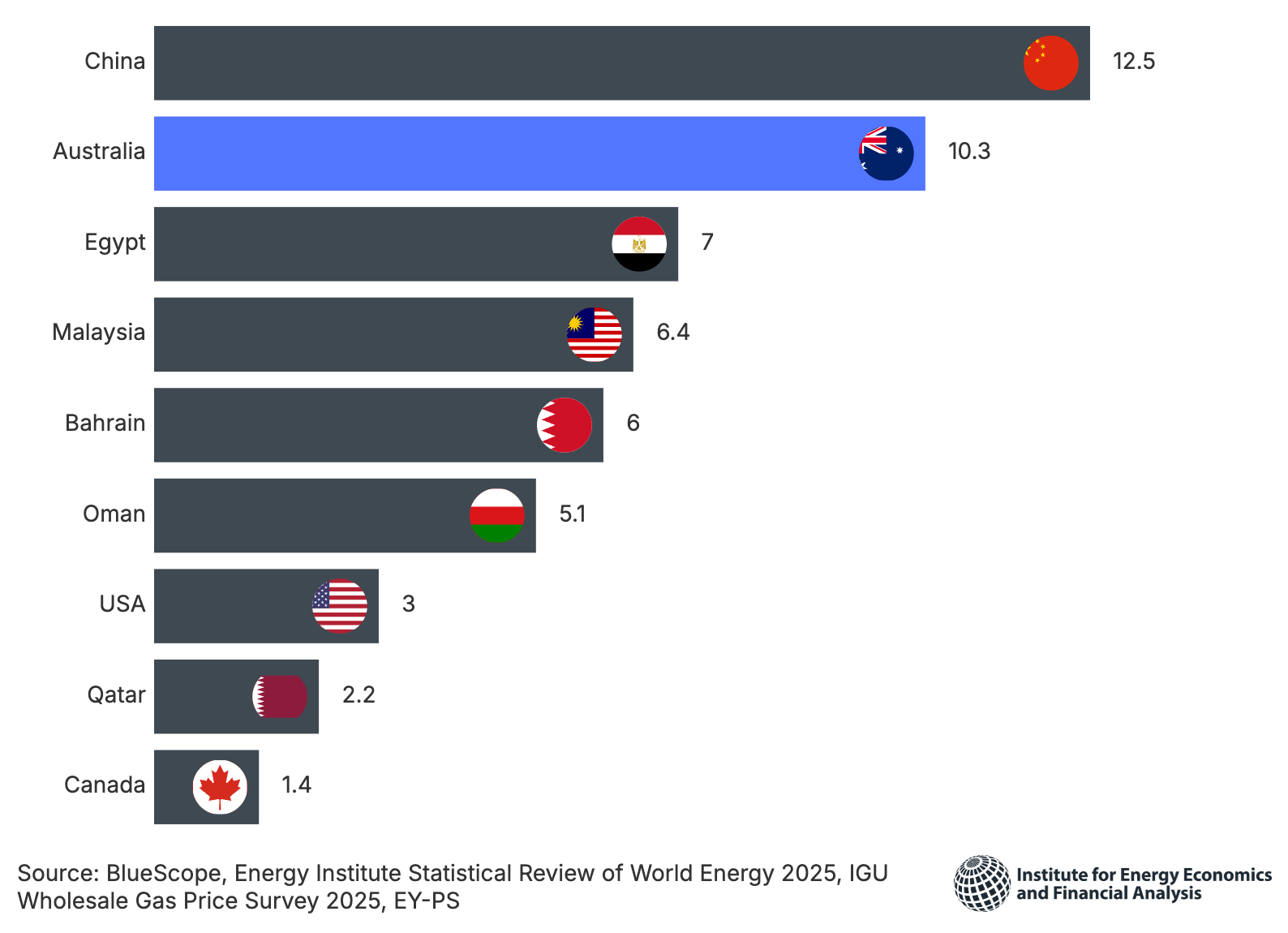
“Eastern Australia’s gas is much more expensive than in nations where the direct reduced iron (DRI) technology proposed for Whyalla is well established, such as the Middle East and North Africa,” Mr Nicholas says.
China – by far Australia’s biggest iron ore customer – is increasingly focused on the role green hydrogen can play in improving energy security, including in the steel sector. Meanwhile, rivals such as Oman are leveraging their cheap gas to land green steel projects that might otherwise have gone to Australia on the promise of converting their plants to green hydrogen.
Campaigning at last month’s state election, SA Labor said switching Whyalla from coal to gas would “produce a decarbonised iron product that the world demands”.
“The SA government’s retreat from a truly green iron and steel pathway looks like a misreading of global steel technology transition progress,” Mr Nicholas says. “Gas-based DRI cannot produce a ‘decarbonised iron product’.”
Gas-based DRI produces more CO2 than steel, at 1.7 tonnes of emissions per tonne of steel, according to the World Steel Association, while steel made with green hydrogen backed by renewables can emit less than 100kg of CO2 per tonne.
The lesson from Europe – where the steel technology transition is more advanced – is that large capital grants to support a switch from coal-based blast furnaces to gas-based DRI are far from guaranteed to succeed where the plant is exposed to high gas prices. The note therefore recommends a co-ordinated plan at state and federal level that requires a phase-in of green hydrogen to progressively replace gas at Whyalla during the 2030s.
“Government support for Whyalla is justified for a strategic industry such as steelmaking,” Mr Nicholson says. “But it should not be wasted on a plan that locks in long-term 100% fossil fuel use that is unlikely to achieve its aim.”
Instead of focusing solely on a capital grant, government support should also focus on lowering the cost of green hydrogen and on offtake of truly low-carbon steel.
“A plan to utilise South Australia’s comparative advantage in renewable energy, and progressively scale up green hydrogen use at Whyalla, can put the state in a global green iron and steel leadership position again.”