Gorgon shows CCS aims are built on technical uncertainty
Key Findings
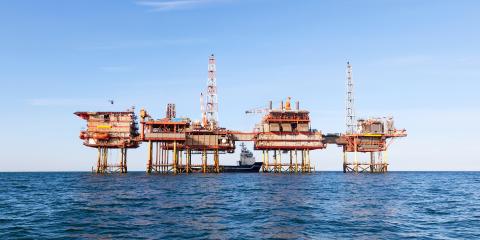
The world’s largest carbon capture and storage (CCS) project, at Chevron’s Gorgon LNG facility in Western Australia, has reported the lowest amount of carbon dioxide captured in a year since its inception in 2019.
The Gorgon CCS project only stored 25% of the carbon dioxide (CO2) removed from its reservoir in FY2024-25, at a cost of AU$265/tCO2 (US$176/tCO2).
Gorgon CCS captured only a fraction of the total emissions from the adjoining LNG plant, highlighting its limited effectiveness in mitigating climate change.
While the fossil fuel industry promotes CCS as a climate solution, it has a history of technical challenges and underperformance. Global CCS capacity captures a minuscule fraction of global fossil fuel emissions.
The latest data release from Chevron on its Gorgon carbon capture and storage (CCS) project, the world’s largest, showed the lowest annual amount of carbon dioxide (CO2) captured and stored since it started in August 2019. Falling CO2 injection rates have pushed up the effective costs for each tonne of CO2 captured, further weakening the project’s economics.
This matters, because CCS has been promoted as a climate solution by the fossil fuel sector, which last year had collective emissions of 37.8 billion tonnes of CO2. This puts the world on a trajectory to reach a global average temperature rise of 2.6°C above pre-industrial levels, according to Climate Action Tracker.
According to the oil and gas sector, one way to avoid this is to adopt CCS. Industry leaders argue that governments should be putting taxpayer funds into CCS projects. However, CCS has a chequered history, beset by technical issues that its proponents, often engineers, say can be overcome. Yet Gorgon CCS shows no signs of improving; its performance has declined significantly since the first year of operation, as the chart below shows.
Figure 1: CO2 captured and stored, compared with CO2 removed from reservoir
To put Gorgon CCS’s underperformance into context, the 1.33 million tonnes (Mt) of CO2 it captured in FY2024-25 represents just 25% of the CO2 removed (5.22MtCO2) from the Gorgon and associated gas fields that feed the Gorgon LNG plant on Barrow Island off Western Australia.
Chevron is not obliged to disclose the amount of CO2 released when the gas is combusted by its customers (Scope 3 emissions). This makes up about 90% of the total emissions released by Gorgon CCS and its associated gas and LNG projects. However, in one of its Gorgon CCS planning documents, Chevron estimated that if all the gas from the project was consumed at gas-powered generation stations in the Asia-Pacific, emissions would amount to 50MtCO2 a year. Based on the assumptions in that scenario, Gorgon CCS captured just 2.66% of the total emissions from extracting, processing, and burning gas from the Gorgon fields.
So even if Gorgon were working at its intended target of 4MtCO2 a year, it would capture only 8% of the total emissions from the Gorgon LNG project.
This would also be the case for any new CCS development, such as Woodside’s Browse project and Inpex’s Bonaparte project.
Nonetheless, Gorgon CCS remains a bellwether for the CCS sector. Despite capturing relatively small amounts of CO2, it still represents a significant proportion of the world’s dedicated CCS projects, which have a combined nameplate capacity of 11.6Mtpa. (Note: CCS is distinct from CCUS projects; the U stands for the utilisation of captured CO2 to squeeze more oil out of the ground, also known as enhanced oil recovery.)
The Global CCS Institute’s (GCCSI) annual report on the status of CCS around the world does not provide data on how much CO2 is captured each year, only projects’ nameplate capacity. It is difficult to assess if the CO2 capture and storage rate of Gorgon CCS, which was about one third of its annual target capacity in FY2024-25, is an outlier or reflects the industry average.
Gorgon CCS’s poor performance means the actual amount of CO2 captured is lower than the nameplate capacity in the GCCSI report. This implies the estimated total CO2 stored by the world’s CCS projects is little more than 10Mtpa, or 0.00026% of global fossil fuel emissions.
Despite the industry’s support for new CCS projects to underpin emissions reduction and facilitate new gas developments, the role is CCS in addressing industry emission reductions is likely to be extremely limited.
CCS is also not likely to be the most cost-effective approach to reduce global emissions. Based on those latest performance figures, the average cost per tCO2 captured has increased to a staggering AU$265/tCO2 (equivalent to about US$176/tCO2). This is nearly four times the initial expected theoretical cost of AU$70/tCO2.
Figure 2: Theoretical vs actual costs for the Gorgon CCS project, AU$/tCO2 captured
In contrast, accelerating the deployment of renewables can reduce emissions while also reducing costs. The costs of solar photovoltaic (PV) and storing electricity through grid-scale batteries have come down sharply in the nine years since Chevron started building Gorgon CCS. Generating electricity from gas with CCS is estimated to have levelised cost of electricity (LCOE) between about AU$200 and AU$300 per megawatt hour (MWh) in 2024, compared with an LCOE for solar PV of below AU$100/MWh. This cost is based on a capacity factor for gas of between 53% and 89% versus 19% and 32% for large-scale solar PV.
This year, renewables overtook coal for the first time in generating electricity, reflecting its falling costs, whereas the high costs of CCS and its technical challenges remain.

Related Content