IEEFA at London Climate Action Week 2026
Clean energy becomes an economic resilience strategy
Across Europe, South Asia, and Southeast Asia, the debate is moving from whether renewable energy can scale to whether grids, markets, supply chains and finance can make it investable, affordable and resilient.
London Climate Action Week 2026 arrived at a moment when energy security, industrial competitiveness and climate ambition have become inseparable. Recent geopolitical shocks, including the Middle East conflict, have exposed the depth of Europe's exposure to fossil fuel volatility, while affordability, inflation and cost of capital have moved to the centre of the climate conversation.
LCAW 2026 signalled a shift, with clean energy increasingly positioned as a response to economic, energy security and geopolitical risks, not only to climate goals. That shift matters as much for Asia and South Asia as it does for Europe, where energy security, affordability and industrial strategy are equally central to the transition debate.
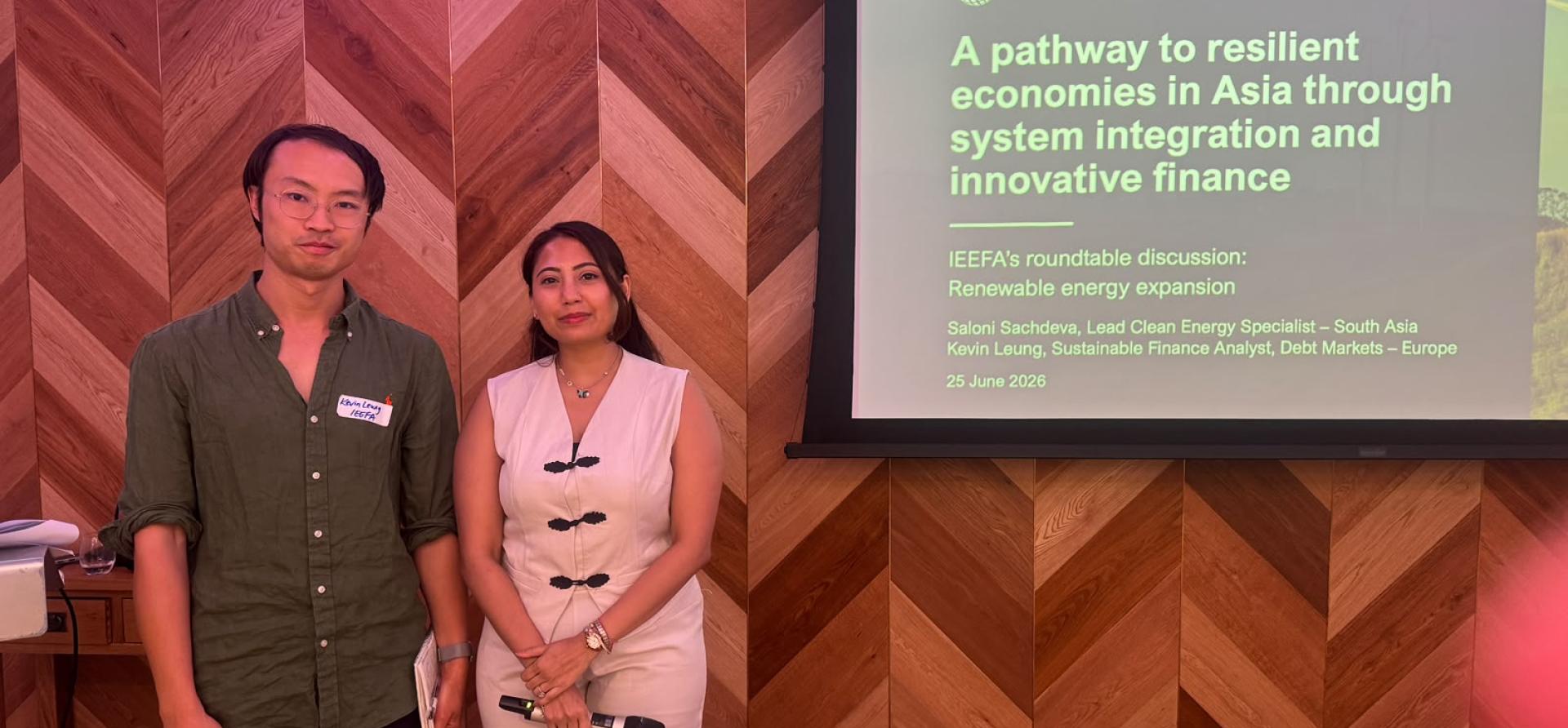
IEEFA participated in a wide range of sessions spanning distributed and utility-scale renewables, transport and energy planning, clean-tech trade partnerships between India, the UK and Europe, and Europe's energy security and industrial competitiveness. IEEFA also organised its own session, 'A pathway to resilient economies in Asia through system integration and innovative finance', drawing on REN21's new Renewable-Based Economy Tracker, with representatives from Solutions for Our Climate (SFOC) presenting their work. The session also drew on IEEFA's credit perspective on financing India's power sector transition.
Across these discussions, four conclusions stood out to IEEFA analysts:
1. The next phase of the transition depends on how well sectors connect
Systems thinking, as opposed to sector thinking, ran through nearly every session. Participants stressed that systems thinking extends beyond how sectors connect to the wider system in which they operate, spanning political economy, governance, financing and costs, institutional capacity and social acceptance. Whether in transport, grids or distributed energy, decarbonisation outcomes were seen to depend on how well these elements are integrated, not only on the performance of individual technologies. This extended to distributed renewables, where India's experience with PM Surya Ghar Yojana, which added nearly 5GW of rooftop solar in just over a year, and Brazil's rapid expansion of distributed solar showed that the debate has moved from proving the technology works to designing the market and regulatory frameworks needed to scale it.
2. Electrification is being driven by security concerns as much as climate ones
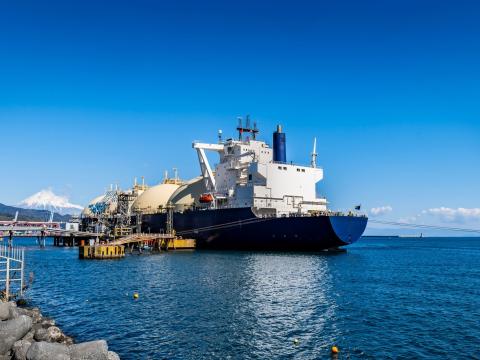
Energy security has become a leading argument for electrification, in Europe and Asia alike. A renewables-based system is structurally more resilient than a fossil fuel-based one: it is two to three times more energy efficient and replaces recurring fuel costs with upfront capital investment. This logic extended to gas and LNG in Europe. Several sessions noted that reducing fossil fuel production must be matched by demand-side measures, or countries risk simply deepening LNG dependency, with implications for both energy security and methane emissions.
3. Supply chains will decide whether the transition holds up
Supply chains and critical minerals are becoming central to transition credibility across regions. As clean technologies scale, the focus is shifting to whether they can do so through diversified, resilient supply chains, avoiding a repeat of today's fossil fuel dependencies. Water scarcity is emerging as a related constraint across AI data centres, clean-tech manufacturing and agriculture, from Europe to South Asia.
4. Investors want proof of delivery
Across Europe and Asia, finance is increasingly following credible delivery rather than announcements. IEEFA analysis of corporate transition planning in India, for example, found that only seven of 33 major Indian companies clearly linked emissions targets to transition measures, limiting investors' ability to assess whether commitments are backed by credible capital plans.
Across investor-focused sessions, system-level risk, corporate lobbying transparency and the credibility of capital allocation behind stated transition targets drew particular attention, alongside AI data centres' potential role as a grid flexibility resource, even as they drive a rapid increase in energy demand.
LCAW 2026 reinforced a wider shift in the global climate dialogue: the pace of the energy transition will now be set less by how quickly renewables are deployed, and more by the systems, markets and partnerships built around them. Across Europe, Asia and South Asia alike, credible transition plans must show falling fossil-fuel demand, integrated renewable systems and capital spending that matches public commitments. Without these foundations, targets carry little weight.





Related Content