Gas Market Review can fix the gas market, provided government picks the right option

Key Findings
With its impending Gas Market Review, the government faces a critical decision regarding how to fix Australia’s long-troubled east coast gas market.
Santos’s Gladstone LNG consortium has directly contributed to rising gas prices in eastern Australia by siphoning gas from the domestic market for export.
An export licensing system applied to LNG exporters is the best option for delivering new gas supply quickly and putting downward pressure on prices.
An industry-wide reservation system is likely to increase complexity and take longer to implement, and may not even increase domestic gas supply or reduce prices.
Australia’s east coast gas market is, to put it simply, a mess. Prices have more than doubled over the past decade, leading to industrial closures, higher electricity costs and inflationary pressures.
Three factors have contributed to this.
The start of liquefied natural gas (LNG) exports from Queensland in 2015 linked the east coast gas market to international LNG markets, massively increasing gas demand. In addition to causing tight supply conditions, this also created a link between domestic and LNG market prices.
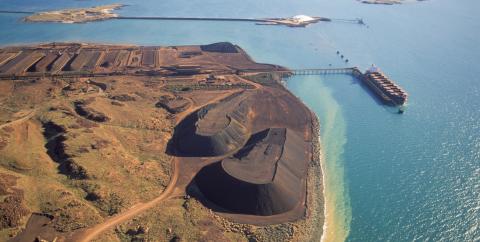
This was compounded by Santos’s decision to proceed with a two-train LNG facility at its Gladstone LNG (GLNG) plant despite having insufficient reserves to fill it. Analysts raised concerns at the time about the company’s ability to access enough gas. GLNG has since purchased large volumes of gas from the domestic market for export; since 2017 those domestic purchases have been equivalent to about two years of eastern Australian gas demand.
The east coast gas market is also uncompetitive due to high market concentration, with the three Queensland LNG exporters controlling 90% of the proven gas reserves in eastern Australia.
Previous policies intended to fix the market have not worked, and the government is expected to soon announce the outcomes of the Gas Market Review. Reports suggest there are two options being considered: an export licensing framework that would require each LNG exporter to meet a domestic supply obligation (Option 1); or an industry-wide framework that would require all gas producers to meet domestic supply obligations (Option 2).
There are several considerations government should keep in mind when determining which approach to adopt. Will it work and what are the unintended consequences? How quickly can it be implemented? And will it actually reduce domestic gas prices?
On all of the above considerations, an export licensing framework that requires all exporters to supply the domestic market is clearly the better option.
The LNG exporters are best positioned to rapidly increase domestic gas supply given they already produce enough gas to meet domestic demand, some of which would otherwise be exported as spot LNG, and they control almost all reserves in eastern Australia. A framework that targets that gas that might otherwise be exported is more likely to lead to additional domestic supply.
Option 1 is also likely to be less complex given it applies only to LNG exporters, meaning a new policy would take less time to implement.
On price, Queensland gas producers generally hold relatively low-cost reserves (with some exceptions), and diverting this gas to the domestic market is likely to be cheaper than bringing on expensive new gas fields. Energy Edge modelling suggests that prices could be more than $2 per gigajoule lower if LNG exporters supplied an additional 30 petajoules domestically. However, the impact on pricing will ultimately depend on the behaviour of LNG exporters, and an export licensing mechanism should include clauses to regulate selling practices and contracting behaviour.
In contrast, Option 2 is not guaranteed to result in material new domestic supply. This reflects two factors: only 10% of eastern Australia’s reserves are not held by LNG exporters; and the vast majority of gas produced by these companies is supplied domestically anyway (with the exception of gas sold to GLNG for export).
Even if Option 2 did lead to additional gas supply, it is likely to take much longer to come to market, thereby not addressing immediate concerns. However, it may carry unintended consequences as it would create regulatory risk and burden for all gas producers, which could impact on their investment decisions and timing.
It is also more likely to be complex to design an industry-wide approach, which means it will take longer to implement.
It is also not clear that this would reduce domestic gas market prices. Option 2 is more likely to incentivise development of new gas reserves in the southern states relative to Option 1, but the costs of these fields are likely to be higher than Queensland gas, with flow-on impacts on pricing. This could lead to a situation where more expensive new gas is supplied domestically while cheaper Queensland gas is exported.
The government is also reportedly considering a “bulk buying” role to lower gas prices for major industry, which could result in taxpayers funding a subsidy for gas companies if gas prices remain above production costs or if the government is unable to secure gas on competitive terms. This may provide a reward to gas companies who have created market issues in the first place, unless the government’s purchasing is on a cost-plus basis, which is unlikely given current market dynamics. It may also leave government on the hook for subsidies permanently.
The government faces a choice in the Gas Market Review: implement a simple and effective export licence system that is more likely to reduce prices quickly; or a more complex, risky option that is less likely to work.
Given past failed policy attempts to fix the market, the government should choose carefully.
This article was first published in Energy News Bulletin.

Related Content