Roundtable: From trends to transformation — accelerating capital flows in India’s electric transport sector
The roundtable brought together policymakers, financiers, industry leaders, and researchers to assess the state of electric vehicle financing in India.
India’s electric vehicle (EV) transition is no longer constrained by technology readiness or policy intent. Over the past decade, demand-side incentives and procurement programmes have demonstrated that consumers and fleets respond decisively when economics improve. Evidence from IEEFA’s earlier study, “From Incentives to Adoption”, confirms that subsidies and policy support have played a pivotal role in accelerating EV sales and uptake across segments.
Yet, achieving India’s vision for a decarbonised transport system will require substantial and sustained investment in vehicle manufacturing, charging infrastructure, and enabling ecosystems. An analysis by IEEFA of the EV investment landscape shows that a significant gap remains between realised investments and the levels required to meet India’s 2030 mobility goals. Although several vehicle segments are maturing as auto majors expand their portfolios, weak demand signals continue to restrict capital mobilisation.
Strengthening demand-side vehicle financing will be critical to bridging this gap. Affordable and accessible financing options for EV buyers can unlock demand, generate steady cash flows for manufacturers, and enable them to raise external capital more effectively. Robust demand, in turn, will catalyse a virtuous cycle of investment across the sector.
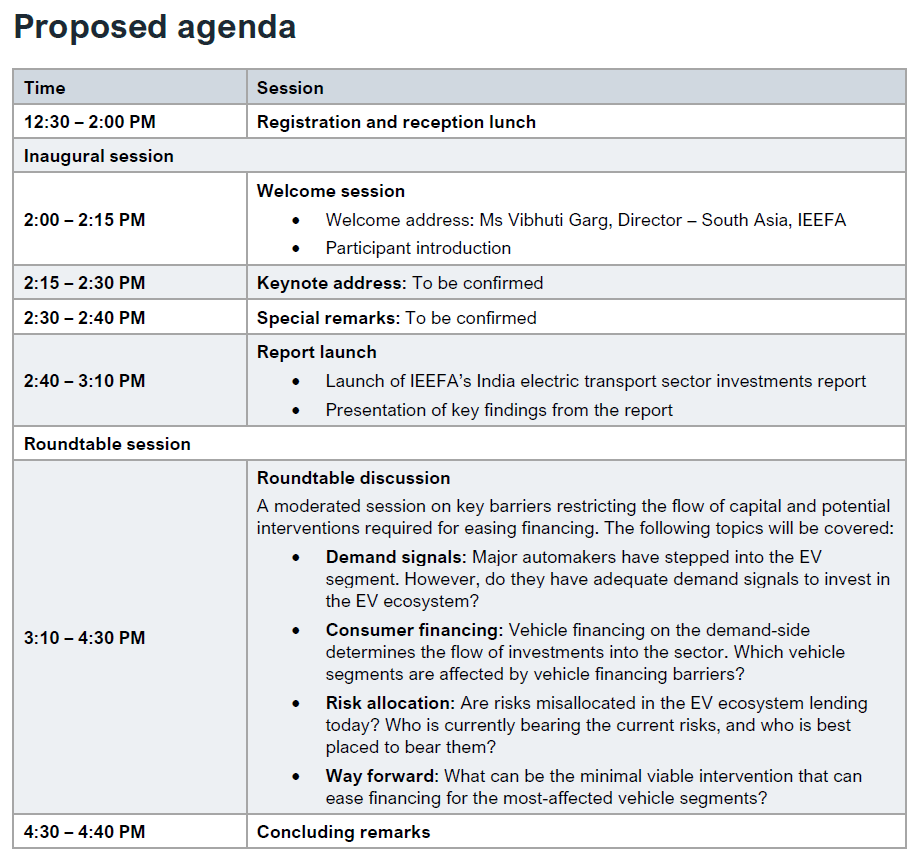
This roundtable brought together policymakers, financiers, industry leaders, and researchers to:
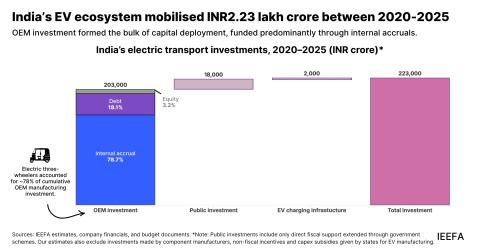
- Review the flow of investments from 2020 to 2025 and identify key trends.
- Examine barriers to demand-side vehicle financing and their impact on capital flows.
- Develop actionable recommendations to ease financing constraints and accelerate investment.
- Explore practical interventions that can help build a self-sustaining ecosystem for India’s electric transport sector.
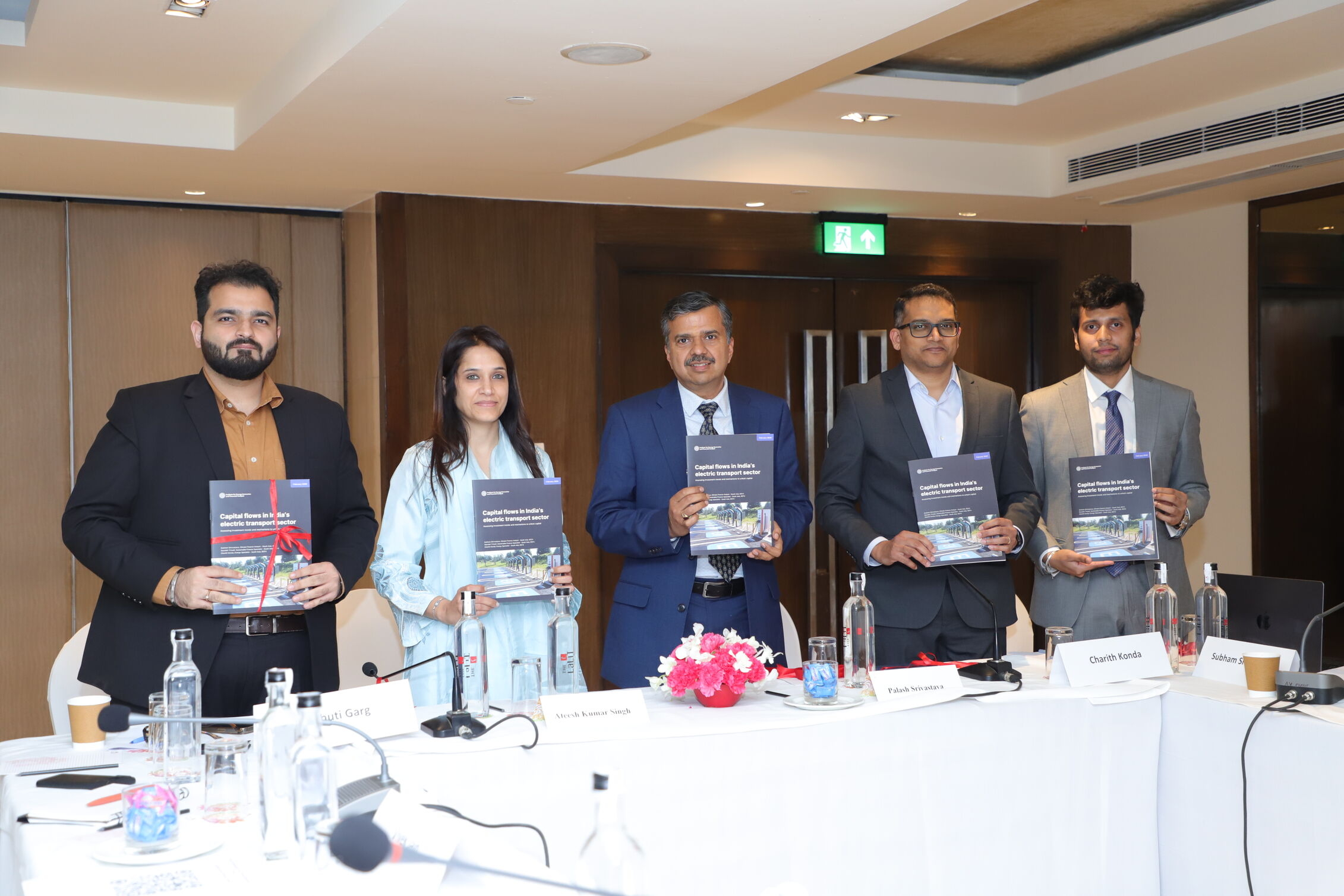
The discussions also marked the launch of IEEFA’s comprehensive analysis of investment flows in India’s EV sector, covering trends across vehicle segments and the broader ecosystem. By combining empirical evidence with forward-looking strategies, the roundtable charted pathways to mobilise capital at scale and advance India’s transport decarbonisation goals for 2030.
The roundtable was held on 23 February 2026.
Organisation: Institute for Energy Economics and Financial Analysis (IEEFA)