Beetaloo gas pipeline plan disconnected from reality
Key Takeaways:
APA has stated the Beetaloo is largely intended as an “export play”, but using Beetaloo gas to backfill Queensland LNG plants is unlikely to be financially viable.
Demand for Beetaloo gas is highly uncertain given falling gas demand in eastern Australia, uncertain demand growth in LNG markets and a looming LNG supply glut.
Financing the pipeline project will materially increase APA’s already high debt, potentially affecting the company’s credit rating and shareholder distributions if it stretches APA’s finances too far.
Investing in new gas infrastructure will affect APA’s ability to invest in electricity transmission and generation assets at a time when electricity demand is forecast to boom.
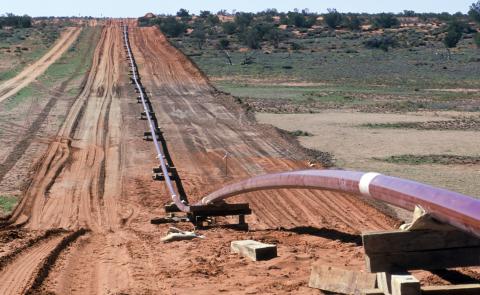
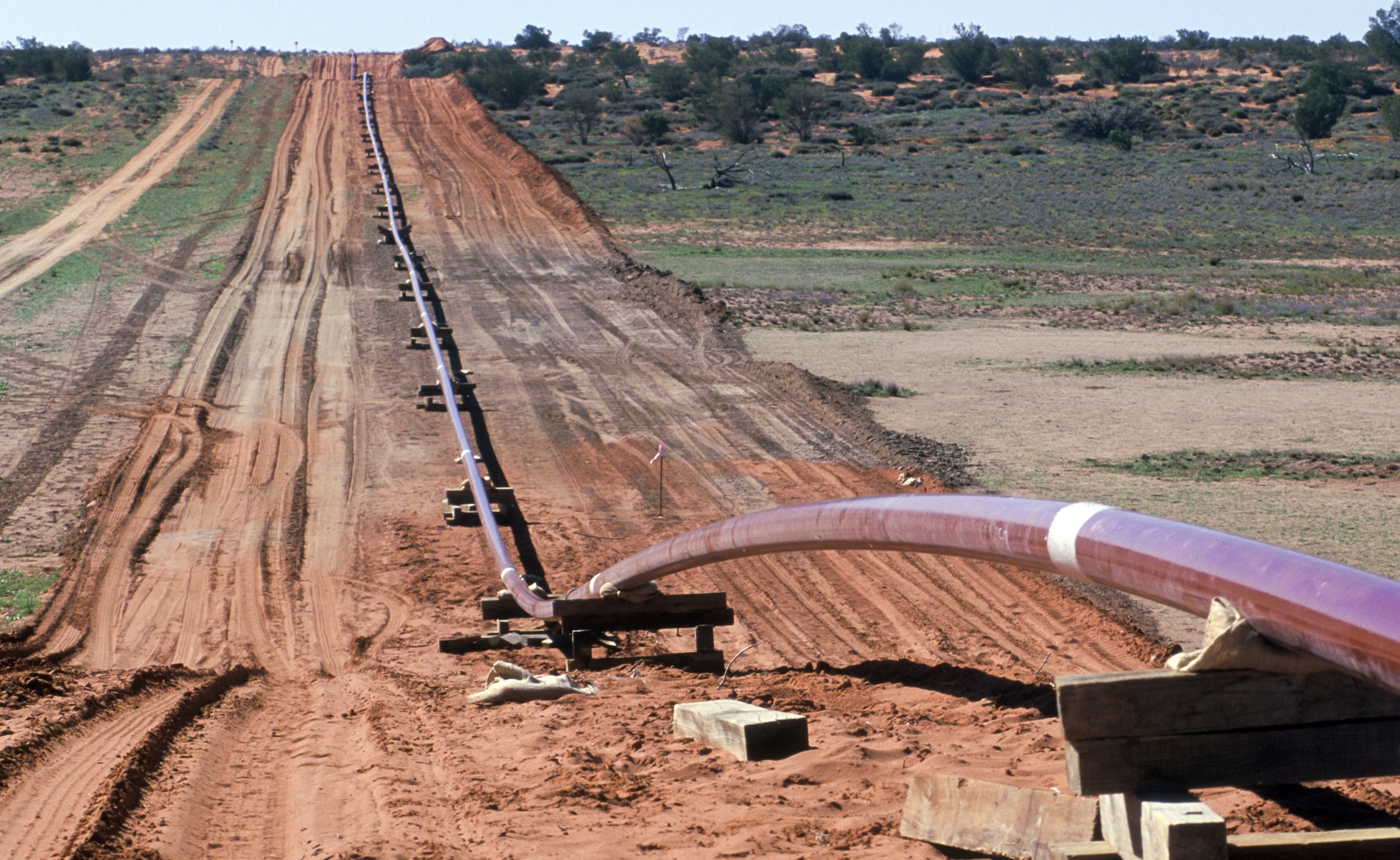
30 November 2026 (IEEFA Australia): Australia’s largest gas pipeline, running 1500km from the Beetaloo field to the east coast, is either unlikely to secure the consumers it needs to get off the ground or will require those consumers to take highly risky long-term positions, according to a new report released today.
APA Group’s proposal to connect the remote Northern Territory field to domestic and export markets has been touted as a solution to looming gas supply shortfalls and a source of gas to backfill LNG projects. However, domestic gas consumption is falling fast and the global LNG market will be flooded with cheap gas by the time the pipeline is completed, making Beetaloo gas expensive and uncompetitive, and the project uneconomic.
These are among the findings of IEEFA’s latest report, Higher gas prices and unwanted supply in the pipeline from Beetaloo, which takes an in-depth look at the numbers behind the proposed multi-billion-dollar project.
“IEEFA’s analysis raises substantial questions about the financial case for the pipeline, due to its high costs and uncertain future demand in both domestic and LNG markets,” says co-author Josh Runciman, lead analyst, Australian gas.
APA eyes the LNG export market from Gladstone for Beetaloo gas but several, principally cost-related factors already undermine that strategy:
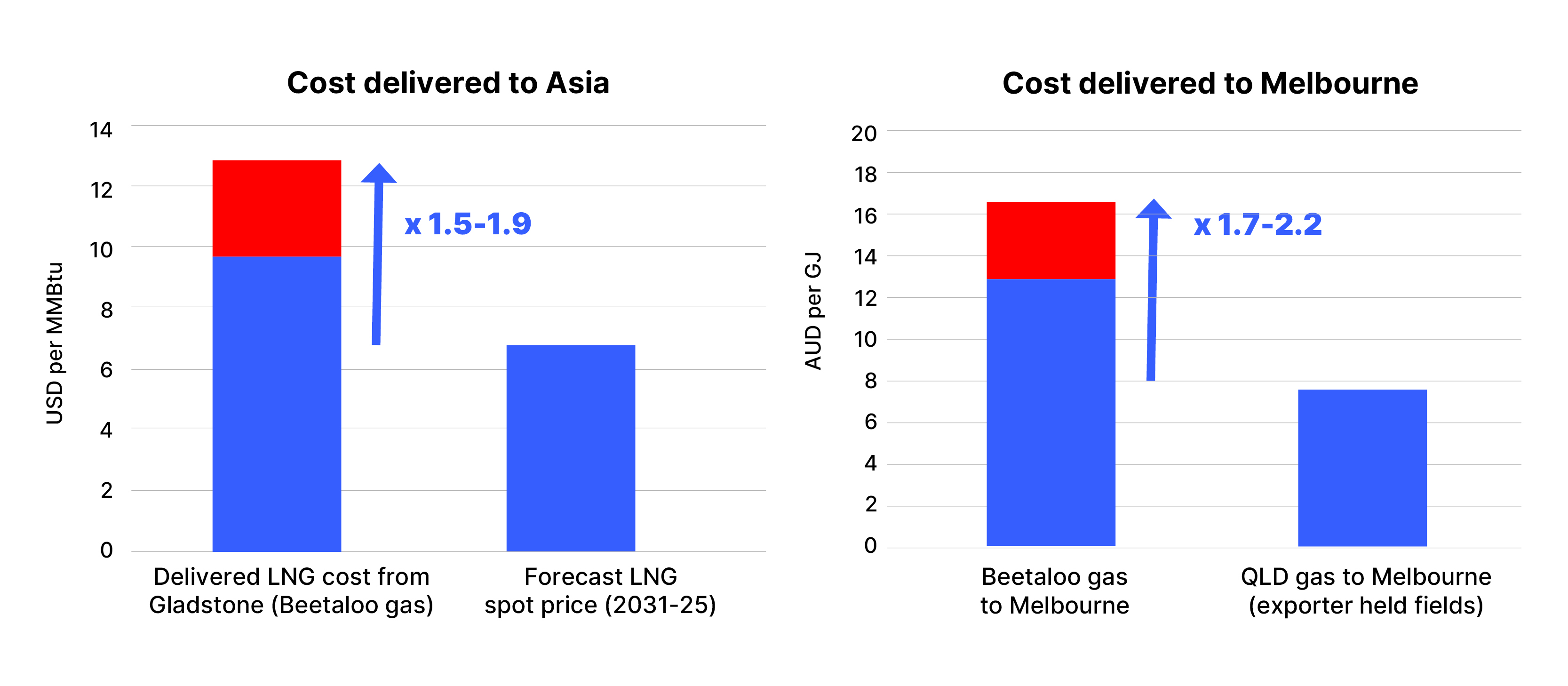
- Unviable LNG feedgas cost – APA past practice suggests it recovers its large capital outlay through pipeline tariffs under foundation contracts, in this case likely to be dominated by Queensland LNG exporter GLNG. IEEFA estimates this would lead to delivered LNG costs of US$9.8–12.7 per million British thermal units (MMBtu) in Asia, well above recent price forecasts of US$6.75–6.8/MMBtu in the early 2030s. Therefore, it is unlikely to make financial sense.
- Lower cost alternatives – Combining high Beetaloo production costs to high transport costs would lead to a delivered price of AU$11.1–14.80 in Central Queensland or AU$12.80–16.40 in Melbourne. This would be significantly higher than the estimated cost of production from undeveloped Surat basin gas held by LNG exporters, meaning the pipeline may not be needed. If it were used to supply the domestic market, it risks pushing domestic prices up materially.
- Pipeline cost – IEEFA estimates the 1,561km North to East Australia pipeline could cost up to AU$8.3 billion, further straining APA’s highly leveraged balance sheet. If it overstretches APA’s finances, it risks a credit rating downgrade, which, in turn, could drive up its borrowing costs.
Beetaloo gas much more expensive than export and domestic alternatives
“APA’s proposed Beetaloo pipeline is likely to be very expensive, representing the largest ever gas transmission investment in Australian history,” Mr Runciman says. “High costs will, naturally, lead to high transmission tariffs, and undermine the competitiveness of gas delivered using the pipeline.
“Given its high cost, Beetaloo gas is likely to either have little demand or push up domestic gas prices. These factors suggest there is no financial case for the pipeline.”
Finally, there is no guarantee the large volumes of gas needed from the Beetaloo to make the pipeline viable will be produced.
“The Beetaloo sub-basin is still in the appraisal phase, and has not yet been proven as commercially viable,” says co-author Kevin Morrison, Energy Finance Analyst, Australian Oil and Gas.
“The risk remains that supply needed to fill the pipeline will not actually materialise. With high costs, and an uncertain demand outlook in both the LNG and domestic market, APA’s NEA pipeline is likely to face too many risks to make financial sense.”
Read the report: Higher gas prices and unwanted supply in the pipeline from Beetaloo
Media contact: Greg McNevin, ph +61 0475 247 044, [email protected]
Author contacts: Josh Runciman, [email protected]; Kevin Morrison, [email protected]