Global MDB Investments in Petrochemicals Tracker
Last updated: August 2026
View Press Release
About
The Global MDB Investments in Petrochemicals Tracker is an interactive database by the Institute of Energy Economics and Financial Analysis (IEEFA). It visualises petrochemical investments from 16 multilateral development banks (MDBs) across different sectors within the industry. The key elements of the database are MDB details, client names, investment amount, investment type, bank risk rating, project sub-sector, and investment purpose. The database is built using details from the Early Warning System (EWS), which is hosted by the International Accountability Project (IAP). This interactive database has been developed in collaboration with IAP.
The database comprises 93 projects covering an investment of USD10,042 million. Investment amounts for eight of these projects are not available.
Methodology
The tracker organises, summarises, and standardises projects from 16 MDBs, and contains information on more than 36,000 investments and the roles of more than 10,000 private actors since 2016. All of this information is sourced from the EWS.
The EWS software Nyali collects, standardises, and organises information that development banks publicly disclose on their website. It also collects files related to projects. The EWS team verifies the information gathered and summarises the project descriptions for clarity and accessibility.
IEEFA’s petrochemical tracker based on this data will be updated every six months.
Scope
This tracker focusses on petrochemicals and their immediate downstream uses in fertilisers and plastics, and projects to decarbonise the sector. The tracker also includes chemical recycling as its outputs impact petrochemical supply. The EWS database includes projects that are active, on hold, closed, and cancelled.
More detailed criteria are below:
A. Upstream
- Oil refineries
- Gas crackers
- Pipelines
- Ports
- Feedstock
B. Midstream and downstream
- Olefins
- Aromatics
- Synthetic rubber
C. Fertilisers
D. Plastic manufacturing, including plastic packaging
E. Chemical recycling
F. Decarbonisation projects in the petrochemical industry
The following are deemed to be outside the database’s purview as they do not directly impact the petrochemical industry or are downstream activities:
- Mechanical recycling
- Circular economy
- Plastic waste management
- Marine plastic pollution

About the database
The EWS, hosted by IAP, is the first civil society-led database that summarises and standardises information on development projects from the largest and most influential DFIs.
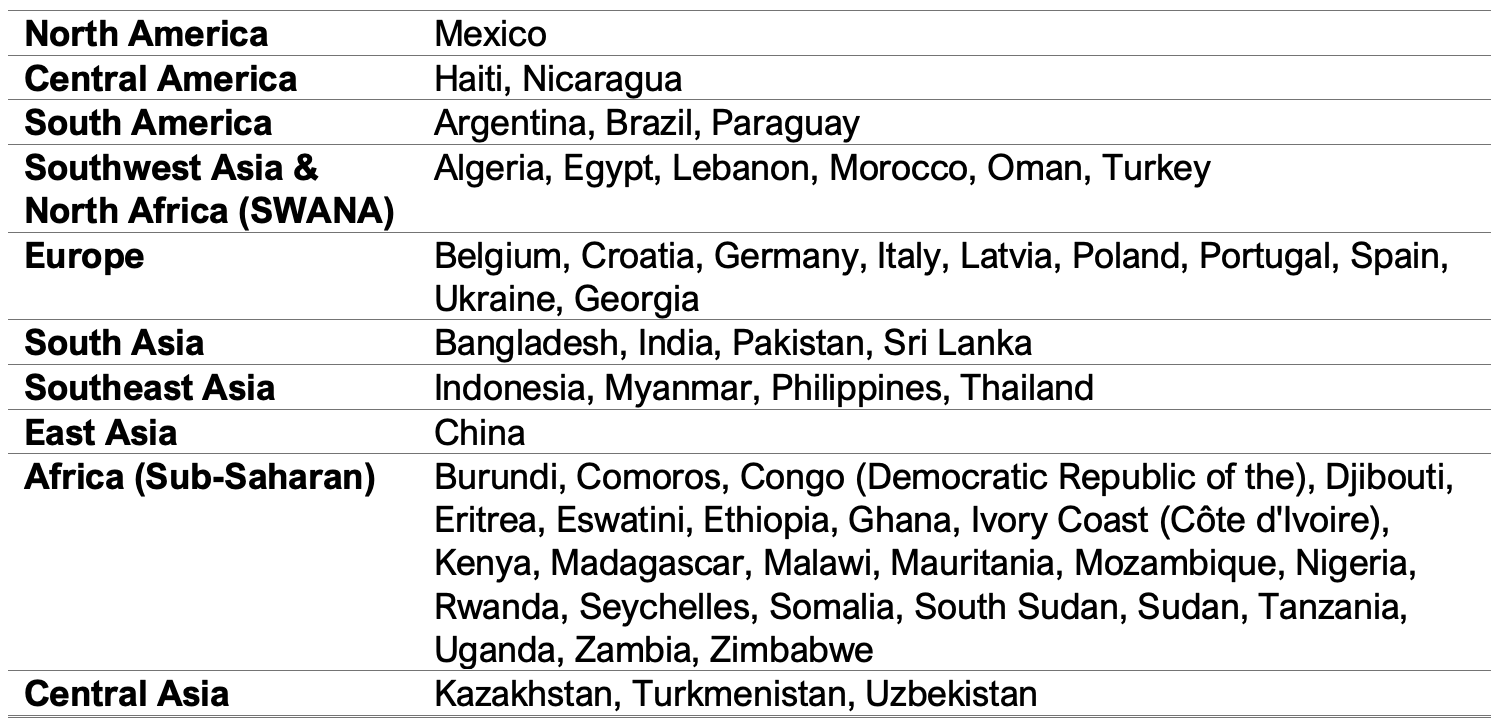
For the purpose of analysis, the following categories have been added to the existing EWS:
Geographical categories
Investment purpose
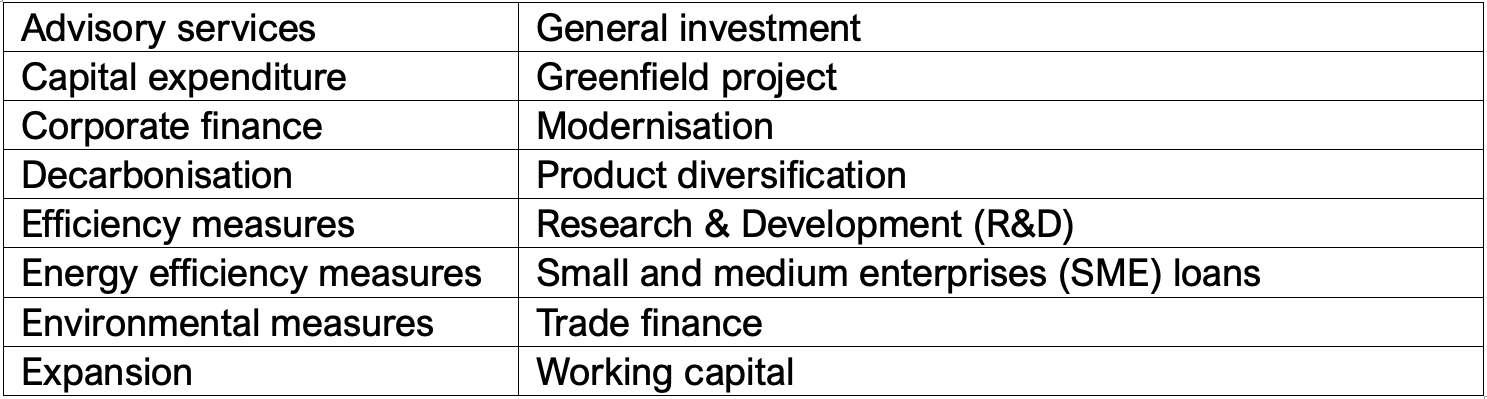
Sub-sectors
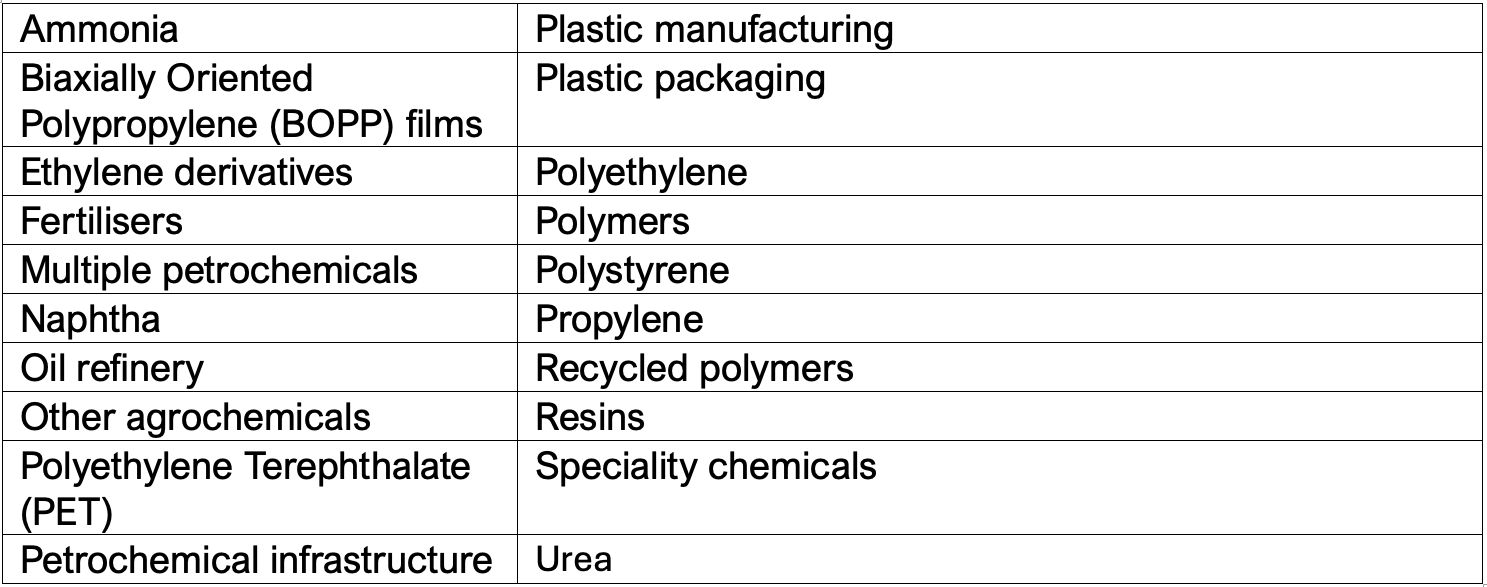
Additional notes on key elements of the tracker
- Bank rating: MDBs assess environmental and social categorisation as a measure of the planned project’s environmental and social impacts. A higher risk rating may require more due diligence to limit or avoid harm to people and the environment. For example, ‘A’ or ‘B’ are risk categories where ‘A’ represents the highest amount of risk. Results include projects that specifically recorded a rating; all other projects are marked ‘U’ for ‘Undisclosed’.
- Project status: Projects that have reached operational conclusion and where financial closure is pending are considered ‘completed’, while those where both administrative and financial closures have been achieved are considered ‘closed’.
- Region: Projects covering multiple countries in South Asia and Southeast Asia are categorised under ‘Asia’. Projects covering multiple countries across continents are categorised as ‘Multiple regions’.
Data policy
The EWS collects public information from development finance institutions (DFIs) and other organisations about development projects, and private information from people who live and work near development projects around the world.
The EWS Data Policy covers both data types and is based on Responsible Data and the Handbook of the Modern Development Specialist, which are guidelines from an active collective of rights and data specialists. Read more: responsibledata.io
The information collected by the Early Warning System is available for use based on Creative Commons Licences Attribution-Non Commercial 4.0 International. This Creative Common license allows others to copy, distribute, display, build upon and use information provided by the Early Warning System for any purpose other than commercial unless they get permission. Others who want to modify information provided by the Early Warning System, must get permission first. This Creative Common license requires that others who use the information provided by the Early Warning System must give appropriate credit, provide a link to the license, and indicate if changes were made. You may do so in any reasonable manner, but not in any way that suggests the licensor endorses you or your use. If others want to use the information provided by the Early Warning System without giving credit or for endorsement purposes, they must get permission. To request permission for use outside of these terms, please contact the Early Warning System.
Key findings
Table of contents
- Key findings
- The World Bank Group cumulatively funds 65% of petrochemical projects
- Agrochemicals receive the highest funding from MDBs
- Among investments, 57% pertain to expansion of existing projects or greenfield projects
- SWANA region leads MDB investments in the petrochemical industry
- Loans are the key mode of investment
- Private sector dominates MDB investment in petrochemicals
- Investment in the petrochemical industry comes with moderate risks
- SWANA, Europe, and Africa have the largest number of active and proposed projects
- Data explorer
- Dataset